
“Saving up” for Thanksgiving: why skipping meals before the feast backfires
In Texas survey data, about one in twelve adults went a full day or longer without eating to lose weight in a single month. Around the holidays the same habit gets a friendlier name: saving up. Here is why it tends to set up the very overeating it is meant to prevent, and what to do instead this Thanksgiving.
Is it okay to skip meals before a big holiday dinner?
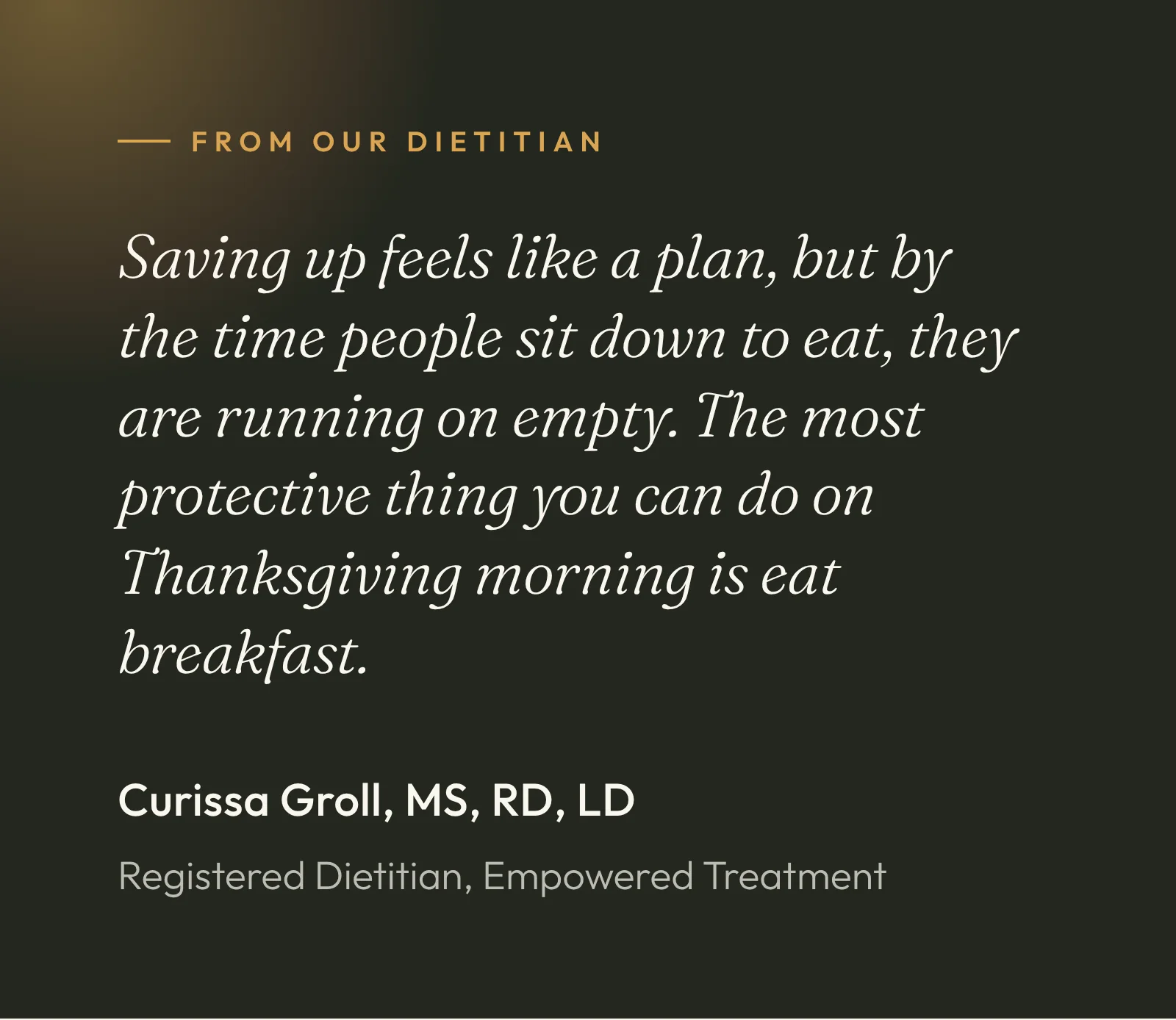
For most people, no. Skipping meals to “save up” for Thanksgiving makes hunger harder to read and loss of control at dinner more likely. Eating breakfast and a lunch or snack on the day itself is the steadier plan, especially for anyone with a history of dieting, binge eating or an eating disorder.
- Fasting to control weight is common in Texas. In state survey data, 8.4% of adults said they had gone 24 hours or more without eating to lose weight in the past 30 days.
- Restriction and bingeing feed each other. In a five-year study, fasting predicted the later onset of binge eating more consistently than dieting did.
- The holiday is one day. Regular meals before, during and after it protect your body and your peace of mind better than any plan to “make up” for it.
- If the cycle feels out of your control, that is worth talking to a professional about, whatever your size and however long it has been going on.
A habit hiding in plain sight
In December 2024 the Texas Department of State Health Services delivered a report on eating disorder prevalence to the Legislature. Drawing on the 2022 Texas Behavioral Risk Factor Surveillance System, it is one of the clearest statewide pictures available.
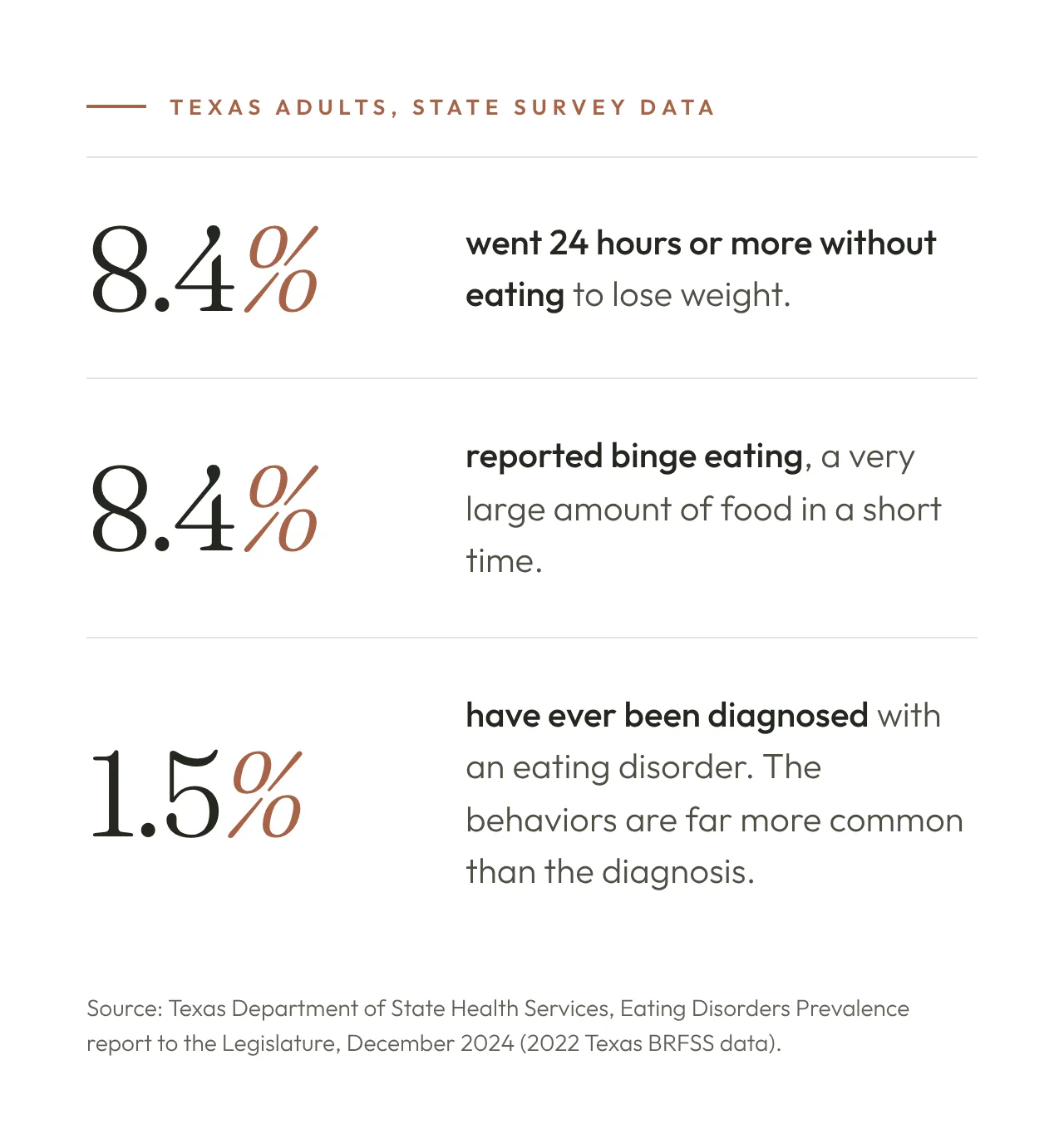
Only 1.5% of Texas adults reported ever being diagnosed with an eating disorder. Far more reported the behaviors: in the past 30 days, 8.4% fasted for 24 hours or more to lose weight and 8.4% reported binge eating. The same report counted 4,068 eating disorder related hospital stays in Texas in 2022, and it notes that early treatment matters because the risk of medical complications is real.
The gap between the diagnosis rate and the behavior rates is the point. Many Texans who restrict or binge never get a name for what is happening. The holidays make it even easier to miss, because skipping breakfast and lunch to “leave room,” or planning a cleanse for the Monday after, is treated as ordinary good sense in a lot of households.
How “saving up” sets up a binge
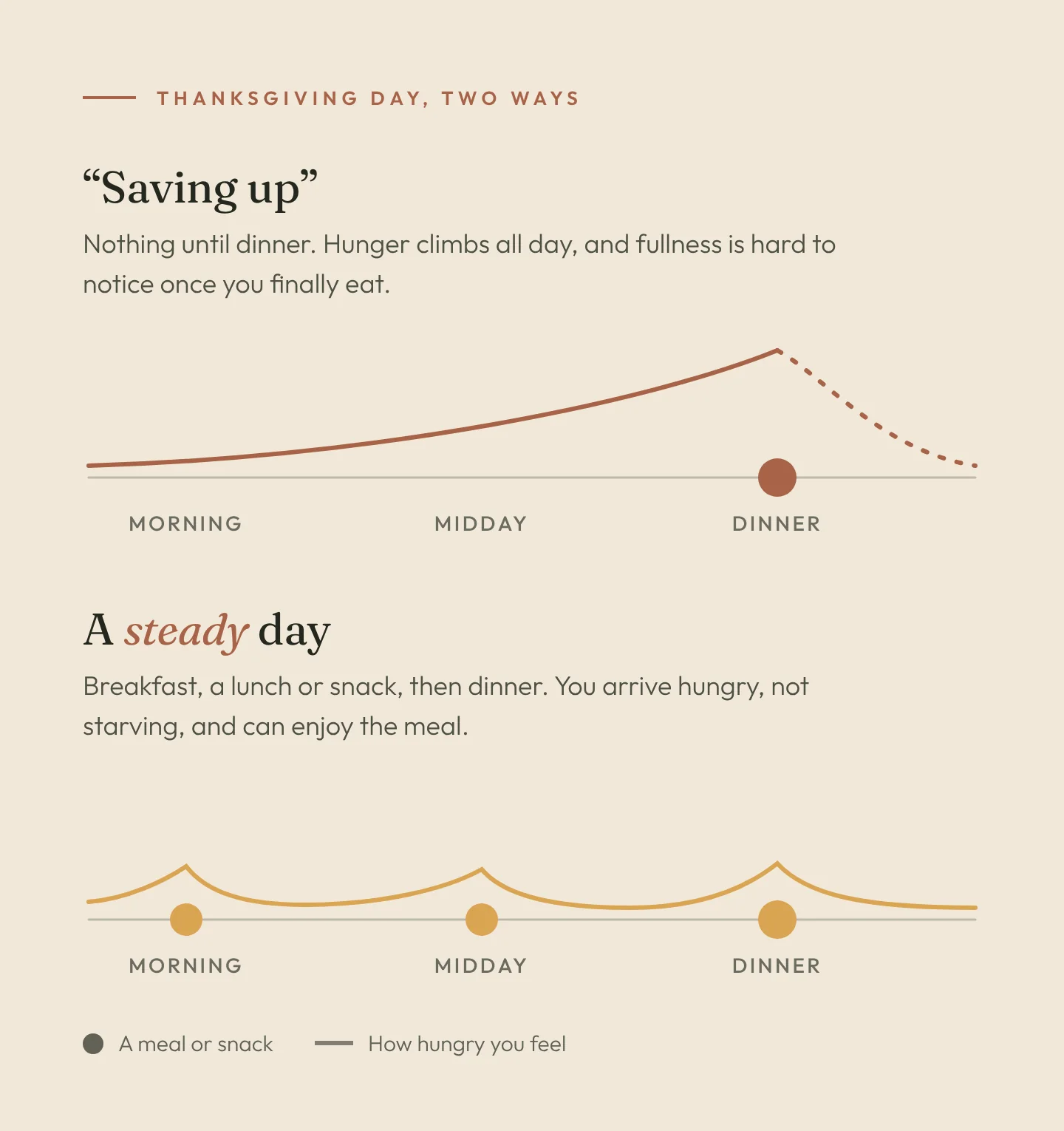
When the body goes too long without enough food, hunger gets louder and more urgent. By the time dinner arrives, fullness is hard to notice until well past it. That rarely feels like a body doing its job. It feels like a lack of willpower, which tends to bring guilt and a promise to restrict even harder the next day. Our clinicians call this the binge-restrict cycle, and a holiday can spin it faster.
Research backs up what clinicians see. In a study that followed 496 adolescent girls for five years, published in 2008, fasting for weight control was a stronger and more consistent predictor of later binge eating and bulimic symptoms than self-reported dieting. Going a full day without food is not a neutral act of discipline. For some people it is the start of a pattern.
Three patterns are worth watching for between now and the new year:
- Banking food. Skipping meals ahead of a gathering, or across several days, to offset what you expect to eat.
- Compensating afterward. Fasting, punishing workouts or “starting over” with a new diet the day after a holiday meal.
- Rules that tighten under stress. Travel, family tension and packed schedules can make food rules feel more necessary, even while they make things worse.
What to do instead on Thanksgiving Day
None of this requires a perfect day. The aim is to lower the odds that hunger, guilt and family pressure all peak at the same moment.
Eat at regular times
Have breakfast and a lunch or snack, even if dinner is early. Arriving hungry but not starving makes it easier to enjoy the meal and to notice when you have had enough. The same idea carries through the whole season: with Texas clocks now set back, keep meals on the clock rather than the light, as we explain in shorter days and eating disorder recovery.
Let every food belong
Foods that feel forbidden tend to feel urgent. Giving yourself real permission to eat what is on the table usually takes some of the pressure off.
Curissa Groll, MS, RD, LD, Registered Dietitian, Empowered Treatment
Decide ahead what you will say
Comments about weight, second helpings or “being good” are common at holiday tables. A short, neutral line such as “I’m enjoying it, thanks,” or a change of subject, can carry you through. If you are in recovery, it can help to tell one trusted person at the gathering what you are working on.
Skip the make-up plan
The day after Thanksgiving is an ordinary day. Eat breakfast, move in ways you enjoy, and let go of the urge to fast or overexercise to cancel out the holiday.
Sydney Kudeviz, LCSW, Therapist, Empowered Treatment
Have a support plan if you are in treatment
If you work with a therapist or dietitian, ask before the holiday for help mapping out the day, including how you will step away if you need a break. If you are visiting family in another Texas city, look up support ahead of time, such as our guides for Houston and Dallas-Fort Worth.
Signs it may be more than holiday stress
Plenty of people overeat at Thanksgiving. It is worth reaching out for an assessment if any of these sound familiar:
- You regularly fast or skip meals to make up for eating, not just around holidays.
- You eat large amounts of food, feel unable to stop, and feel shame or distress afterward.
- You vomit, use laxatives or exercise hard to compensate for food.
- Planning around food, weight or your body takes up a large part of your day.
- You feel dizzy or faint, notice your heart racing, or loved ones have told you they are worried.
The National Institute of Mental Health describes eating disorders as serious and potentially life-threatening, and also as illnesses that can be treated successfully, with early detection and treatment important for a full recovery. You do not need to be certain before you ask. Our guides to binge eating disorder and to disordered eating versus an eating disorder can help you sort out what you are noticing.
Support for adults across Texas
Empowered Treatment offers an adult intensive outpatient program and a partial hospitalization program in Northwest Austin, with therapists, registered dietitians and psychiatric providers on one team. Adults come to us from across Texas, including San Antonio, Houston and Dallas-Fort Worth, and our transitional housing makes daily programming possible for people traveling from other cities.
You can check your insurance benefits online, or call our admissions team during business hours at (512) 882-4599. If the holidays already feel hard, a conversation in the weeks before Thanksgiving can make the day itself easier to plan for.
Holiday eating and eating disorders: FAQs
Is it healthy to skip meals before Thanksgiving dinner?
For most people it is not a helpful strategy. Long stretches without food make hunger harder to manage and raise the odds of eating past fullness. Regular meals on the day are the steadier approach.
How common is fasting to lose weight in Texas?
In 2022 survey data reported by the Texas Department of State Health Services, 8.4% of Texas adults said they had gone 24 hours or more without eating to lose weight in the past 30 days.
What should I do if I binge at Thanksgiving?
Go back to regular eating the next morning rather than fasting or overexercising to compensate. If bingeing happens often or feels out of control, talk with a doctor, therapist or eating disorder program.
Can adults from other Texas cities attend Empowered’s programs?
Yes. Adults from across Texas attend IOP or PHP in Austin, and our transitional housing supports people traveling from other cities during treatment.
This article is for general education and is not medical advice. If you are in crisis, call or text 988. The ANAD Eating Disorders Helpline is free at (888) 375-7767, weekdays.
Sources
- Texas Department of State Health Services. Eating Disorders Prevalence, as required by Senate Bill 184, 87th Texas Legislature, Regular Session, 2021. December 2024.
- Stice E, Davis K, Miller NP, Marti CN. Fasting increases risk for onset of binge eating and bulimic pathology: a 5-year prospective study. Journal of Abnormal Psychology, 2008;117(4):941-946.
- National Institute of Mental Health. Eating Disorders. Last reviewed December 2024.
- ANAD. Get help: Eating Disorders Helpline and support groups.
- 988 Suicide and Crisis Lifeline. 988lifeline.org.
Eating disorders are not a choice. Recovery can be.
One confidential conversation is all it takes to start. No pressure. We'll help you find the right next step, even if it isn't with us.