
01
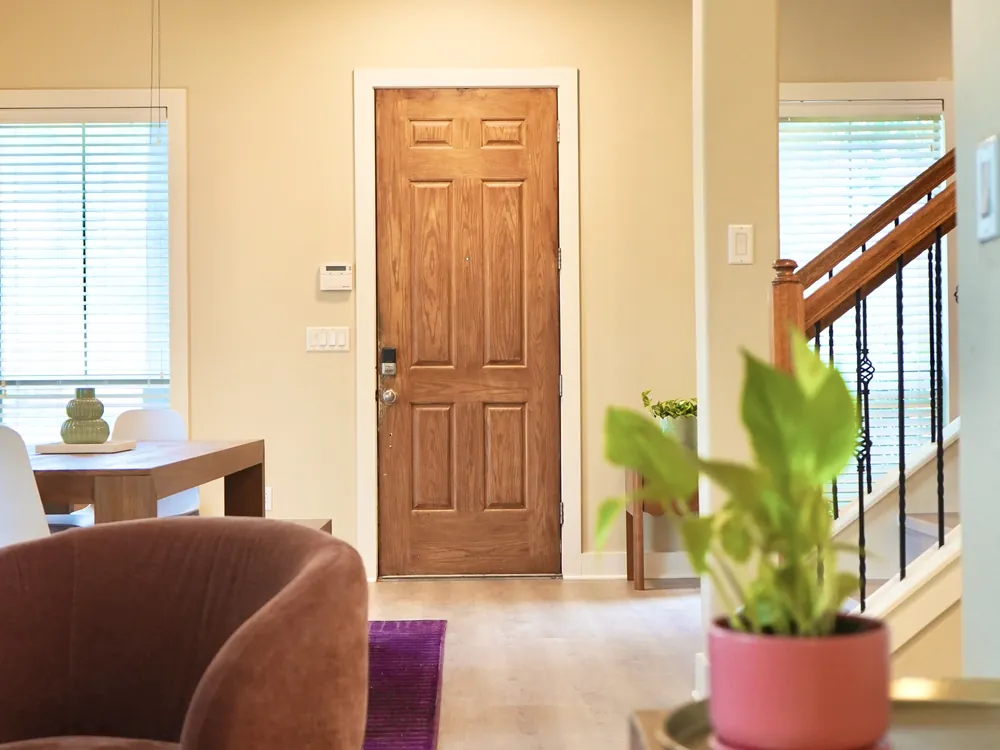
The front door
A door on a residential street in Hyde Park, a short drive from our treatment center. No reception desk, no sign-in sheet. You come home the way people come home.
Recovery is hard to hold when the place you go home to each night works against it. Our transitional housing is a real house on a residential street — available alongside both our PHP and IOP programs.

There is a point in recovery where the clinical intensity of residential care is no longer needed, but living completely independently is still more than the recovery can carry. It is one of the most vulnerable stretches of the whole process, and it is where a lot of hard-won progress quietly comes apart.
The same gap opens from the other direction: someone entirely ready for treatment who cannot start it, because the household they live in is part of what keeps the eating disorder in place, or because the program that fits is hours from where they sleep.
Recovery involves relearning ordinary domestic life — cooking, sharing a table, having a room of your own to close the door on. That is difficult to relearn anywhere that feels institutional, so this was furnished the way you would furnish a home you actually wanted to live in.
A door on a residential street in Hyde Park, a short drive from our treatment center. No reception desk, no sign-in sheet. You come home the way people come home.
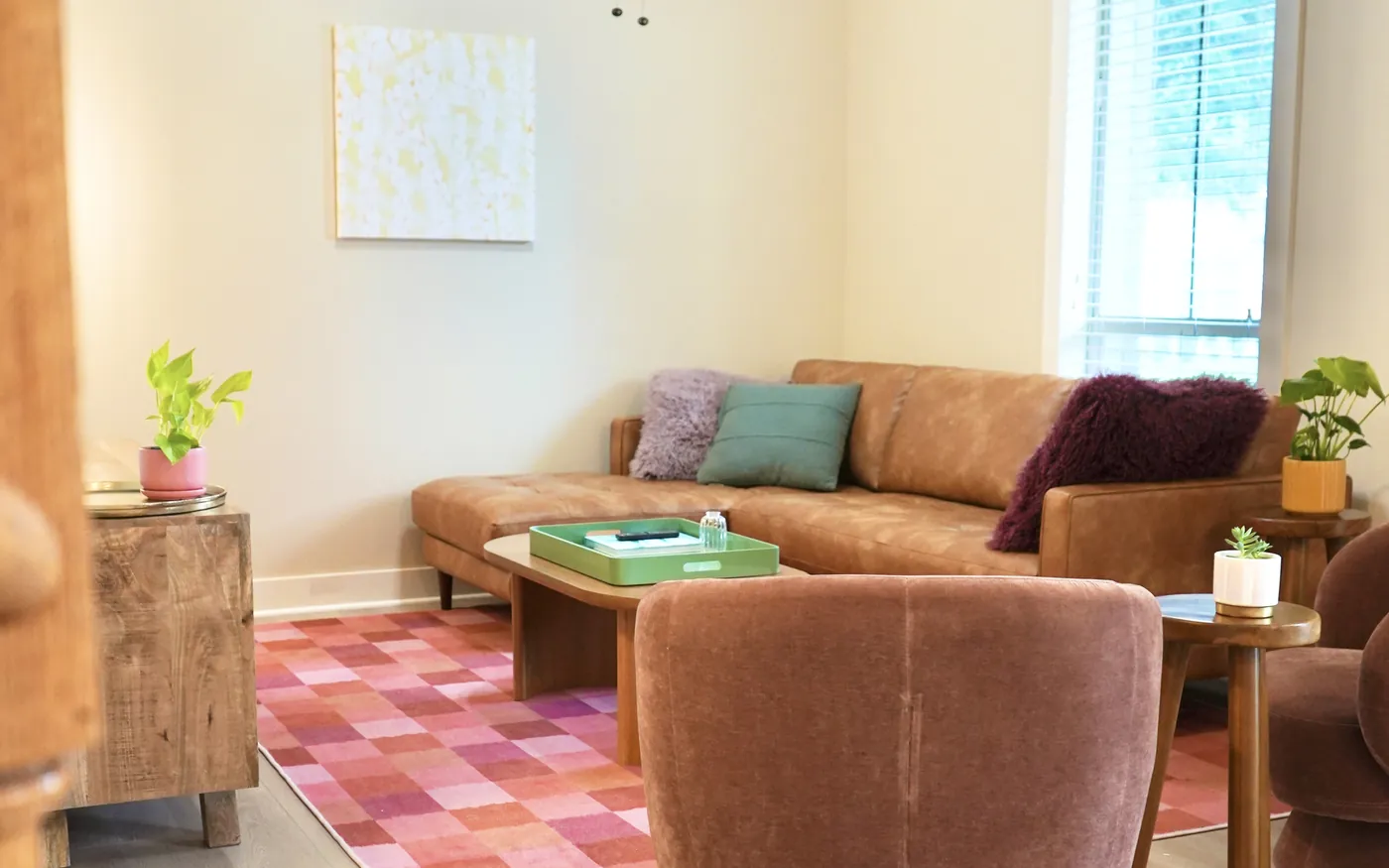
The hours right after a treatment day are often the hardest part, and they are the ones nobody schedules. There is a room here with soft seating and other people in it, which is a different thing entirely from an empty apartment.
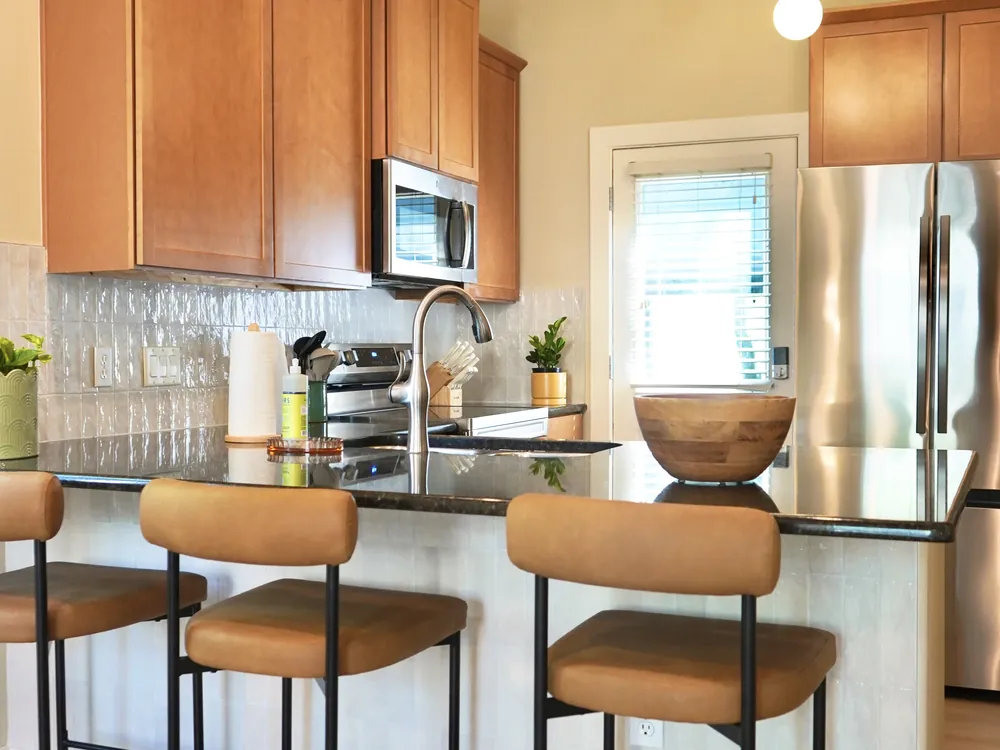
A full kitchen, used the way kitchens are used. Shopping, cooking and feeding yourself are recovery skills, and they are learned by doing them somewhere ordinary rather than being talked about in a room.
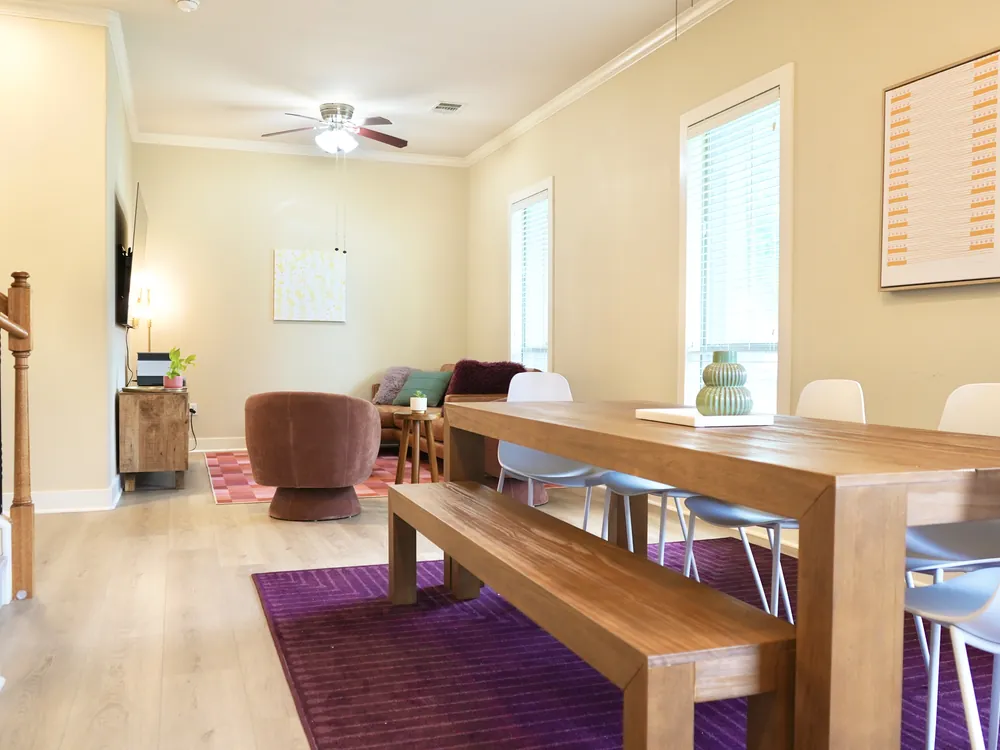
Long enough that everyone eats together. Supported meals happen at the center with your team; this is the other kind — the ordinary kind, with people who understand, which is the version that has to transfer to the rest of your life.
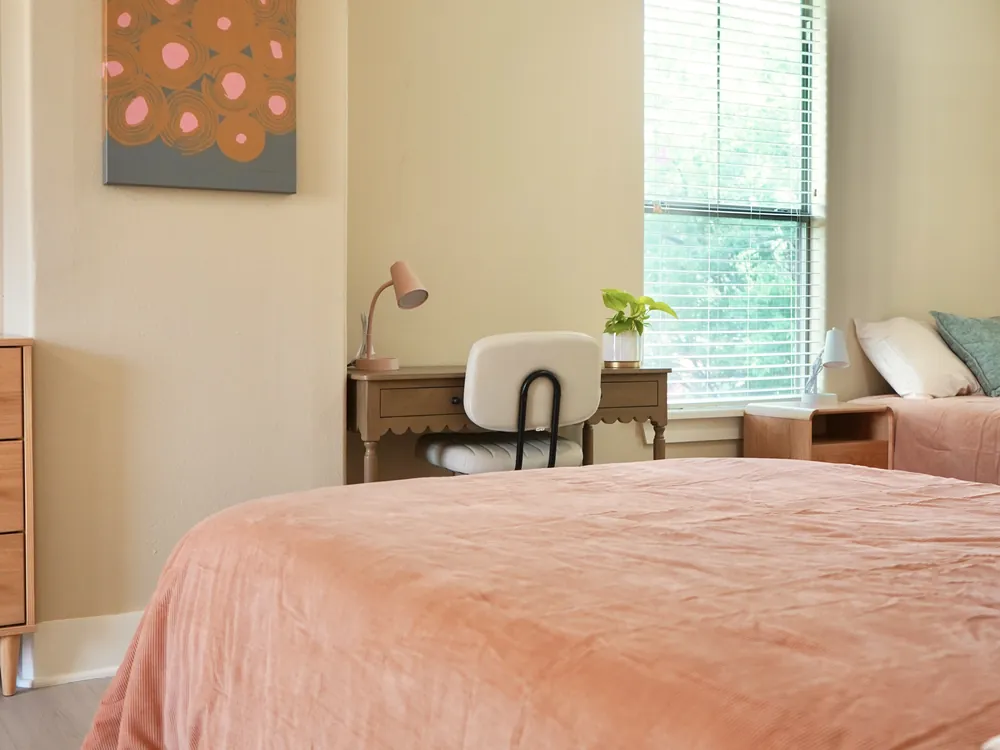
A bed, a desk, a window with something green outside it, and a door you can close. Privacy is not a luxury in recovery. A good deal of the processing happens alone, after everyone else has gone quiet.
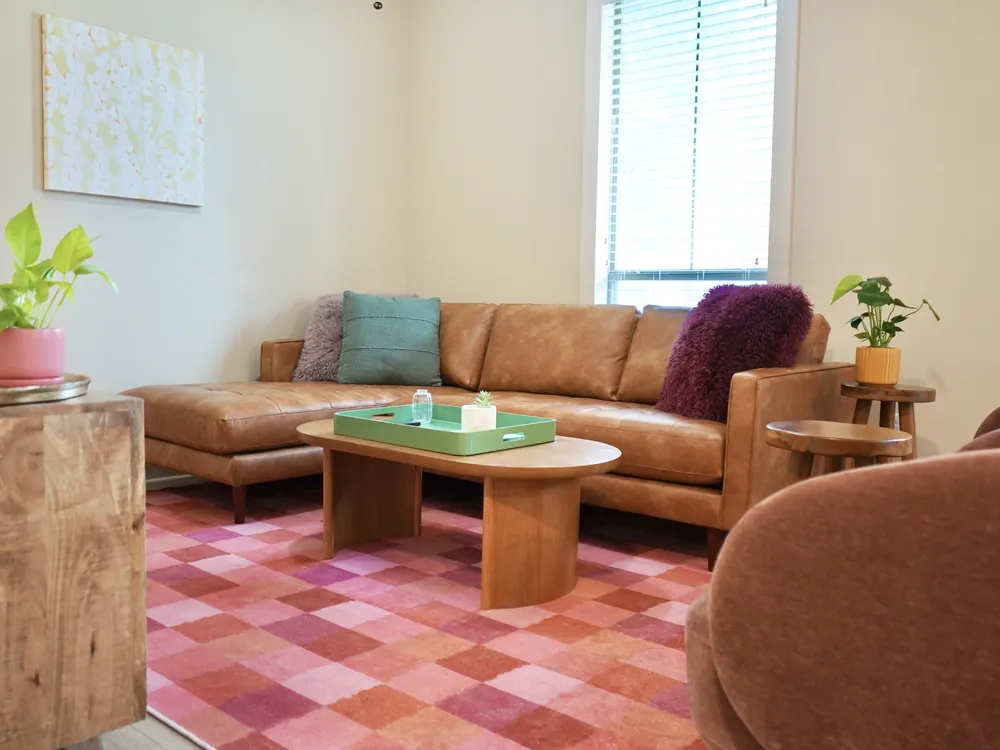
Structure helps most at the times of day when it is usually absent. Living alongside people doing the same work turns the evening from something to get through into something that is simply happening, with company.
If the right program is not close to home, housing is what makes attending it realistic rather than theoretical. People come to us from outside the city and outside the state.
Leaving 24-hour care and going straight back to full independence is a long step. This is the one in between, and it is the step where relapse risk is highest.
Sometimes the household, the kitchen, or the relationships inside it are bound up with the eating disorder. Distance from that, for a while, can be clinically useful rather than avoidant.
An apartment between appointments is its own risk. Isolation is where eating disorder behaviors get quiet, private and harder to interrupt.
Housing is an optional addition to treatment, not a separate service and not a replacement for it. Clients can supplement their programming with transitional housing, and many pair it with experiential coaching, where coaches help you navigate the world and build skills between sessions.
A full treatment day at our center, then somewhere supportive to go at the end of it. Common for clients travelling to Austin, and for those stepping down from residential care elsewhere.
About the PHP program →Programming that fits around work, school, and family, with a stable and supportive place to live while the rest of your routine is rebuilt around it.
About the IOP program →Whether housing is right for you, what it costs alongside your program, and whether there is space right now all depend on your situation. One phone call answers all three, and there is no obligation attached to asking.
No. In residential treatment you live on site at a clinical facility with 24-hour care, and the treatment and the living happen in the same place. Transitional housing is a supportive place to live while you attend treatment somewhere else — in this case, our PHP or IOP programming at the Spicewood Springs center. It is designed to bridge the gap between residential treatment and living independently.
In Hyde Park, a residential neighborhood in central Austin, a short drive from our treatment center on Spicewood Springs Road.
No. Housing is optional. Many clients live at home and attend PHP or IOP from there. Housing exists for the people for whom that is not workable or not clinically advisable.
Yes. People travel to Austin for our programs, and housing is a large part of what makes that practical. Call us and we will talk through what the logistics would look like for your situation, including timing and insurance.
That depends on your program, your length of stay, and your insurance situation, so it is not something we can put a single number against here. Our team will walk you through the specifics on the phone before you commit to anything.
Call (512) 882-4599 and ask. Availability changes, and our team can tell you where things stand the same day.
Call today and we will talk through whether outpatient treatment is the right level of care for you or someone you love.