
For people struggling with eating disorders in San Antonio, about an hour and a half away.
Empowered Treatment is an adult eating disorder program in Austin offering partial hospitalization, intensive outpatient care, and transitional housing, about 80 miles up I-35 from San Antonio.

Close to home, and still hard to name.
San Antonio is a city where so much of life gathers around food: family tables, celebrations, Sunday meals that run long. For someone with an eating disorder, those moments can be the hardest part of the week, full of planning, avoidance, or guilt that nobody else at the table can see.
Eating disorders affect people across every culture, body size, and age, and they often go unrecognized for years, especially in adults who are good at holding everything together. If food has started to feel like something to manage rather than something to share, you are not alone, and it is not too late to get help.

You can want help and still feel unsure.
Feeling mixed about getting help is normal. Part of you may want things to change while another part is not ready to give up the rules that have kept you feeling in control. You can call while you are still unsure. That is often how it starts.
Because San Antonio is close, some people begin with a conversation and an assessment without having to rearrange their whole life first. We will help you think through what level of care fits and what it would mean for your week.
Love can look like a careful conversation.
If you have noticed changes in how someone you love eats, talks about their body, or avoids family meals, it can be hard to know whether to say something. Choosing a calm, private moment and focusing on what you have noticed, rather than their weight or appearance, makes a difference. Our guide to what not to say can help.
Families are part of recovery. Our family education gives parents, partners, and siblings practical ways to support someone in treatment, and San Antonio is close enough to stay involved in person.
Close enough to visit, with room to focus.
Even at 80 miles, a daily round trip adds up over 30 hours a week of partial hospitalization. Our transitional housing in Austin’s Hyde Park neighborhood lets you stay near the program during the most intensive stretch of treatment, and still see family on weekends.
 Shared living spaces
 A room of your own
One team, working on all of it.
Therapy, nutrition, and medical and psychiatric care happen together in our program, with eating disorder therapists, registered dietitians, a family therapist, and psychiatric providers who coordinate every week. That matters when an eating disorder is tangled up with anxiety, depression, or trauma, which it often is.
Partial hospitalization (PHP)
Full treatment days at our Austin center: supported meals, daily groups, individual therapy, dietitian care, and medical and psychiatric monitoring.
About PHP →Intensive outpatient (IOP)
Group programming plus weekly individual and dietitian sessions, built to fit around work, school, and family once more structure is not needed.
About IOP →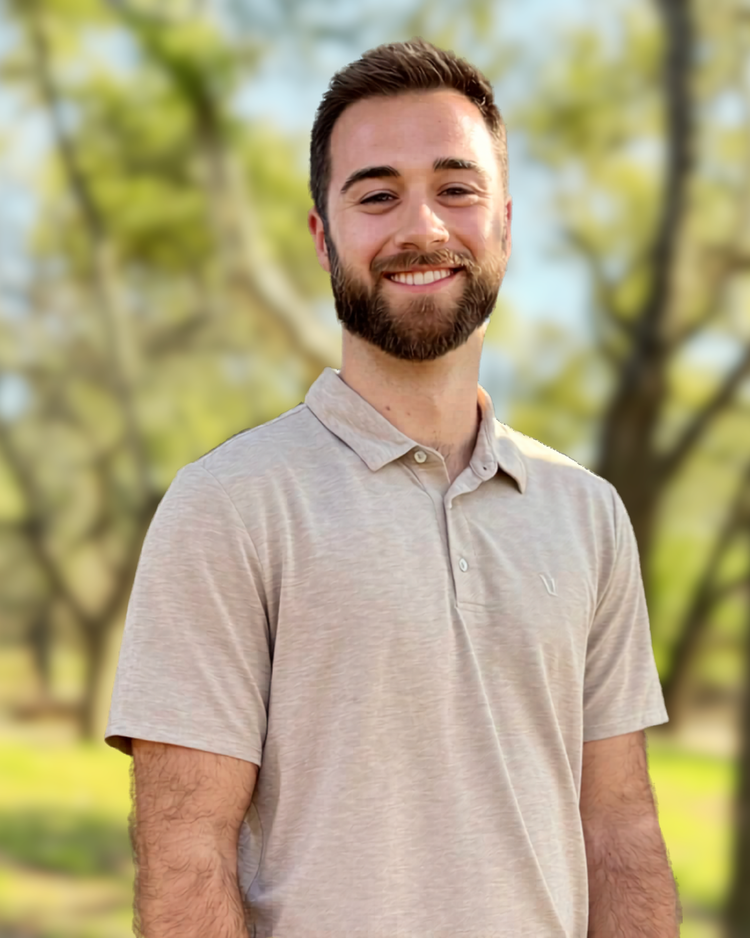
“Families often ask how they can help without making things harder. Usually it starts with understanding what the eating disorder is doing for the person they love, and that is something we can work on together.”Chase O'Neal, LMFT-AssociateFamily Program Therapist, Empowered Treatment
The drive, the details, and the cost.
Getting to Austin from San Antonio
Our center is on Spicewood Springs Road in Northwest Austin, about 80 miles from San Antonio.
- By car: roughly 1.5 hours via I-35, depending on traffic and where you start
- During PHP: many people stay in Austin rather than commute daily; ask about transitional housing
- During IOP: nine hours a week of programming makes scheduling more flexible, and our team can help you plan
- Family visits: close enough for loved ones to visit regularly
Insurance and paying for care
Our team can check your benefits before you commit, including coverage for partial hospitalization, intensive outpatient care, and out-of-network services.
- Verify your insurance online, or call and we will walk through it with you
- Housing is arranged alongside your program; cost and availability depend on your situation, so ask us directly
- The Texas Department of Insurance offers free help with health plan questions, denied claims, and appeals
- Read does insurance cover eating disorder treatment?
Support back home in San Antonio.
When you return home, ongoing support makes a difference. These resources in San Antonio and across Texas can sit alongside the aftercare plan we build with you.
- NAMI San Antonio: Family SupportFree support groups and education for families and loved ones of people living with mental health conditions.
- The Center for Health Care ServicesBexar County’s local mental health authority, offering crisis and community mental health services.
- Texas Health and Human Services: Mental Health and Substance UseState mental health services and a search for behavioral health providers in your area.
- 988 Suicide & Crisis LifelineCall or text 988, any time, from anywhere in the United States. In an emergency, call 911.
Questions people in San Antonio often ask.
Can I commute from San Antonio?
It depends on the level of care. During PHP, a daily drive is a lot, and many people stay in our transitional housing. IOP is nine hours a week, which some people schedule around a commute.
Will my family be involved?
If you want them to be. Adults decide who is involved in their care. Many people find family involvement helpful, and our family education is designed for exactly that.
What if I have tried treatment before?
That is common, and it does not mean recovery is out of reach. Tell us what helped and what did not; it shapes the plan. Read relapse after eating disorder treatment.
What happens when I go back to San Antonio?
We plan the transition with you, including aftercare that can connect you with providers in the San Antonio area.
More for San Antonio
Articles and guides for readers in San Antonio.
Help is about 80 miles away, and one call closer.
Talk with a real member of our clinical team about what is going on and which level of care makes sense. There is no cost or obligation to ask.