
About 70 miles from Killeen-TempleAdults 18+In person in Austin
Eating disorder treatment for Killeen-Temple adults, about an hour south, with an IOP commute within reach for some.
Empowered Treatment is an adult eating disorder program in Austin, about 70 miles south of Killeen and Temple, with partial hospitalization, intensive outpatient care, and transitional housing under one clinical team. From Bell County, an IOP commute down I-35 is realistic for some adults, while PHP usually pairs with a room in our Hyde Park house so the hours outside treatment go to rest, not the road.
about70miles
About 1 to 1.25 hours each way by car. Temple and Belton via I-35 south; Killeen via US-190 east to I-35, or TX-195 south through Florence to Georgetown; Copperas Cove via US-190 and US-183 through Lampasas.
Other Texas cities we serve, by distance
- 30 hrsa week in partial hospitalization: supported meals, groups, therapy, dietitian, medical and psychiatric care
- 9 hrsa week of group programming in IOP, plus weekly individual and dietitian sessions
- 1 housein Hyde Park, alongside PHP or IOP, with shared meals and a room of your own
- 18+adults only, with every hour of care in person at our Austin center
In Bell County, an eating disorder can hide inside a demanding schedule.
Life around Killeen and Temple runs on schedules other people set: duty rosters and field exercises at Fort Hood, long hospital shifts in Temple, school runs in Harker Heights, a commute up and down I-35. An eating disorder fits neatly inside that kind of week. A skipped meal gets blamed on the day, hard training gets credited to the job, and a binge after a late shift passes for plain exhaustion.
Soldiers, veterans, nurses, teachers, and the spouses who hold a military household together all develop eating disorders, at every body size and every stage of adult life, and the condition carries real medical weight whichever form it takes. Two of the most familiar forms have pages of their own, anorexia treatment for Killeen-Temple adults and bulimia treatment for Killeen-Temple adults. Plenty of patterns drift between labels or never settle on one, which is why we also provide OSFED treatment at our Austin center.
Sometimes the first person to say the words is a clinician. An abnormal lab, a fainting spell, or an emergency room visit in Temple can be where years of quiet restriction or bingeing finally come to light. You can read about everything we treat at our Austin center, but you need neither a diagnosis nor a referral before you call.
When the care you have stopped matching what is happening.
You may already see a counselor, a primary care doctor, or a dietitian in Bell County. The harder question is whether that amount of care still fits what is going on. These patterns suggest it may be time for more structure:
- A clinician has raised it.A doctor has flagged your heart rate, your labs, a change in weight, or a fainting spell, and asked what you are actually eating.
- The job is covering for it.Shifts, field time, or long workdays have become the reason meals disappear, and the reason nobody asks about it.
- Exercise feels like an order.Training stopped being about fitness some time ago, and a missed workout brings guilt or panic instead of rest.
- The rules keep multiplying.What, when, and where you can eat keeps narrowing, or bingeing and purging are claiming more of each week.
- Other struggles are louder now.Anxiety, low mood, obsessive thinking, or trauma symptoms are wound so tightly around eating that one cannot be treated without the other.
- Someone at home has noticed.A spouse, parent, or friend has brought it up more than once, even if you are not sure they are right.
None of this has to reach a crisis first. If two or three sound familiar, one call can help you work out which level of care fits.
Two levels of care in Austin, planned around the drive home.
Treatment happens in person at our center on Spicewood Springs Road in Northwest Austin, with the same therapists, dietitians, and psychiatric providers following your plan as it moves between levels. From Bell County, the level of care and the question of where you sleep are decided together at the assessment, not guessed at beforehand.
Partial hospitalization, when the eating disorder needs the whole day
When restriction, bingeing, or purging has taken over most days, our eating disorder PHP for Killeen-Temple adults fills 30 hours a week with supported meals, daily groups, individual therapy, dietitian care, and medical and psychiatric monitoring.
Intensive outpatient, the level that fits the drive
The eating disorder IOP for Killeen-Temple adults is 9 hours a week of group programming, plus weekly individual and dietitian sessions, a load some adults can carry while still sleeping in Bell County.
Medical care that answers the referral
Medical and psychiatric monitoring is part of the program, so a concern first raised by a Temple physician has someone in Austin watching it and, with your permission, reporting back.
Everything else, treated together
When depression, anxiety, OCD, or the aftermath of deployment or an older trauma is part of the picture, the same team works on it in the same weeks, with trauma-integrated care where it belongs.
If you are coming out of a Temple hospital stay and need more than PHP can safely give, we will help you find the inpatient, residential, or detox care we do not provide, and keep the door open for afterward. Our page on what we offer in Austin shows how the pieces fit together.
An hour down the highway, and two ways to make it work.
The center is about 70 miles from Killeen-Temple, about 1 to 1.25 hours by car. From Temple and Belton it is I-35 south the whole way. From Killeen and Harker Heights, take US-190 east to I-35, or TX-195 south through Florence to Georgetown. From Copperas Cove, US-190 and US-183 run down through Lampasas. That distance puts Bell County in between: an IOP commute is realistic for some adults, but PHP at 30 hours a week plus 2 to 2.5 hours of daily driving is hard to sustain, so PHP from here usually pairs with transitional housing in Hyde Park, a real house with shared meals and a room of your own.
- A call, from wherever you areTell us what has been happening, whether a doctor raised it, and what your work or family schedule can bend around. We listen first.
- Your coverage, checkedWe can check your benefits before you decide, whether the plan comes through a Bell County employer, a spouse, or military coverage.
- One trip for the assessmentYou meet the clinical team in Austin and settle two things at once: PHP or IOP, and whether you will commute or stay.
- Commute or move inIOP with the drive home if it is manageable, or a room in the house for PHP. Cost and availability depend on your situation, so ask us directly.
- A handoff back to Bell CountyBefore you step down, your aftercare plan goes, with your permission, to the doctor or therapist who knows you at home.
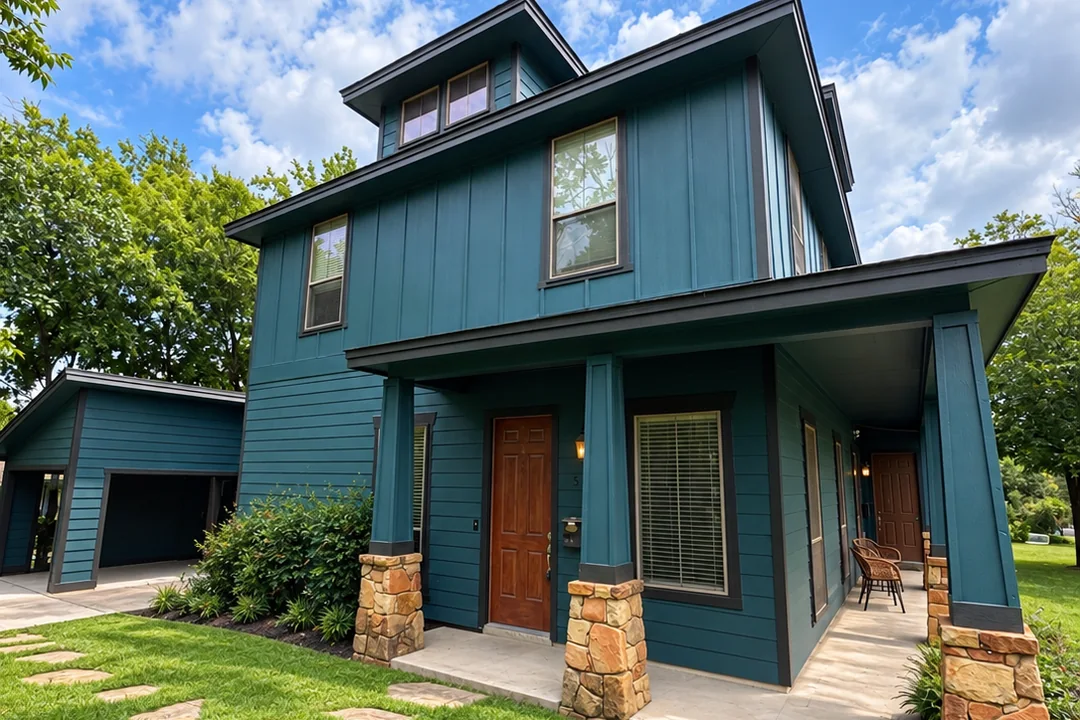
The transitional house in Hyde Park. See transitional housing in Hyde Park
Back in Bell County, the people who noticed stay involved.
If the eating disorder surfaced in a Temple exam room or during a checkup at Fort Hood, the clinician who caught it deserves to know what happened next. With your written permission, we keep your primary care doctor, therapist, psychiatrist, or dietitian informed during treatment and send a clear plan when you step down, so care at home continues rather than starting from scratch.
Family belongs in it too. The drive is short enough that a spouse or parent can come down for family education and be home the same night. For the person doing the worrying, our guide on how to help someone with an eating disorder is a sensible first read.
For support between appointments, in Bell County and statewide:
- Texas Health and Human Services: Mental Health and Substance UseState mental health services and crisis contacts, plus a county lookup for the Bell County mental health authority.
- 988 Suicide and Crisis LifelineCall or text 988 at any hour if things feel unsafe; press 1 to reach the Veterans Crisis Line.
More for Killeen-Temple adults, in one place.
Everything for Killeen-Temple: every service, the drive, the house →Or find your Texas city →
- Eating disorder treatment for Killeen-Temple adultsThe full picture: levels of care, the team, and how adults decide what fits.This page
- Anorexia treatment for Killeen-Temple adultsRestriction, weight restoration, and the fear underneath both.→
- Bulimia treatment for Killeen-Temple adultsBinge and purge cycles, treated with structure and without shame.→
- Eating disorder PHP for Killeen-Temple adultsThirty hours a week of structured care at our Austin center.→
- Eating disorder IOP for Killeen-Temple adultsNine hours a week of groups, plus weekly individual and dietitian sessions.→
What Killeen-Temple adults ask before they call.
Straight answers for Killeen-Temple adults. If yours is not here, call and ask it.
Can you check whether my military or Bell County employer plan covers care in Austin?
Yes, and it is worth doing before you plan anything else. Send us your plan details or call, and we will look at how your coverage treats PHP and IOP in Austin. If your coverage comes through the military, your plan administrator can tell you what it requires before care begins, and we can help you prepare for that call. If a claim on a Texas employer plan is ever denied, the Texas Department of Insurance offers free help with appeals.
Is Empowered an option if my eating disorder came up during a Temple hospital stay or doctor's visit?
Yes, if you are medically stable enough for PHP or IOP. A Temple physician who notices restriction, purging, or a worrying lab result may have stabilized you, but ongoing eating disorder care is a different job, and it is the one we do. In that case the assessment in Austin is the next step. If you still need inpatient or residential care, we will tell you and help you find it. Your doctor can read our notes on eating disorder red flags for medical providers.
How long are Killeen adults usually away from work for eating disorder treatment?
We will not guess at a number before we have met you, because it depends on the level of care and how treatment goes. IOP is 9 hours a week, and some adults keep working around it while driving down from Killeen. PHP is 30 hours a week and usually means stepping away from work for a stretch. Your HR office or command can explain what leave is available, and our guide to working while in eating disorder treatment helps you plan that conversation.
Can a spouse in Killeen call admissions on behalf of an adult partner?
Yes. A spouse can call to ask questions, describe what they are seeing at home, and learn how admissions works. Because Empowered treats adults 18 and older, starting treatment is your partner’s decision, and we will need to speak with them directly before an assessment. If deployment, shift work, or plain fear makes that conversation hard to start, we can help you think through how to raise it.
Whether you commute or stay in Austin, the first step is the same phone call.
Call to talk through what has been happening, whether a commute or the house makes more sense from where you live, and how your plan covers each level of care.