
About 100 miles from WacoAdults 18+In person in Austin
Eating disorder treatment for Waco adults when campus counseling or weekly therapy is no longer enough.
Empowered Treatment is an adult eating disorder program in Austin, about 100 miles down I-35 from Waco, offering partial hospitalization and intensive outpatient care, with a room in our Hyde Park house when the drive is too much. If the counselor you see at Baylor, or the therapist you squeeze in after a shift, can no longer keep pace with what food is doing to your days, this is the next level of care.
about100miles
About 1.5 to 2 hours each way by car. I-35 south the whole way, traffic-dependent through Temple and Round Rock.
Other Texas cities we serve, by distance
- 30 hrsa week in partial hospitalization: supported meals, groups, therapy, dietitian, medical and psychiatric care
- 9 hrsa week of group programming in IOP, plus weekly individual and dietitian sessions
- 1 housein Hyde Park, alongside PHP or IOP, with shared meals and a room of your own
- 18+adults only, with every hour of care in person at our Austin center
Weekly care works until the disorder outgrows the hour you give it.
In Waco the pattern often hides inside an ordinary schedule. A long shift at the hospital or the plant leaves no one watching what you eat on break. A parent in Hewitt feeds everyone else first and calls the leftovers dinner. A Baylor student skips the dining hall, logs extra miles along the Brazos, and tells the counseling center things are better than they are. None of it looks like an emergency, which is exactly how it lasts.
Campus counseling and a weekly therapist do real work, and for plenty of people they are enough. They were not designed for a disorder that needs supported meals, medical monitoring, and a dietitian at the table several times a week, the work an eating disorder treatment center is built around. When behaviors grow in the gaps between appointments, the problem is the dose of care, not your effort, and our guide on when weekly therapy is not enough walks through that shift.
The name of the disorder matters less than the pattern. Restricting, bingeing, purging, or avoiding foods out of fear each has its own Waco page, including anorexia treatment for Waco adults and bulimia treatment for Waco adults, and OSFED treatment at our Austin center covers the patterns that fit no single label. You can read what we treat at our Austin center first, though a call works just as well.
Signs the counseling hour is no longer holding the week.
If you already see someone in Waco, the question is not whether you have help. It is whether there is enough of it. These patterns point toward more structure:
- The plan fades before the next meal.You leave a session clear about what to try, and by the time you are home the eating disorder has rewritten it.
- Your shifts or your semester give it cover.Night work, back-to-back shifts, or a packed class schedule make skipped and secret meals easy to explain.
- Your body has started to object.Dizziness, a racing heart, fainting, missed periods, or lab results your Waco doctor wants to repeat.
- Something else is getting louder.Low mood, anxiety, obsessive thoughts, or old trauma are wound into how you eat, and treating one at a time has not worked.
- People have stopped accepting the explanations.A spouse, roommate, or parent has raised it more than once, and the excuses are starting to tire you too.
- Every reset lasts a few days.Promises to eat more, binge less, or stop compensating hold briefly, then the pattern returns stronger than before.
None of this has to become a crisis before you call. Two or three together are reason enough to talk about level of care.
Two levels of care in Austin, and one team across both.
Treatment happens in person at our center on Spicewood Springs Road. The same team carries your care across both levels, so you never have to retell your history to strangers halfway through.
PHP, when the disorder fills the day
Our eating disorder PHP for Waco adults runs 30 hours a week, which from about 100 miles away usually means a room in Austin and a planned break from work or classes.
IOP, when work or school has to continue
The eating disorder IOP for Waco adults is 9 hours a week of groups plus weekly individual and dietitian sessions, a load light enough that an I-35 commute is realistic for some.
Meals at the center of the work
Dietitians build your meal plan with you and sit beside you at supported meals, because the hardest moments of an eating disorder usually arrive with a plate in front of you.
The rest of your mind, in the same plan
If panic, a flat mood, compulsions, or an old wound sits under the food, the same team works on it here rather than sending you back up the highway with another referral, and trauma-integrated care is part of that when your history calls for it.
If what you need first is inpatient or residential care, or medical stabilization, we will tell you plainly and help you find it. You can see what we offer at our Austin center in full before you call.
About 100 miles of I-35, and two ways to cover it.
From Waco the center is about 100 miles south, about 1.5 to 2 hours on I-35 depending on traffic through Bell and Williamson counties, then a short run west across Northwest Austin. That distance splits the decision in two. An IOP commute is realistic for some adults in Hewitt, Woodway, or China Spring who can protect the drive. PHP is different: 30 hours a week with the highway at both ends of every day is more than recovery should have to carry, so it usually pairs with a room in our transitional housing in Hyde Park, a real house with shared meals and a room of your own.
- A first callTell us what is happening and what you have already tried in Waco. We talk through PHP, IOP, and whether driving or staying makes more sense.
- A benefits checkWe can check your benefits before you decide, whether the plan comes from your employer, your spouse, or a student policy.
- One trip down for the assessmentYou meet the clinical team in person and leave with a recommended level of care and a start date.
- A decision about nightsCommute or stay. If you stay, the room is planned around your start date; ask us directly about cost and availability.
- A plan that drives home with youBefore you step down, aftercare is built with you and, with your written permission, shared with the Waco clinicians you choose.
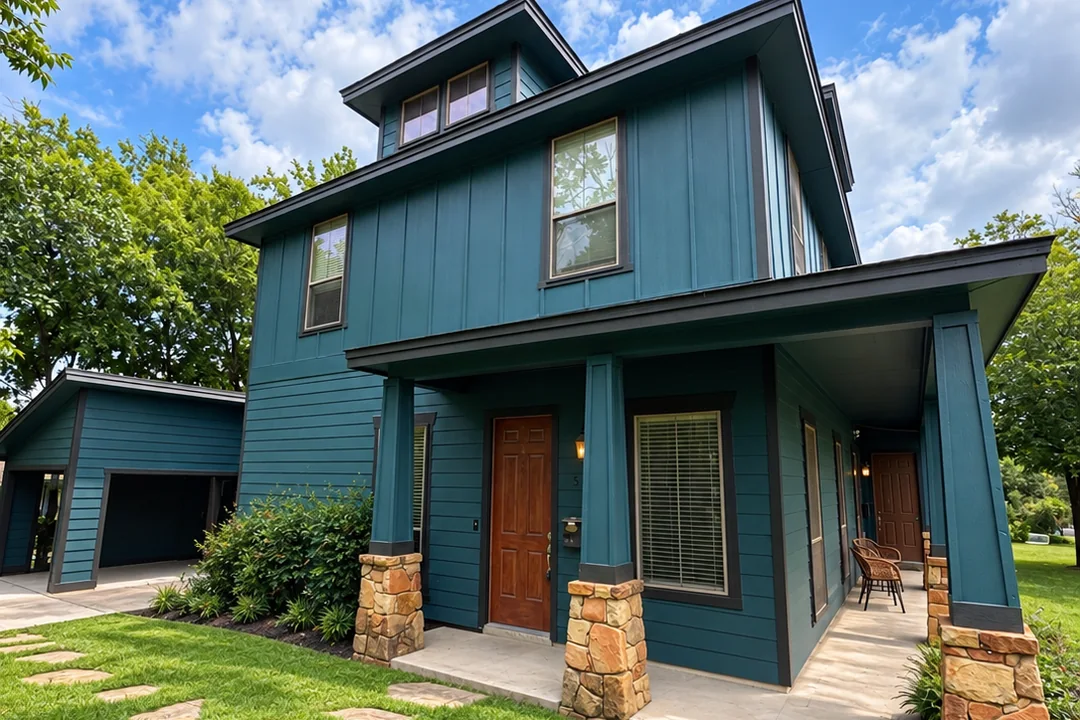
The transitional house in Hyde Park. See transitional housing in Hyde Park
Back in Waco, with the people who already know you.
The point of a stretch in Austin is a steadier life in Waco, not a new one somewhere else. With your written permission, we coordinate with the therapist, dietitian, psychiatrist, or family doctor you see at home, and for Baylor students with the campus counseling team, so they know what changed and what to watch for in the first weeks back.
Family can stay close through it. A parent in Woodway or a partner in McGregor can make the drive for a visit, and our family education helps the people around you understand what recovery asks of them. If you are the one who is worried, begin with how to help someone with an eating disorder.
For support between appointments in McLennan County and across Texas:
- Texas Health and Human Services: Mental Health and Substance UseCrisis contacts and the state’s county lookup for the mental health authority serving McLennan County.
- NAMI TexasFamily-to-Family classes and peer support groups across the state, for Waco relatives who want to understand what you are facing.
More for Waco adults, in one place.
Everything for Waco: every service, the drive, the house →Or find your Texas city →
- Eating disorder treatment for Waco adultsThe full picture: levels of care, the team, and how adults decide what fits.This page
- Anorexia treatment for Waco adultsRestriction, weight restoration, and the fear underneath both.→
- Bulimia treatment for Waco adultsBinge and purge cycles, treated with structure and without shame.→
- Eating disorder PHP for Waco adultsThirty hours a week of structured care at our Austin center.→
- Eating disorder IOP for Waco adultsNine hours a week of groups, plus weekly individual and dietitian sessions.→
What Waco adults ask before they call.
Straight answers to the questions we hear most. If yours is not here, call and ask it.
Will my Waco employer plan, or my spouse’s plan, pay for treatment at your Austin center?
That depends on the plan itself, and we would rather find out with you than leave you guessing. Whether coverage comes through your own Waco job or your spouse’s, we can check your benefits before you decide, including how the plan treats PHP, IOP, and out-of-network care. Start at verify your insurance or call us, and ask about housing in the same conversation.
Can I take a medical withdrawal from Baylor for treatment?
That decision belongs to Baylor, so the dean of students office or your academic advisor is the right place to ask about withdrawal or a reduced course load. What we can help with is the clinical side: whether PHP needs a full break from classes or whether IOP could sit beside a lighter schedule. Ask us what paperwork you need, and we will tell you what we can provide with your written permission.
Is Waco close enough that family from Hewitt or Woodway can visit on weekends?
Yes. At about 100 miles, roughly 1.5 to 2 hours on I-35, a visit is a day trip or a single overnight for family in Hewitt or Woodway. Visits go better when you plan them with your therapist, so a parent or partner arrives knowing how the week went and how to sit at a meal without commentary.
I am not sure what I have counts as an eating disorder. Should a Waco adult still call?
Yes. You do not need a diagnosis, a referral from a Waco doctor, or a certain weight to pick up the phone. Tell us what eating, exercise, or your body has been doing to your days, and our admissions team will help you work out whether it fits PHP, IOP, another kind of care, or simply a closer watch for now. There is no cost or obligation to ask.
What if a Baylor counselor or my Waco therapist thinks I need more than they can offer?
Then they are doing their job well, and they can be part of the next step. With your permission, a campus counselor or outside therapist can share what they have seen with our admissions team, which makes the assessment faster and more accurate. They can keep a role afterward too, and our note on how campus counselors support students explains how that handoff can work.
The drive down I-35 starts with one conversation, and you set its pace.
A confidential call with our admissions team about what is happening, which level of care fits from Waco, and whether to commute or stay.