
About 70 miles from Killeen-TempleAdults 18+In person in Austin
Anorexia treatment for Killeen-Temple adults, with medical monitoring shared back to your Bell County doctor.
Empowered Treatment provides anorexia treatment for adults at our center in Austin, about 70 miles south of Killeen and Temple, with medical and psychiatric monitoring built into partial hospitalization, and intensive outpatient care as the step back toward home. From Bell County, the doctor who first noticed the weight loss or the abnormal labs can stay informed throughout, with your permission, and pick up the thread when you come home.
about70miles
About 1 to 1.25 hours each way by car. Temple and Belton via I-35 south; Killeen via US-190 east to I-35, or TX-195 south through Florence to Georgetown; Copperas Cove via US-190 and US-183 through Lampasas.
Other Texas cities we serve, by distance
- 30 hrsa week in partial hospitalization: supported meals, groups, therapy, dietitian, medical and psychiatric care
- 9 hrsa week of group programming in IOP, plus weekly individual and dietitian sessions
- 1 housein Hyde Park, alongside PHP or IOP, with shared meals and a room of your own
- 18+adults only, with every hour of care in person at our Austin center
Restriction can look like discipline, right up until the labs come back.
Anorexia nervosa is a serious eating disorder built around restriction: eating far less than the body needs, a fear of gaining weight that does not quiet down as weight falls, and a sense of worth that rises and falls with the scale. It is a mental illness with physical consequences for the heart, bones, hormones, and brain, and it happens in larger bodies too, where it is easier to miss and is sometimes called atypical anorexia.
Around Killeen and Temple, anorexia often wears a respectable disguise. Near Fort Hood, strict eating and extra miles can pass for readiness. In a Temple hospital or clinic, a nurse or technician who barely eats on shift can look dedicated rather than ill. The first person to see the pattern clearly is often a primary care doctor reading a low heart rate, a missed period, or bloodwork that does not add up.
Our anorexia treatment at our Austin center treats both sides at once: the body that needs steady nourishment and medical attention, and the fear underneath that makes eating feel dangerous. If the restriction is driven by texture, fear of choking, or low interest in food rather than fear of weight gain, ARFID treatment for Killeen-Temple adults may describe it better, and the assessment sorts that out.
When your body starts sending reports you can no longer explain away.
Anorexia is good at persuading people that things are fine. These patterns suggest the restriction has gone further than an outpatient appointment every week or two can hold:
- Your doctor wants another look.A slow pulse, low blood pressure, abnormal electrolytes, bone density concerns, or a weight change that prompted a second appointment.
- The cold will not leave.You are cold in a Central Texas summer, your hair is thinning, or you feel dizzy standing up from your desk.
- Training no longer stops.You run or lift through injury, illness, or exhaustion, and rest days feel unbearable rather than earned.
- The rules keep getting stricter.Calorie limits, safe foods, and eating times narrow every few weeks, and breaking a rule brings real panic.
- Meals with others have disappeared.You cook for your family without eating, skip unit or staff gatherings with food, or eat only when nobody can see.
- Weight loss has stopped feeling like enough.Each goal you reach moves, and the fear of gaining is as loud as it was at the start.
Any one of these deserves attention. Several together, especially the medical ones, mean it is time to talk about a higher level of care.
Nourishment and medical attention first, then the fear that drives it.
Anorexia care at Empowered happens in person in Austin, in PHP or IOP depending on how much support your body and your days need. A starved brain grows more rigid and more anxious, so we do not wait for insight before rebuilding nutrition; steady eating is what lets therapy start to work.
Medical monitoring with a line back home
Medical and psychiatric providers watch vital signs, labs, and medication while nutrition is restored. With your permission, what they see is shared with your Temple or Killeen physician, so nobody back home is guessing.
Supported meals with a dietitian
A dietitian plans meals with you, and supported meals mean the hardest moments of the day are not faced alone.
Therapy aimed at the fear
Individual and group therapy work on the fear of weight gain, the rules, and whatever restriction has been managing, whether that is anxiety, control, or trauma.
Exercise put back in proportion
If movement has become compulsive, it is addressed directly and returned gradually, an honest concern for anyone whose job or community prizes fitness.
When restriction is medically unsafe for a day program, we will tell you so and help you find inpatient or residential care first. If you need more structure than IOP gives, a full treatment week from Bell County is set out under eating disorder PHP for Killeen-Temple adults.
About 70 miles from the doctor who referred you, and still in close touch with them.
The center is about 70 miles away, about 1 to 1.25 hours down I-35 from Temple and Belton, or via US-190 from Killeen and Harker Heights. For anorexia, the drive matters in a particular way: early in nutritional rehabilitation, energy is low and concentration is unreliable, which makes a daily round trip both tiring and risky. PHP from Bell County therefore usually pairs with transitional housing in Hyde Park, where shared meals continue after the program day ends. An IOP commute becomes realistic for some adults later, once eating is steadier.
- Tell us what your doctor foundOn the first call, share any recent labs, vital signs, or weight concerns. They help us judge whether a day program is safe to start.
- A look at your benefitsWe can check your benefits before you decide, including how your plan covers PHP and the medical side of care.
- An in-person assessmentMedical, psychiatric, nutritional, and therapy questions, answered in Austin, with a recommended level of care at the end.
- Settling in to the houseIf you are starting in PHP, a room in Hyde Park means the evening meal is supported too. Cost and availability depend on your situation, so ask us directly.
- Stepping back toward Bell CountyAs eating steadies, care can move to IOP and the drive home, while your Temple or Killeen doctor takes up the medical follow-up.
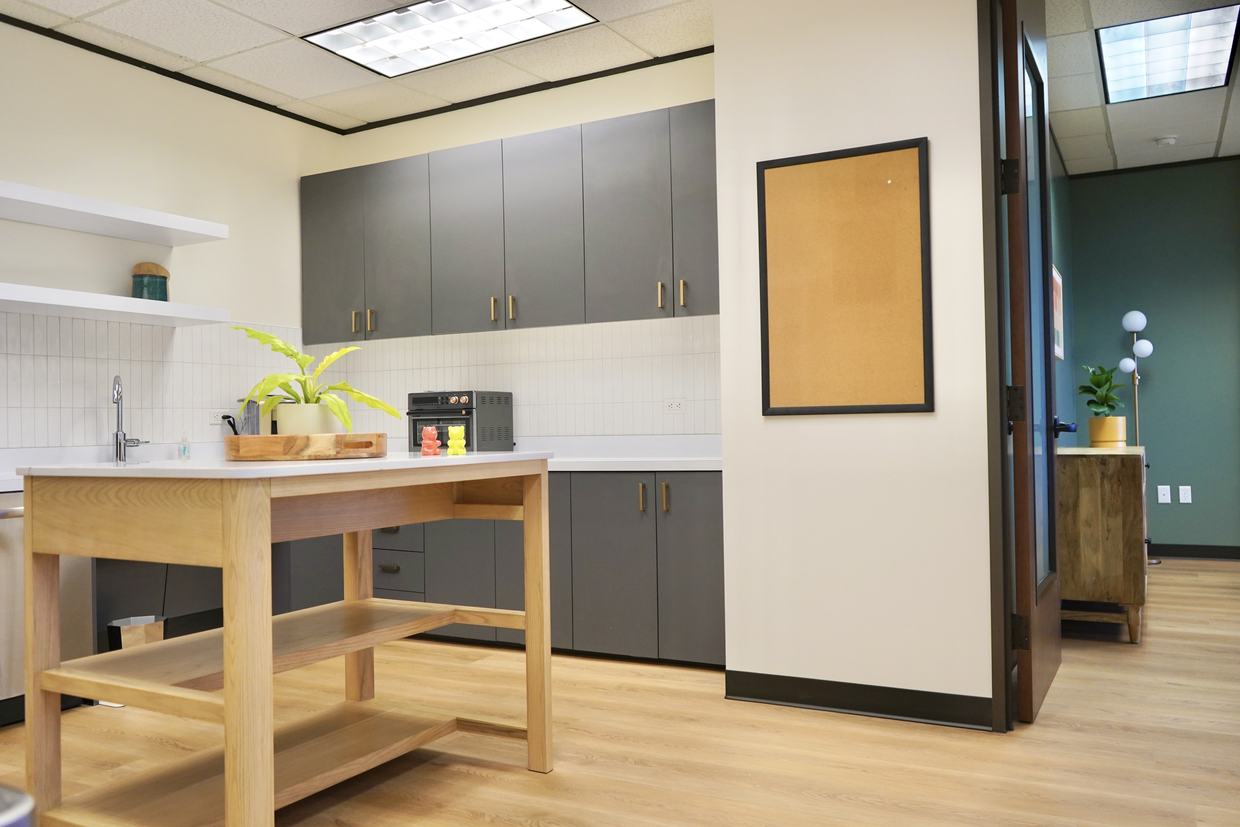
Inside our center on Spicewood Springs Road, Northwest Austin.
Your Bell County doctor gets the full picture, not a discharge note.
Anorexia recovery needs medical follow-up after treatment ends, so the handoff to your physician is planned from the start rather than assembled on the last day. With written permission, we can share weight trends, lab results, medication changes, and what to watch for, whether your primary care is in Temple, in Killeen, or at a military treatment facility. Your therapist and dietitian at home can receive the same plan.
A partner or parent in Copperas Cove or Salado can make the drive for family education and learn what helpful support at the table actually looks like. If running, rucking, or gym culture has been part of the illness, our article on whether your exercise is still healthy gives you language for that conversation at home.
Support in Texas for you and the people around you:
- NAMI TexasFamily-to-Family classes and support groups for relatives learning how to help an adult with a serious mental illness.
- Texas Health and Human Services: Mental Health and Substance UseState mental health services and crisis lines, with a county lookup for the mental health authority in Bell and the counties around it.
More for Killeen-Temple adults, in one place.
Everything for Killeen-Temple: every service, the drive, the house →Or find your Texas city →
- Anorexia treatment for Killeen-Temple adultsRestriction, weight restoration, and the fear underneath both.This page
- Eating disorder treatment for Killeen-Temple adultsThe full picture: levels of care, the team, and how adults decide what fits.→
- Eating disorder PHP for Killeen-Temple adultsThirty hours a week of structured care at our Austin center.→
- ARFID treatment for Killeen-Temple adultsAdult care for food avoidance driven by fear, texture, or low appetite.→
- Bulimia treatment for Killeen-Temple adultsBinge and purge cycles, treated with structure and without shame.→
What Killeen-Temple adults ask before they call.
Straight answers to the questions we hear most. If yours is not here, call and ask it.
Can my Temple doctor receive updates during anorexia treatment?
Yes, once you sign a release saying who may receive what. Your Temple physician can get regular updates on weight, vital signs, labs, and medication changes, and can call our medical team with questions. That matters for anorexia in particular, because the doctor who sees you after treatment needs to know what stabilized and what still needs watching. You decide who is included, and you can change that at any time.
I am in my forties, work at a Temple hospital, and anorexia came back in midlife. Will I be the oldest one in the room?
Age is never a reason to wait. Empowered treats adults 18 and older, and anorexia returning in midlife, after years of quiet, is something our clinicians treat with the same seriousness as a first episode. Working in healthcare can add its own shame. Our article on healthcare workers with eating disorders speaks to it directly.
Does anorexia treatment address the PT tests and fitness culture around Fort Hood?
Yes, directly. When fitness standards, unit workouts, or a training culture have fed the restriction, therapy looks at how the job and the illness got tangled together, and movement is rebuilt gradually rather than simply banned. We do not interpret military fitness requirements; your unit’s medical provider or chain of command can explain how treatment affects testing. What we can do is help you face those conversations with a body that is being fueled again.
How do you work with fear of weight gain?
We treat it as the center of the illness, not a side effect. Nutrition is restored steadily, because a starved brain makes the fear louder, and therapy works on the fear itself: the body checking, the rules, and the meaning weight has taken on. Dietitians help you eat through the anxiety at supported meals instead of around it. The fear rarely disappears all at once, but it can lose its authority over what you eat.
If a doctor in Bell County is worried, a call to us is a reasonable next step.
Talk with our team about what your doctor found, whether PHP or IOP fits, and how your Bell County physician can stay part of the plan.