
For people struggling with eating disorders in Virginia, feeling better can begin with one honest conversation.
Empowered Treatment is an Austin, Texas, eating disorder program built for adults, offering partial hospitalization, intensive outpatient care, and transitional housing nearby for people who come from out of town. If eating has started to feel like a battle you fight every day, you do not have to keep fighting it without help.
High-achieving and hurting can happen at the same time.
Virginia asks a lot of people. Federal contractors in Northern Virginia, sailors and shipyard workers in Hampton Roads, students at UVA, Virginia Tech, and VCU, nurses in Roanoke, farmers in the Shenandoah Valley. When schedules are packed and expectations are high, an eating disorder can blend in, disguised as healthy habits, a busy season, or a strict workout plan.
Over time, though, it usually takes more than it gives. You may notice you cannot relax around food, that your mood depends on what you ate, or that you feel panicky when routines change. Maybe others have commented, or maybe nobody knows. Either way, what you are going through is real, and support from a team that specializes in eating disorders can change how the next months look.

Needing help is not the same as failing.
If you are used to handling everything yourself, asking for support can feel like admitting defeat. It is the opposite. Recognizing that an illness needs treatment is a clear-eyed decision, and it takes courage.
A first call with Empowered is a chance to describe what has been happening and hear honest information. Our team will explain how PHP and IOP work and what a typical week looks like. You might also find what recovery actually means reassuring.
How to show up for someone who is struggling
Whether you are a parent in Fairfax, a partner in Norfolk, or a sibling in Charlottesville, it can be painful to watch someone you love pull away from meals and from you. You do not need to diagnose anything. Our article on what not to say helps you avoid common missteps and lead with care.
During treatment, families have a place too. Our family education helps you understand the illness, prepare for meals and holidays together, and support recovery from Virginia or wherever you are.
Somewhere calm at the end of the day.
Traveling from Virginia for care means you will need somewhere to live, and that place can either support recovery or work against it. Our transitional housing is a real house in Austin's Hyde Park neighborhood for clients in PHP or IOP. Residents share routines, meals, and conversation, so you come home each evening to people who get it.
 Shared living spaces
 A room of your own
Treatment that sees the full picture.
Your care at Empowered is shaped by a team, not a single provider. Therapists who specialize in eating disorders, registered dietitians, psychiatric providers, and a family therapist plan together and check in often, keeping nutrition, emotional health, and medical care moving in the same direction. As discharge nears, they help you set up support in Virginia.
Partial hospitalization (PHP)
Full treatment days at our Austin center: supported meals, daily groups, individual therapy, dietitian care, and medical and psychiatric monitoring.
About PHP →Intensive outpatient (IOP)
Group programming plus weekly individual and dietitian sessions, built to fit around work, school, and family once more structure is not needed.
About IOP →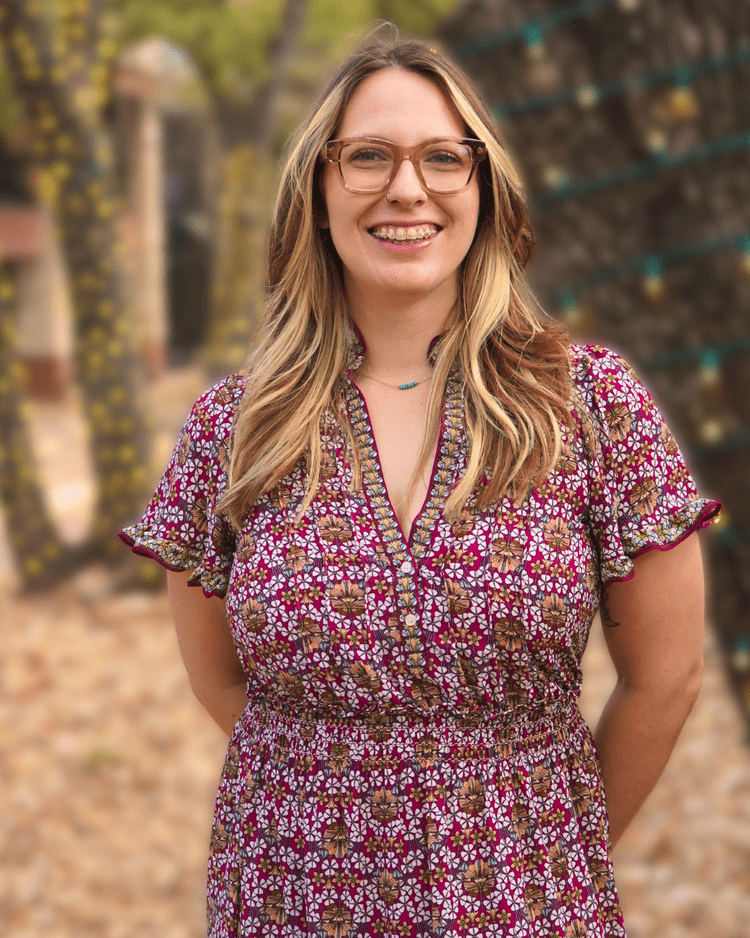
“I like to think of nutrition work as rebuilding a relationship, which takes patience, honesty, and plenty of practice. Together we figure out what your body needs and what makes eating feel safer, then keep at it until those meals start to feel like yours.”Madeline Thomas, MS, RD, LDDietitian, Empowered Treatment
Travel and coverage, without the guesswork.
Getting to Austin from Virginia
Most Virginians fly to Austin. Our team can help you coordinate dates, arrival, and housing so your first day feels manageable.
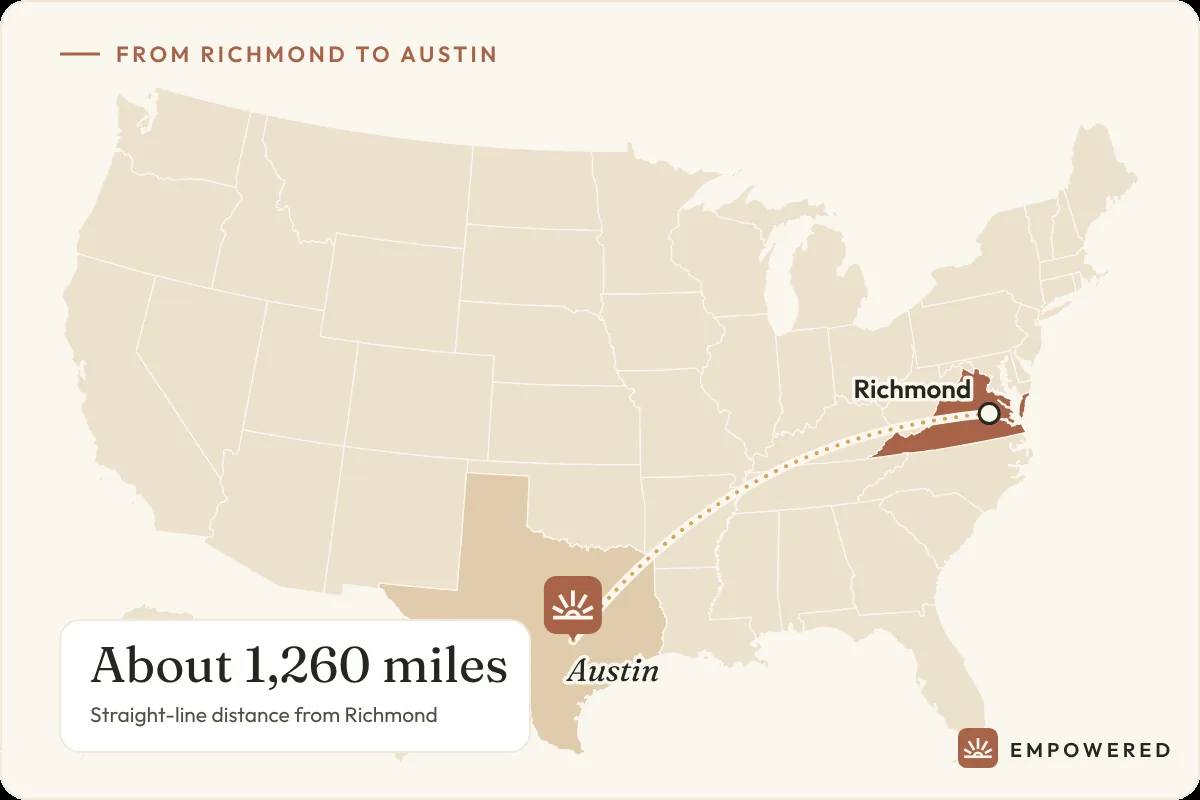
- Distance: about 1,260 miles from Richmond as the crow flies
- Airports: Richmond International Airport (RIC), Norfolk International Airport (ORF), Washington Dulles International Airport (IAD), and Ronald Reagan Washington National Airport (DCA) all have flights to Austin-Bergstrom International Airport (AUS)
- From AUS: our center is roughly a 30-minute drive, depending on traffic
- Housing: transitional housing is available for clients in PHP or IOP
Working through insurance
Coverage for specialty care across state lines can be complicated. Our team can review your benefits and explain them clearly before you make decisions.
- Use our verify insurance page, or call to check benefits with our team
- If your plan is based in Virginia, ask how it covers out-of-network partial hospitalization and IOP in Texas; we can help you prepare the questions
- The Virginia Bureau of Insurance, part of the State Corporation Commission, assists consumers with insurance questions and concerns
- Read eating disorder treatment costs: what to know for more on planning
Support that follows you home to Virginia.
Lasting recovery needs support beyond any single program. These resources in Virginia can help you and your family keep care going after treatment, from the Blue Ridge to the Chesapeake Bay.
- Virginia Department of Behavioral Health and Developmental ServicesThe state behavioral health agency, with crisis information, including 988, and a way to find your Community Services Board.
- NAMI VirginiaThe state organization of the National Alliance on Mental Illness, with family education, support groups, and advocacy.
- Virginia Bureau of InsuranceState insurance regulator with consumer contact lines for questions and concerns about insurers.
- 988 Suicide & Crisis LifelineCall or text 988, any time, from anywhere in the United States. In an emergency, call 911.
Virginians often ask us these.
I work for the federal government or a contractor. Can I take time off for treatment?
Many people use medical leave for a higher level of care. Rules differ by employer, so check with HR. Our articles on telling your employer about treatment and working while in treatment can help you plan.
Is Austin too far from Virginia to make sense?
It is a significant trip, and only you can decide whether it fits. Some people value a setting away from daily pressures and the option of transitional housing. Our team can talk it through without pushing you either way.
Do you treat ARFID?
Yes. We treat adults with ARFID, along with anorexia, bulimia, binge eating disorder, and OSFED. ARFID is not about body image for most people, and treatment looks different as a result. Read more on our ARFID page.
What if I have anxiety or OCD along with an eating disorder?
That is common, and we treat co-occurring conditions as part of one plan. Learn more about eating disorders and anxiety and eating disorders and OCD.
More for Virginia
Articles and guides for readers in Virginia.
Help can start with a single call.
Talk with someone from our clinical team about where things stand and what level of care might help. It costs nothing, and you stay in charge of every decision.