
About 165 miles from HoustonAdults 18+In person in Austin
Eating disorder treatment for Houston adults, with a room in Austin and a plan for coming home.
Empowered Treatment gives Houston adults one eating disorder team in Austin, about 165 miles west: partial hospitalization, intensive outpatient care, and a room in our Hyde Park house while treatment runs. Whether the drive starts in Katy, The Woodlands, or Sugar Land, the shape is the same: you live in Austin while the program runs, then return with a plan your Houston providers can carry forward.
about165miles
About 2.5 to 3 hours each way by car. Usually US-290 from northwest Houston or I-10 then TX-71 from the west side.
Other Texas cities we serve, by distance
- 30 hrsa week in partial hospitalization: supported meals, groups, therapy, dietitian, medical and psychiatric care
- 9 hrsa week of group programming in IOP, plus weekly individual and dietitian sessions
- 1 housein Hyde Park, alongside PHP or IOP, with shared meals and a room of your own
- 18+adults only, with every hour of care in person at our Austin center
An eating disorder rarely looks like one from across the room.
Houston makes it easy to keep going. A long commute absorbs a skipped lunch, the gym becomes a standing appointment, and a late binge happens after the house goes quiet. From the outside, life looks on track, which is exactly how an eating disorder can last for years in adults who are capable, busy, and tired.
Eating disorders are serious mental health conditions with real medical effects, and they reach people of every size, background, and age. Some patterns have a clear name, and anorexia treatment for Houston adults and bulimia treatment for Houston adults each have their own page. Many patterns do not fit a single label, which is why we also offer OSFED treatment at our Austin center.
Searching a metro this spread out for an eating disorder treatment center can become a project of its own, with every option a different drive and a different set of rules. Underneath any label sits a simpler question: whether food, weight, or exercise now makes more of your decisions than you do. Everything we treat at our Austin center is listed on one page, though nobody has to find themselves on a list before calling.
Signs that weekly appointments are no longer enough.
You may already see a therapist or dietitian in Houston. The question is rarely whether help exists. It is whether the amount of help matches what is happening. These patterns suggest it may be time for more structure:
- Sessions are not holding.You leave with a plan and lose it by the next meal, or behaviors are growing in the days between visits.
- Your body is sending signals.Dizziness, fainting, a racing heart, missed periods, or lab results your doctor wants to recheck.
- Food has taken over the calendar.Meals, workouts, or binges are planned around, hidden, or negotiated, and work or family life is bending to fit.
- Other struggles are louder.Anxiety, depression, obsessive thoughts, or trauma symptoms are tangled up with eating and hard to treat apart.
- Someone close has said something.A partner, parent, or friend has raised concern more than once, even if you are not sure they are right.
- You are tired of managing it alone.Keeping the eating disorder hidden has become a second job, and you would like to put it down.
None of this requires a crisis. If two or three sound familiar, a conversation with our admissions team can help you sort out which level of care fits.
One team, one building, one plan you can see.
Across a metro the size of Houston, adults often assemble care piece by piece: a therapist on one side of town, a dietitian on the other, a psychiatrist with a long waitlist. At Empowered, those people work inside one program and plan your care together. Treatment happens in person at our center on Spicewood Springs Road, where one eating disorder program runs at two levels of care.
Partial hospitalization, when you need the whole day
From Houston, a full program day only works if you are living in Austin, which is what the house is for. Our eating disorder PHP for Houston adults fills 30 hours a week with supported meals, daily groups, individual therapy, dietitian care, and medical and psychiatric monitoring.
Intensive outpatient, when you need structure around a life
The eating disorder IOP for Houston adults is 9 hours a week of group programming, plus weekly individual and dietitian sessions.
Meals with someone beside you
Dietitians plan with you and sit with you at supported meals, which is where much of the hardest work happens.
The whole picture, treated together
Anxiety, depression, OCD, and trauma are treated alongside the eating disorder, with trauma-integrated care when trauma is part of the story.
If you need inpatient or residential care first, or medical stabilization, we will say so plainly and help you find it. Our page on what we offer in Austin shows how the pieces fit together.
Treatment in Austin, a home base in Hyde Park.
The center is about 165 miles away, usually by US-290 from northwest Houston or I-10 and then TX-71 from the west side. That puts a daily round trip out of reach for PHP or IOP, so treatment from Houston usually pairs with a room in our transitional housing in Hyde Park: a real house with shared meals and a room of your own, where evenings are spent somewhere steady instead of on the highway or alone in a hotel.
- A first callTell us what has been happening. We listen, answer questions, and talk through whether coming to Austin makes sense right now.
- A benefits checkBefore you decide anything, we can check your benefits, including how your plan treats PHP, IOP, and out-of-network care.
- An assessment in AustinYou meet the clinical team in person, and together you settle on a level of care and a start date.
- Moving into the houseIf you are staying with us, you arrive to a room that is ready. Cost and availability depend on your situation, so ask us directly.
- A plan for coming homeBefore you step down, we build your aftercare with you and, with your permission, share it with the Houston providers you choose.
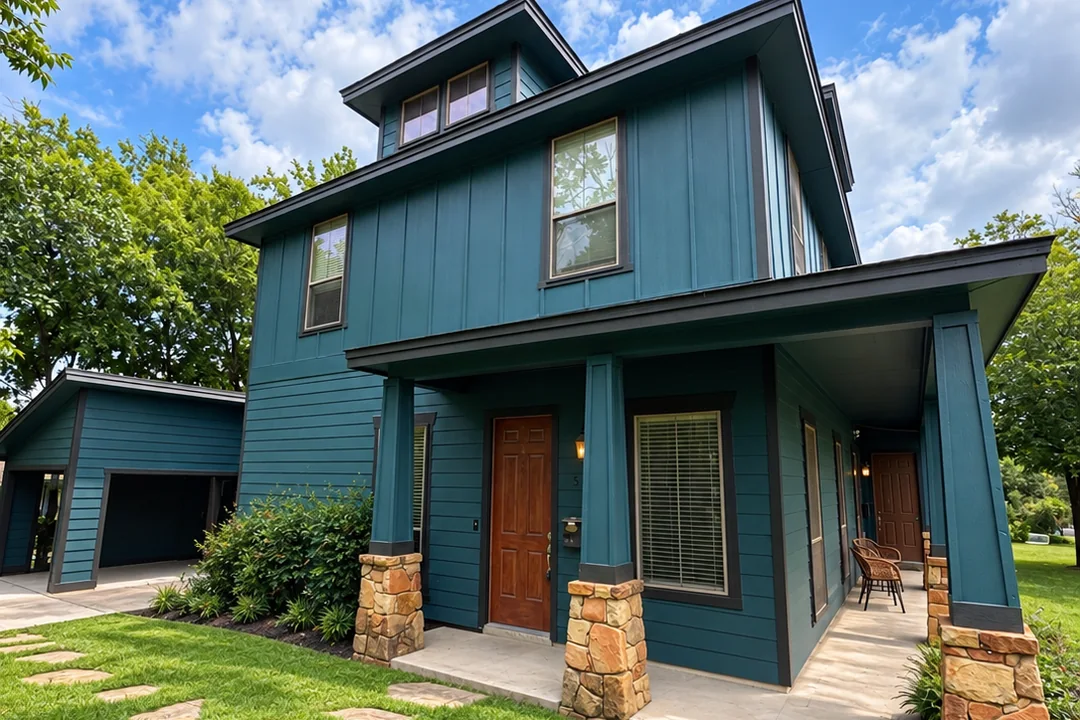
The transitional house in Hyde Park. See transitional housing in Hyde Park
“When someone comes to us from Houston, a lot of the early work is helping them feel settled, so their energy can go into treatment instead of logistics. Having a steady place to come home to each evening can make the rest of the day feel more possible.”Maryam Mahmoud, LCSW, LCDC, Clinical Director of Transitional Services
Your Houston team stays in the loop.
A few weeks in Austin should not mean starting over when you return. With your written permission, we coordinate with the therapist, dietitian, psychiatrist, or primary care doctor you already see, so they know what changed here and what to watch for once you are home.
Family belongs in this too. Houston is close enough for weekend visits, and our family education helps partners, parents, and siblings understand what recovery asks of everyone. If you are the one who is worried, our guide on how to help someone with an eating disorder is a good place to begin.
These Houston and Texas organizations can help keep support in place between appointments:
- The Harris Center for Mental Health and IDDHarris County’s mental health authority, with crisis services and community mental health programs.
- Mental Health America of Greater HoustonEducation, advocacy, and mental health resources for people and families across the Houston region.
- NAMI TexasFree family education, including Family-to-Family, plus support groups for people affected by mental illness and those who love them.
More for Houston adults, in one place.
Everything for Houston: every service, the drive, the house →Or find your Texas city →
- Eating disorder treatment for Houston adultsThe full picture: levels of care, the team, and how adults decide what fits.This page
- Anorexia treatment for Houston adultsRestriction, weight restoration, and the fear underneath both.→
- Bulimia treatment for Houston adultsBinge and purge cycles, treated with structure and without shame.→
- Eating disorder PHP for Houston adultsThirty hours a week of structured care at our Austin center.→
- Eating disorder IOP for Houston adultsNine hours a week of groups, plus weekly individual and dietitian sessions.→
What Houston adults ask before they call.
Straight answers to the questions we hear most. If yours is not here, call and ask it.
Can you verify my Houston-based insurance before I book a room in Austin?
Yes, and it should happen before the room is booked. A house about 165 miles from Houston is a real commitment, and you deserve to know what your plan covers first. Check your benefits with us, and we will look at how your plan treats PHP, IOP, and out-of-network care. Housing cost depends on your situation, so ask us directly in the same conversation. If a claim is ever denied, the Texas Department of Insurance offers free help with appeals.
How do I explain a few weeks in Austin to my Houston employer?
A few weeks living about 165 miles from the office is time away people will notice, so the real question is what to call it, and that part is yours to decide. Some people say only that they need medical leave and stop there. Your HR office can tell you what leave your job offers and what paperwork it needs, and we will tell you what we can provide with your written permission. Our page on confidentiality in eating disorder treatment explains what stays private, and we can talk through that conversation with you before you have it. For the bigger picture, read working while in eating disorder treatment.
What is the transitional house like for someone used to living alone in a Houston apartment?
You keep a room of your own, and the shared rooms are where meals and evenings happen. It is a real house in Austin’s Hyde Park neighborhood, not a dorm, and the structure exists so you are not carrying recovery alone at the end of a long treatment day. If privacy matters to you, say so when you call, and we will walk you through what an ordinary evening there looks like before you decide.
My symptoms do not fit anorexia or bulimia neatly. Is Empowered still the right call from Houston?
Often, yes. Across Houston, adults tend to collect a diagnosis in pieces: disordered eating from one provider, anxiety from another, a comment about weight at a primary care visit, and none of it quite adds up. The assessment in Austin is where those pieces are read together, including the possibility of OSFED, binge eating, or ARFID. You do not need a settled diagnosis to call, and if a different kind of care would serve you better, we will tell you and help you find it.
Houston to Austin is a drive, and the first step is only a phone call.
Talk with our team about what has been happening, which level of care fits, and what a few weeks in Austin would involve for you and the people at home.