
About 195 miles from Dallas-Fort WorthAdults 18+In person in Austin
Eating disorder treatment for Dallas-Fort Worth adults, from Collin County to Tarrant County, about 195 miles south.
Empowered Treatment is an adult eating disorder program in Austin, about 195 miles from Dallas-Fort Worth, with partial hospitalization, intensive outpatient care, and transitional housing run by one clinical team. From anywhere in the metroplex, Wylie to Fort Worth, the trip usually means a few weeks in our Hyde Park house, then a plan your providers at home can carry forward.
about195miles
About 3 to 3.5 hours each way by car. I-35E from Dallas or I-35W from Fort Worth, joining I-35 at Hillsboro.
Other Texas cities we serve, by distance
- 30 hrsa week in partial hospitalization: supported meals, groups, therapy, dietitian, medical and psychiatric care
- 9 hrsa week of group programming in IOP, plus weekly individual and dietitian sessions
- 1 housein Hyde Park, alongside PHP or IOP, with shared meals and a room of your own
- 18+adults only, with every hour of care in person at our Austin center
Holding everything together is not the same as being well.
Across the metroplex, an eating disorder tends to hide inside a full calendar. An attorney in Uptown eats at her desk or not at all. A Fort Worth nurse comes off a long shift and eats standing at the counter, or skips it. A parent in Frisco plans every family dinner and barely touches any of it. Capable adults are often the last people anyone checks on, and the first to say they are fine.
Eating disorders are serious psychiatric conditions with medical consequences, and they show up in every body size, gender, and age. Some have familiar names: anorexia treatment for Dallas-Fort Worth adults and bulimia treatment for Dallas-Fort Worth adults each have a page written for North Texas. Others shift over the years or never settle under one label, which is why we also offer OSFED treatment at our Austin center.
What these share is a point where food, weight, or exercise starts choosing for you: which invitation you accept, what you order at the client lunch, whether the drive home includes a stop you would rather nobody saw. Our page on everything we treat at our Austin center lists the conditions, though you can call without having matched yourself to one. From North Dallas, a Tarrant County suburb, or Wylie, a drive of about 195 miles turns into a list of practical questions, and we work through that list with you from the first conversation.
When the help you already have stops matching what is happening.
Plenty of adults in the metroplex already see someone: a Fort Worth eating disorder counselor, a therapist off Central Expressway, a dietitian in Southlake, a doctor who keeps reordering labs. Weekly counseling and a full program are different amounts of care, and moving to a program does not mean giving up your counselor, who can stay on the plan with your permission. The real question is whether the amount of care fits the size of the problem. These patterns suggest it no longer does:
- The week between sessions is where it unravels.You leave each appointment with a plan, and by the next meal the eating disorder has renegotiated it.
- Your labs have become the conversation.A doctor wants to recheck potassium, heart rate, or bone density, or you have fainted, felt your heart race, or stopped having periods.
- Work is absorbing the damage.Lunch disappears into meetings, the drive home covers for a skipped dinner, and your focus is slipping anyway.
- Exercise has stopped being optional.The run or the gym session happens through injury, illness, or exhaustion, because missing it feels unbearable.
- Secrecy costs more than the behavior.Hiding food, wrappers, or skipped meals has turned into a part-time job you are tired of doing.
- Someone has said it out loud.A spouse, roommate, or parent has named their worry more than once, and part of you suspects they are right.
None of this has to reach a crisis before you call. Two or three of these together are reason enough to ask which level of care fits.
Three-plus hours south, everyone treating you works under one roof.
In a place as spread out as North Texas, care often gets assembled from separate offices in separate cities, each one seeing a single slice of the problem. At Empowered, your therapist, dietitian, and psychiatric providers work from the same treatment center on Spicewood Springs Road and plan your care together, at one of two levels.
Partial hospitalization for full treatment days
Our eating disorder PHP for Dallas-Fort Worth adults fills 30 hours a week, and much of PHP happens at the table: meals eaten with clinical support, groups after them, and medical and psychiatric oversight throughout.
Intensive outpatient as the step between
The eating disorder IOP for Dallas-Fort Worth adults keeps 9 hours a week of groups, with your own therapist and dietitian once a week each, so structure loosens gradually before you head north.
A dietitian at the table with you
Meal plans are made with you rather than handed to you, and your dietitian is often in the room when the plan meets an actual plate.
What sits underneath, treated alongside
Anxiety, depression, OCD, and trauma belong to the same plan, with trauma-integrated care when your history calls for it.
If the assessment shows you need inpatient care, residential care, or medical stabilization first, we will tell you plainly and help you find it. Our overview of what we offer at our Austin center shows how the pieces connect.
“A lot of the people I work with have been very good at looking okay. Part of therapy is making room for the parts of them that have not been okay, and finding out what they need instead of what the eating disorder tells them they need.”Sydney Kudeviz, LCSW, Therapist
Two interstates out of the metroplex, one road into Austin.
The center is about 195 miles from the metroplex, roughly 3 to 3.5 hours: I-35E south from Dallas or I-35W from Fort Worth, merging at Hillsboro for the long run south into Austin. That is too far to drive each day for PHP or IOP, so treatment from Dallas-Fort Worth pairs with a room in our transitional house in Hyde Park, where meals are shared, the bedroom is yours, and evenings are spent somewhere steady instead of in a hotel off the interstate.
- A call from wherever you areTell us what has been happening and where in North Texas you live. We will talk through whether a stay in Austin makes sense now, or whether something else should come first.
- Your benefits, before the driveWe can check your benefits before you decide. Dallas and Fort Worth employers offer a wide spread of plans, from the self-funded plan at a large Las Colinas company to a small-firm policy, so we read yours rather than assume, and you know what it says before anyone packs a car.
- An assessment in AustinYou meet the clinical team in person and settle on a level of care and a start date. From the metroplex, driving down the day before can make the morning calmer.
- A room in Hyde ParkIf you are staying with us, your room is ready when you arrive. Cost and availability depend on your situation, so ask us directly.
- A handoff back northBefore you step down, we build aftercare with you and, with your written permission, share it with your own providers in Dallas, Fort Worth, or Collin County.
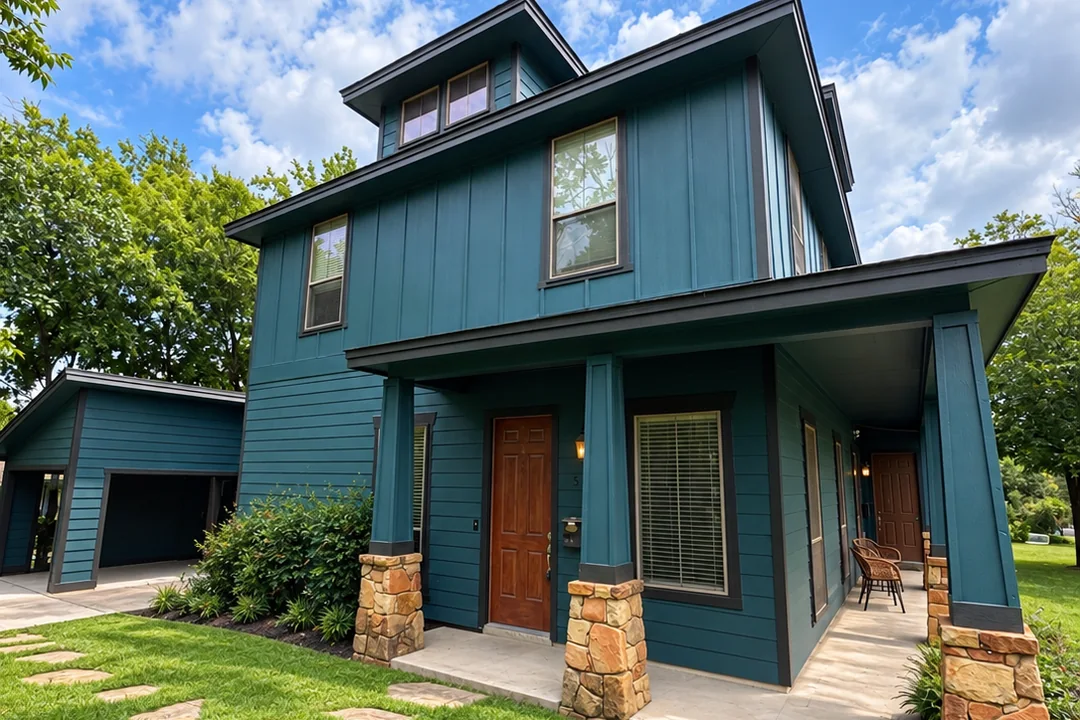
The transitional house in Hyde Park. See transitional housing in Hyde Park
Your metroplex providers pick up where Austin leaves off.
A few weeks in Austin should lead to a life at home that holds, not to a fresh start from zero. If you already have a therapist, dietitian, psychiatrist, or family doctor at home and you sign a release, we talk with them before you leave: what shifted, which meals are still hard, and the early warning signs worth catching.
Family can be part of this from the start. A drive of about 3 to 3.5 hours puts a weekend visit within reach, and our family education gives partners, parents, and grown siblings a clear picture of what recovery will ask of the household. If you are reading on behalf of someone else, begin with how to help someone with an eating disorder.
For support between appointments in Dallas County, Tarrant County, and across Texas:
- Metrocare ServicesCommunity mental health care for adults and families across Dallas County, useful for keeping support in place after you return.
- My Health My Resources of Tarrant CountyTarrant County’s mental health authority, with crisis lines and community behavioral health programs for Fort Worth and Arlington.
- NAMI TexasFree family education and support groups statewide, including classes for the people who love someone in recovery.
- Texas Health and Human Services: Mental Health and Substance UseThe state’s guide to mental health services and crisis contacts, with a county lookup for the public mental health authority anywhere in the metroplex.
Related care for Dallas-Fort Worth adults, in one place.
Everything for Dallas-Fort Worth: every service, the drive, the house →Or find your Texas city →
- Eating disorder treatment for Dallas-Fort Worth adultsThe full picture: levels of care, the team, and how adults decide what fits.This page
- Anorexia treatment for Dallas-Fort Worth adultsRestriction, weight restoration, and the fear underneath both.→
- Bulimia treatment for Dallas-Fort Worth adultsBinge and purge cycles, treated with structure and without shame.→
- Eating disorder PHP for Dallas-Fort Worth adultsThirty hours a week of structured care at our Austin center.→
- Eating disorder IOP for Dallas-Fort Worth adultsNine hours a week of groups, plus weekly individual and dietitian sessions.→
What adults across Dallas-Fort Worth ask before they call.
Straight answers to the questions we hear most. If yours is not here, call and ask it.
Can you run my insurance from a Dallas or Fort Worth employer before I plan the drive of three hours or more?
Yes, and a drive of three hours or more is exactly why it should come first. Send us the card from your Dallas or Fort Worth employer and check your benefits with us; we will tell you what the plan says about each level of care and where it is unclear, before you ask for leave or load the car. The cost of the house is a separate question, so raise it in the same call. If a claim is denied later, the Texas Department of Insurance offers free help with appeals.
I live in Wylie or elsewhere in Collin County. Is Austin realistic for me?
Realistic, yes, as long as you plan for a stay rather than a commute. From Wylie, Plano, or Frisco, getting across Dallas adds time before the drive south even begins, so a daily round trip is off the table. What makes it work is the Hyde Park house: you live in Austin during treatment and drive home when your team agrees you are ready. The first call is where we test that against your job, your family, and your finances, honestly, before you commit to anything.
Is about 195 miles from the metroplex too far for family to visit?
It is a real drive, but it is a weekend drive rather than a flight. A partner or parent can leave Dallas or Fort Worth in the morning and be in Austin by lunch. Visits go more smoothly when they are timed around the program, and family education helps relatives understand what they are walking into. One longer visit can serve better than several rushed ones, and your team can help you decide what fits your family.
I have already tried outpatient therapy in North Dallas. What would a full program change?
Mostly the amount of support around the hardest moments. Weekly therapy gives you an hour to talk about meals that already went badly. In PHP, a clinician sits with you at meals, groups follow them, and your therapist, dietitian, and psychiatric provider work from one shared plan. None of that is a judgment on the work you did in North Dallas, and that therapist may be exactly who you return to. Read when weekly therapy is not enough for a fuller picture.
Do you treat men from Dallas-Fort Worth, or only women?
Adults of every gender, from anywhere in the metroplex. In men, an eating disorder can look like discipline at the gym or a strict diet for a sport, which makes it easy for everyone, including you, to miss. Treatment in Austin is the same program and the same team, adapted to you, and the Hyde Park house is available alongside PHP or IOP; ask us directly about availability for your dates. Read about eating disorders in men, or call and tell us what has been happening.
About 195 miles down I-35, and it starts with one call.
Tell our team what has been happening, and we will help you weigh the level of care, the drive, and a few weeks away from the metroplex against everything waiting at home.