
For people struggling with eating disorders in Wyoming, distance does not have to mean going without care.
Empowered Treatment in Austin, Texas, provides adults with partial hospitalization, intensive outpatient care, and transitional housing, so specialized eating disorder support is within reach even from far away.
Self-reliance is a strength, until it keeps you isolated.
Wyoming asks a lot of people. Long drives between Gillette and Casper, wind that does not quit, winters that stretch into May, and work on ranches, rigs, and highway crews that rarely slows down. Students in Laramie, nurses in Cheyenne, and families in Riverton all manage a great deal on their own. An eating disorder can settle into that independence without anyone noticing.
It might mean eating very little to stay in control, bingeing after a long day alone, or exercising through exhaustion. When specialists are hundreds of miles away, it is easy to decide you will handle it yourself. You do not have to. Reaching out for information is a practical step, the same kind of step you would take for any other health problem.

Asking for help is not giving up control.
Maybe you have kept this to yourself for a long time, or tried to fix it with more discipline. Needing support is not weakness. Eating disorders are health conditions, and they respond to the right kind of care.
A first call is private, with no obligation attached. Someone on our team will listen, ask about your day-to-day life, and talk through whether PHP or IOP could help. If you are weighing a move for treatment, read moving to Austin for eating disorder care.
Being far away does not shut you out.
When a family member travels hundreds of miles for care, the people at home can feel sidelined. You still matter to their recovery. Staying in touch, learning about the illness, and keeping expectations realistic all help. Our page on supporting someone from a distance offers concrete ideas.
Our family education is designed for parents, partners, and siblings who want to understand what their loved one is working on, how to respond during setbacks, and how to prepare home in Wyoming for the transition back.
Not an apartment. A household in recovery.
Many people from Wyoming live far from any eating disorder program, so staying in Austin is usually part of the plan. Our transitional housing is a home in Hyde Park, used alongside PHP or IOP. Residents share chores, meals, and quiet evenings, with staff helping them practice the routines that make returning to life across the Equality State feel possible.
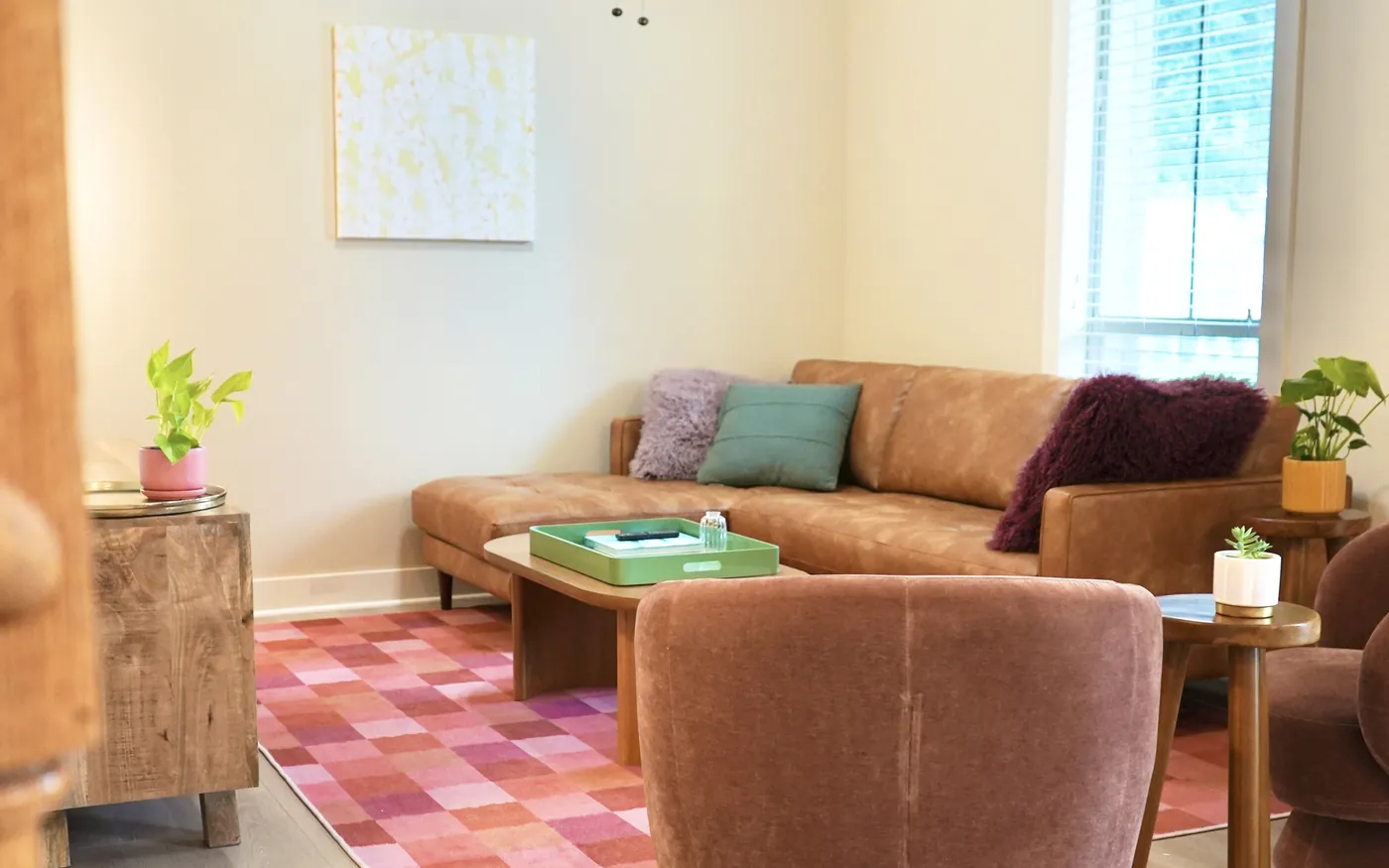 Shared living spaces
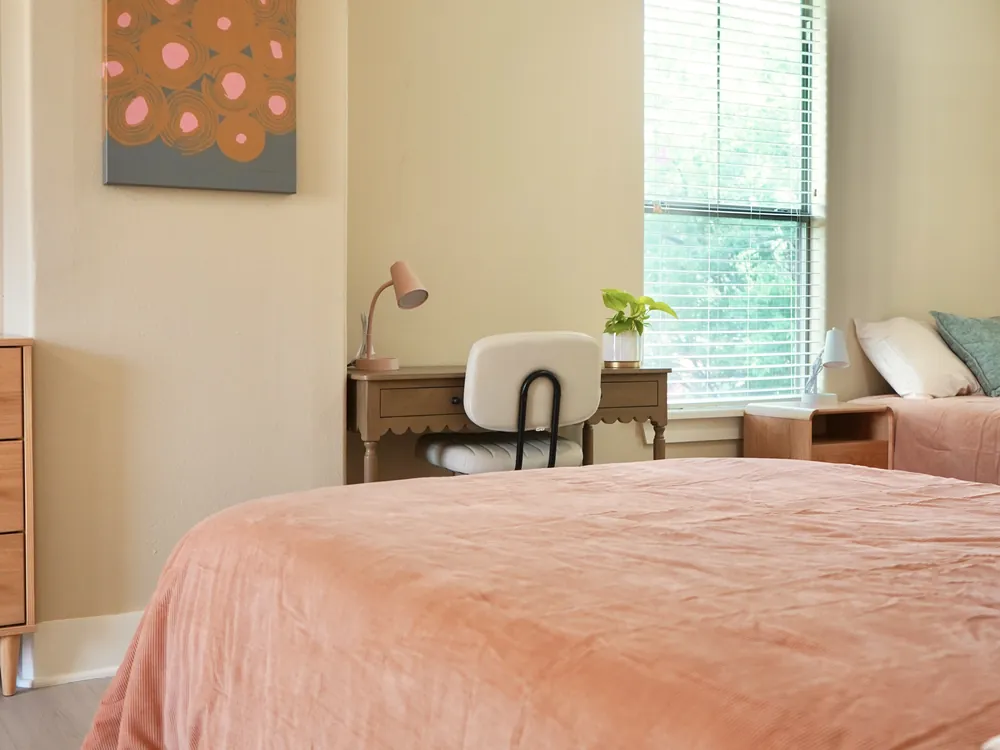 A room of your own
Coordinated care from arrival to aftercare.
Therapists, dietitians, psychiatric providers, and a family therapist share one treatment plan and talk often, so each part of care supports the others. Our transitional services team links what happens in programming with what happens at home each evening. Before you head back to Wyoming, we help you set up providers who can keep supporting you there.
Partial hospitalization (PHP)
Full treatment days at our Austin center: supported meals, daily groups, individual therapy, dietitian care, and medical and psychiatric monitoring.
About PHP →Intensive outpatient (IOP)
Group programming plus weekly individual and dietitian sessions, built to fit around work, school, and family once more structure is not needed.
About IOP →
“Living in our housing gives people a chance to practice recovery in the hours when no group is running, like cooking dinner, unwinding, and getting ready for the next day. We focus on building routines that feel steady enough to take home, so the transition back is something we plan together rather than a sudden drop-off.”Maryam Mahmoud, LCSW, LCDCClinical Director of Transitional Services, Empowered Treatment
Getting here from Wyoming, and paying for it.
From Wyoming to Austin
With long distances at both ends, most people fly and then stay in Austin while attending our center in Northwest Austin.
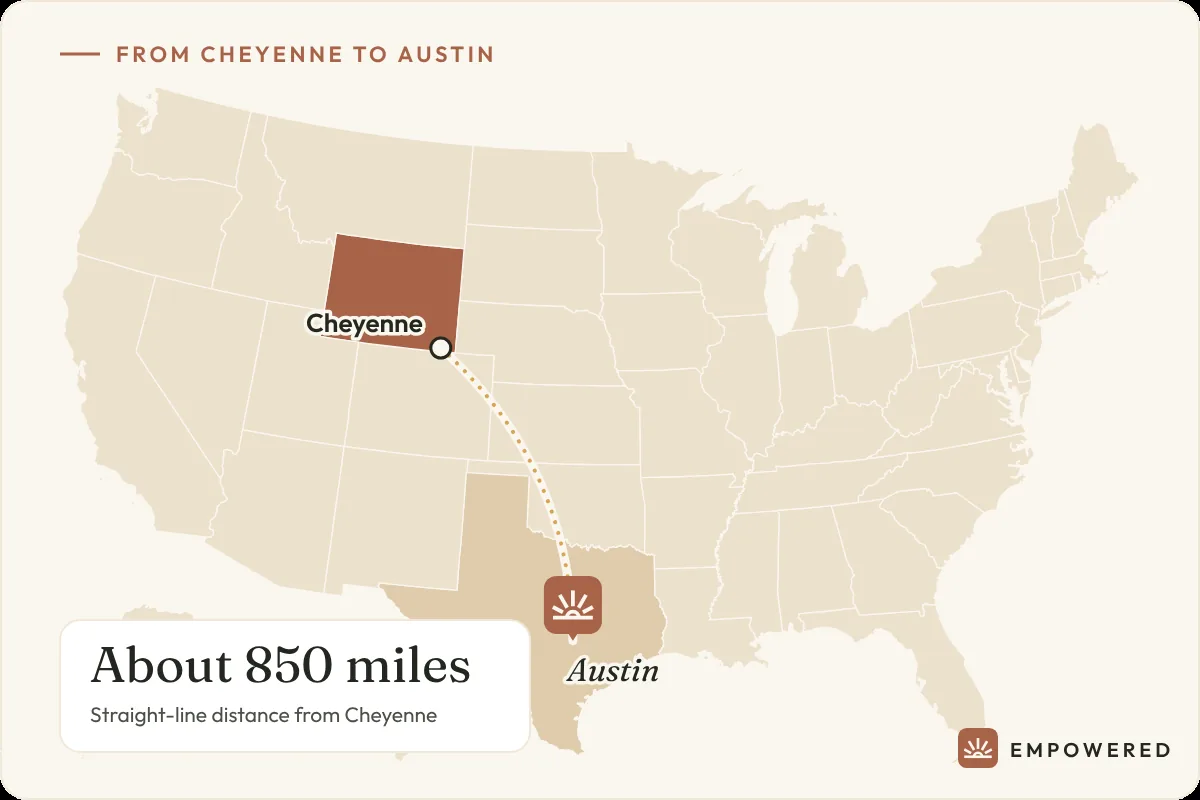
- Distance: about 850 miles from Cheyenne as the crow flies
- Airports: Casper/Natrona County International Airport (CPR) and Jackson Hole Airport (JAC) connect to Austin-Bergstrom International Airport (AUS); from Cheyenne and Laramie, many travelers use Denver International Airport (DEN) in Colorado
- Last leg: our center is about 30 minutes from AUS by car
- Housing: transitional housing can be arranged together with your admission
Insurance basics
We can check your benefits before you travel, including how your plan covers partial hospitalization, intensive outpatient care, and services outside Wyoming.
- Verify your insurance with our online form, or call and we will review it together
- If your plan is based in Wyoming, ask about out-of-network benefits and how it handles care in Texas; our team helps you sort out what to ask
- The Wyoming Department of Insurance has a consumer complaint portal and information on independent review of medical claims
- If you have Wyoming Medicaid, coverage for care outside your home state is usually limited, so call and we'll help you understand what applies
Support for the road back home.
Planning ahead for the return trip is part of recovery. These statewide resources in Wyoming can help you and your family keep care and community in place after treatment.
- Wyoming Department of Health: Behavioral Health DivisionOversees state-funded community mental health and substance use treatment, with staff available by phone to help find services.
- NAMI WyomingSupport and education for individuals, families, and caregivers whose lives are affected by mental illness.
- Wyoming Department of InsuranceConsumer affairs help with policy and claim questions, plus guides for comparing health plans.
- 988 Suicide & Crisis LifelineCall or text 988, any time, from anywhere in the United States. In an emergency, call 911.
What Wyoming families want to know.
Specialized programs are scarce where I live in Wyoming. What are my options?
Many people in rural states travel for higher levels of care and then continue with outpatient support at home. Coming to Austin is one option. We can talk through what you need and whether a program here, paired with our housing, makes sense.
Can I drive down from Wyoming instead of flying?
Some people do, especially if they want their own vehicle while in Austin. It is a long trip, so plan rest stops and meals with support in mind. Our article on recovery while traveling has helpful suggestions.
What is daily life like in transitional housing?
Residents attend programming during the day and return to the house in the evening. Meals, shared responsibilities, and structured downtime are part of the routine, with staff support available. Learn more on our transitional housing page.
Who decides when I am ready to go home?
You and your team decide together, based on medical stability, nutrition, and how well new skills are holding. Many people step down from PHP to IOP first. Our page on how long treatment takes explains more.
More for Wyoming
Articles and guides for readers in Wyoming.
Far from home, but not on your own.
Call to talk with our team about what you are facing and what support could look like in Austin. The call is free and confidential.