
For people struggling with eating disorders in Utah, you can have a life beyond these rules.
Eating disorders can make every day feel like a test you have to pass. Empowered Treatment in Austin, Texas, provides adults with partial hospitalization, intensive outpatient care, and transitional housing, delivered by a team devoted to eating disorder recovery.
Strength and struggle can coexist.
Utah is known for mountains, trails, and an active outdoor culture, and for many people that is a genuine joy. For someone with an eating disorder, though, fitness and food can blur into something compulsive. It might show up in a runner in Ogden, a software developer in Lehi, a University of Utah student, a young parent in St. George, or a ski patroller who never quite feels they have earned a meal.
Some people restrict, some binge, some purge, and many cycle among patterns that leave them exhausted and ashamed. None of that is a character flaw. Eating disorders are serious and treatable, and support from people who specialize in them can change how you relate to food, movement, and yourself. Getting curious about that support is a healthy place to begin.

Recovery is not about being perfect.
If you are used to high standards, it is easy to treat recovery like another goal to master. That pressure can keep you stuck. You do not need to have everything figured out before asking for help. You just need to be willing to start a conversation.
Our admissions team can explain how PHP and IOP work and help you think through what fits. If exercise has become rigid or compulsive, our clinicians will address that too, as part of what we offer.
Supporting a loved one without losing yourself.
Caring about someone with an eating disorder can take a toll. Many families feel worn down by worry, conflict at meals, or the sense that nothing they say helps. Our page on caregiver burnout speaks to that strain and offers ways to protect your own wellbeing.
When your loved one is in treatment with us, family education helps you understand the illness and how to respond in ways that support progress. Families can participate from Utah, and our family therapist can help you navigate hard conversations.
Where you stay shapes how you heal.
Leaving the Wasatch Front or southern Utah for treatment in Texas can feel like a leap. Our transitional housing, a real home in Austin’s Hyde Park neighborhood, gives clients in PHP or IOP a supportive place to live alongside others in recovery. That shared structure can make evenings, weekends, and the first weeks in a new city much easier.
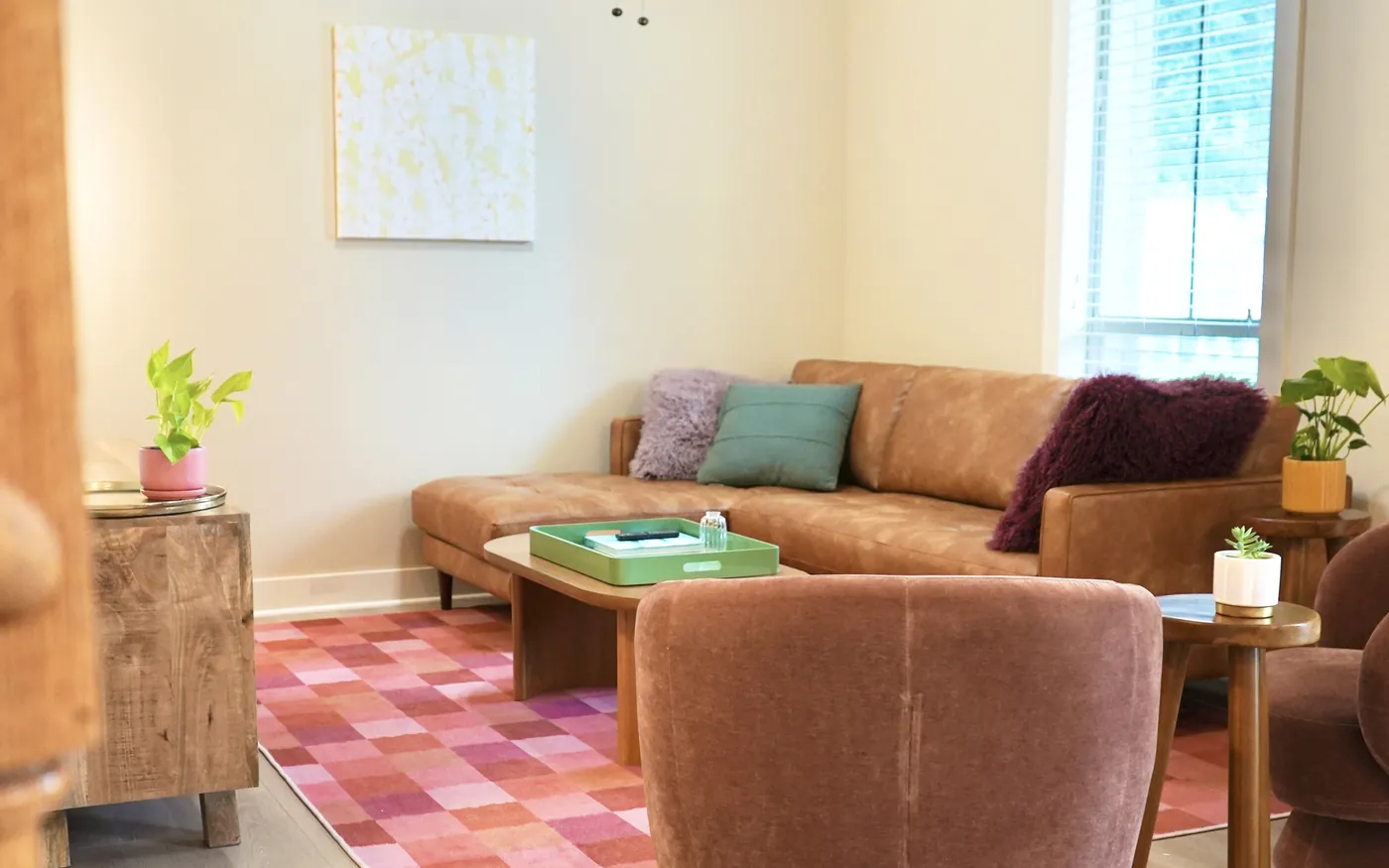 Shared living spaces
 A room of your own
Integrated treatment from day one.
We treat eating disorders as conditions of both mind and body. Your therapist, registered dietitian, psychiatric provider, and family therapist collaborate on one plan, so nutrition, movement, mood, and medical needs are addressed together. As you move toward discharge, we coordinate with you to build an aftercare team in Utah that can carry recovery forward.
Partial hospitalization (PHP)
Full treatment days at our Austin center: supported meals, daily groups, individual therapy, dietitian care, and medical and psychiatric monitoring.
About PHP →Intensive outpatient (IOP)
Group programming plus weekly individual and dietitian sessions, built to fit around work, school, and family once more structure is not needed.
About IOP →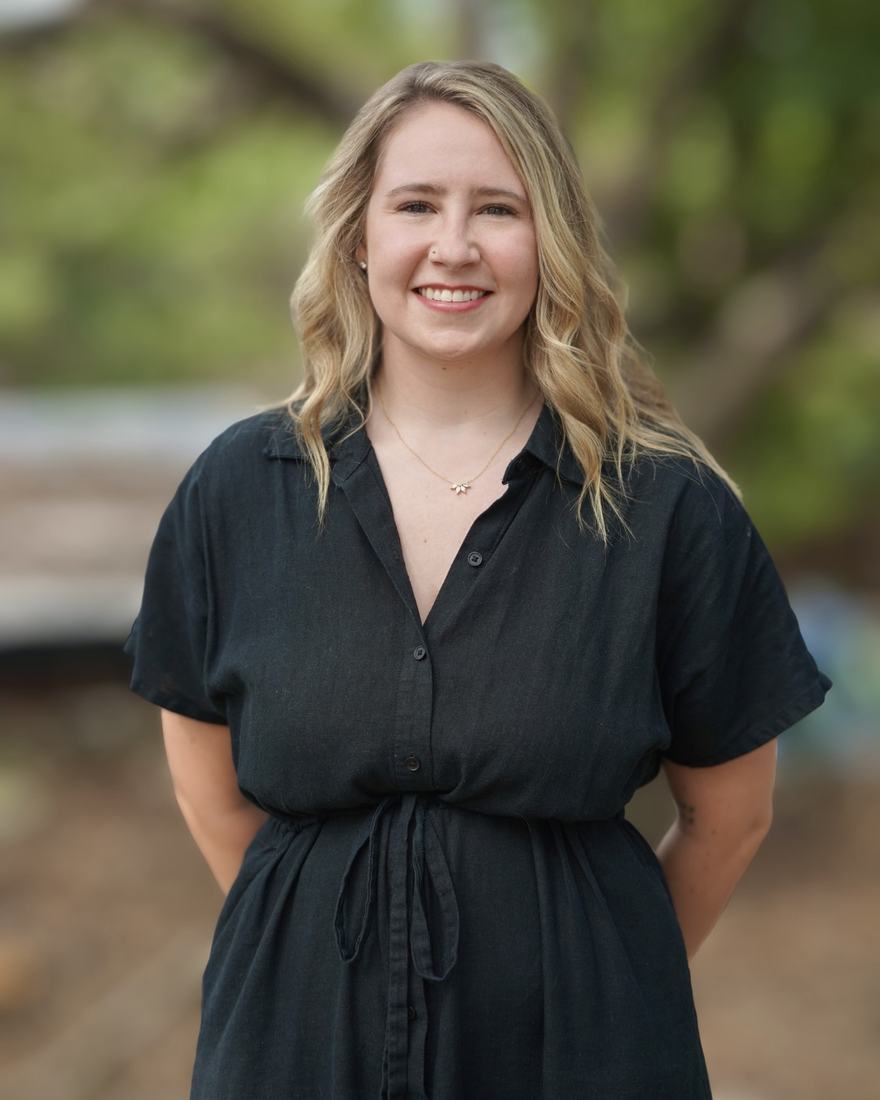
“A lot of my work is helping people notice the harsh inner voice that tells them they have to earn rest, food, or kindness, and then gently practice responding to it differently. Recovery gets a little more possible each time someone treats themselves with the patience they would offer a friend.”Megan Swiderski, MS, LCSWTherapist, Empowered Treatment
Travel and insurance, sorted out early.
Flying to Austin from Utah
Most Utahns traveling for treatment fly, and our team can help coordinate your arrival with your first program day.
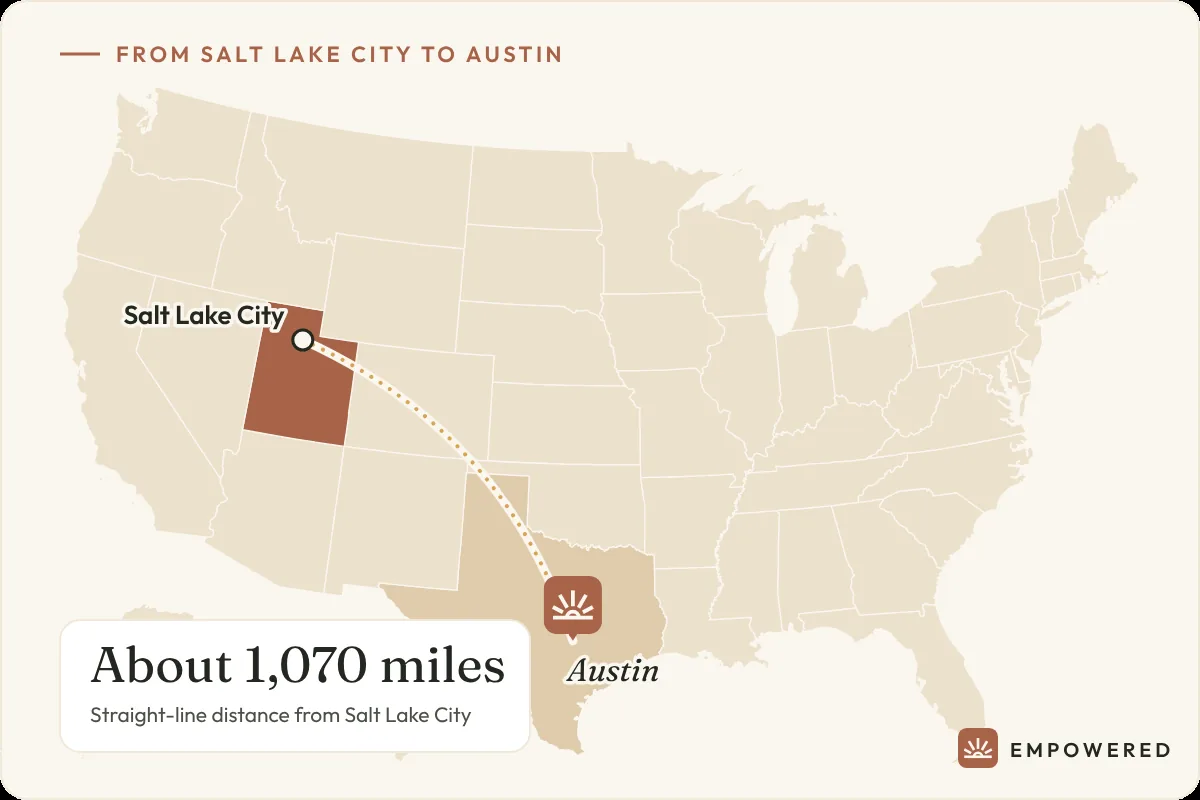
- Distance: about 1,070 miles from Salt Lake City as the crow flies
- Main airport: Salt Lake City International Airport (SLC) has flights to Austin-Bergstrom International Airport (AUS)
- Ground travel: Empowered’s Northwest Austin center is roughly 30 minutes by car from AUS
- Housing: clients can ask about transitional housing alongside PHP or IOP
Coverage and costs
Before you arrange travel, we can verify your benefits and explain how your plan approaches partial hospitalization, intensive outpatient treatment, and out-of-network care.
- Send your information through verify insurance, or call and we will go through your benefits
- If your plan is based in Utah, ask how it handles providers in Texas and whether out-of-network benefits apply; we can help you prepare those questions
- The Utah Insurance Department has consumer service analysts who handle health insurance questions and complaints
- Read does insurance cover eating disorder treatment? for more background
Utah support for life after treatment.
Recovery keeps going after programming ends. These statewide resources in Utah can help you and your family stay connected to care when you return home.
- Utah DHHS: Office of Substance Use and Mental HealthState mental health information, the Utah Crisis Line through 988, and a map of county treatment authorities.
- NAMI UtahFamily support groups, help for loved ones, and mental health education for Utahns and the people who care about them.
- Utah Insurance DepartmentConsumer help with health insurance questions, complaints, and information about independent review.
- 988 Suicide & Crisis LifelineCall or text 988, any time, from anywhere in the United States. In an emergency, call 911.
Questions we hear from Utahns.
Is it common to leave Utah for eating disorder care?
People travel for care for many reasons: a particular level of support, a team approach that suits them, or the chance to focus on recovery away from daily pressures. We can talk openly about whether Empowered is the right match for you.
How do you handle compulsive exercise?
Over-exercise is common with eating disorders and is addressed directly in treatment. Your team helps you understand what drives it and gradually build a healthier relationship with movement. This happens alongside nutrition and therapy work.
Can my partner or parents visit me in Austin?
Many families plan visits, and some take part in family sessions while in town. Your treatment team can help you decide on timing that supports your recovery. Read what to expect when a loved one is in treatment.
What does recovery actually look like?
Recovery looks different for each person. It often means more flexibility with food, less time consumed by eating disorder thoughts, and more room for relationships and goals. Our article on what recovery actually means explores this.
More for Utah
Articles and guides for readers in Utah.
A different chapter can start with a call.
Reach out to talk with our team about your situation and what support might help. We will listen, answer questions, and let you move at your own pace.