
About 17 miles from Round RockAdults 18+In person in Austin
ARFID treatment for Round Rock adults: try a new food in program, then again at home that same evening.
Empowered Treatment offers adult ARFID treatment in Austin, about 25 to 35 minutes from Round Rock, through partial hospitalization and intensive outpatient care. Because you sleep at home, the work does not stay in the building: a food you practice with a dietitian during the day can be tried again at your own table that evening, then talked through the next morning.
about17miles
About 25 to 35 minutes each way by car. TX-45 west to MoPac south, or US-183.
Other Texas cities we serve, by distance
- 30 hrsa week in partial hospitalization: supported meals, groups, therapy, dietitian, medical and psychiatric care
- 9 hrsa week of group programming in IOP, plus weekly individual and dietitian sessions
- 1 housein Hyde Park, alongside PHP or IOP, with shared meals and a room of your own
- 18+adults only, with every hour of care in person at our Austin center
Not picky, not about weight, and not something adults simply outgrow.
Avoidant/restrictive food intake disorder narrows what a person can eat until it affects health or daily life. Usually one or more of three things drives it: sensitivity to texture, taste, or smell; fear of what might happen, such as choking or vomiting; or so little interest in food that eating feels like a chore. What is absent is the drive for thinness that shapes anorexia.
Adults with ARFID in Round Rock, Georgetown, and Pflugerville have often heard “just try it” for most of their lives, usually from people who meant well. If that worked, it would have worked by now. Our adult ARFID program in Austin starts from the opposite premise: the distress is real, and the way through it is gradual, chosen, and never forced.
ARFID often travels with anxiety, and sometimes with autism or ADHD. If restriction has started to involve fear of gaining weight or distress about your body, that can point toward anorexia treatment for Round Rock adults instead, and the assessment is where that gets sorted out.
When a short list of safe foods starts running your week.
Avoidance can stay manageable for years and then tip. These are signs it may be time for structured care rather than another round of willpower:
- The list keeps shrinking.Foods you could eat last year are off the table now, and nothing new is taking their place.
- Your body is keeping score.Weight loss, fatigue, trouble concentrating, or a doctor flagging low iron, B12, or other deficiencies.
- Supplements have become meals.Shakes or bars stand in for food most days, rather than covering the occasional gap.
- Invitations feel like threats.You skip team lunches, dates, or family dinners, or eat beforehand so no one watches you eat.
- Fear arrived with one event.A choking or vomiting episode, or a frightening medical experience, and eating has not felt safe since.
One sign alone is not a diagnosis. A pattern that keeps growing is worth a conversation.
Exposure that moves at the pace your nervous system allows.
ARFID care at Empowered begins with stability, not challenge. Treatment happens in person at our Austin center, in PHP or IOP depending on what you need, and the same therapists, dietitians, and psychiatric providers follow your plan as it changes.
Nutrition first, with foods you trust
A dietitian starts from what you already eat and closes the gaps your body is short on, iron and B12 among them. Nothing new reaches your plate until your energy is steady enough to try it.
A hierarchy you help build
You and your therapist rank foods from easiest to hardest, and you decide when to climb. A step can wait for tomorrow’s drive in, and “not yet” is always an acceptable answer.
Treatment aimed at the driver
Texture, fear of choking or vomiting, and plain lack of interest each call for a different plan. Your assessment in Austin finds which one leads for you, and every step you carry home to Round Rock is built around it.
Anxiety care alongside
CBT gives the fear around a food a shape you can work with, and the anxiety skills you learn at the center are the ones you lean on at your own table that night. If you are autistic or have ADHD, the plan bends to how you experience food rather than treating that as the problem.
When anxiety, depression, or trauma is part of the picture, the page on co-occurring eating disorder treatment for Round Rock adults explains how those are treated together.
A short drive, and your own kitchen at the end of it.
The center is about 17 miles away, usually TX-45 west to MoPac south, or US-183, so commuting from home for PHP or IOP is realistic. That changes how ARFID treatment works. Exposure does not stop at the door: what you practice at a supported meal can be tried in your own kitchen that evening, and what happened there becomes the starting point for the next day.
- A first callTell us what you can eat, what you avoid, and what has changed lately. We will talk through whether PHP or IOP makes sense.
- A benefits checkWe can check your benefits before you decide, including how your plan covers each level of care.
- An assessment in AustinYou meet the clinical team in person. Part of the assessment is understanding which driver, whether sensory, fear, or low interest, shapes your ARFID.
- Practice at the centerNew foods are introduced at supported meals, at the step you agreed to, with a dietitian or therapist beside you.
- Practice at homeThe same food, or a smaller step toward it, goes home with you that evening. You bring back what happened, and the plan adjusts.
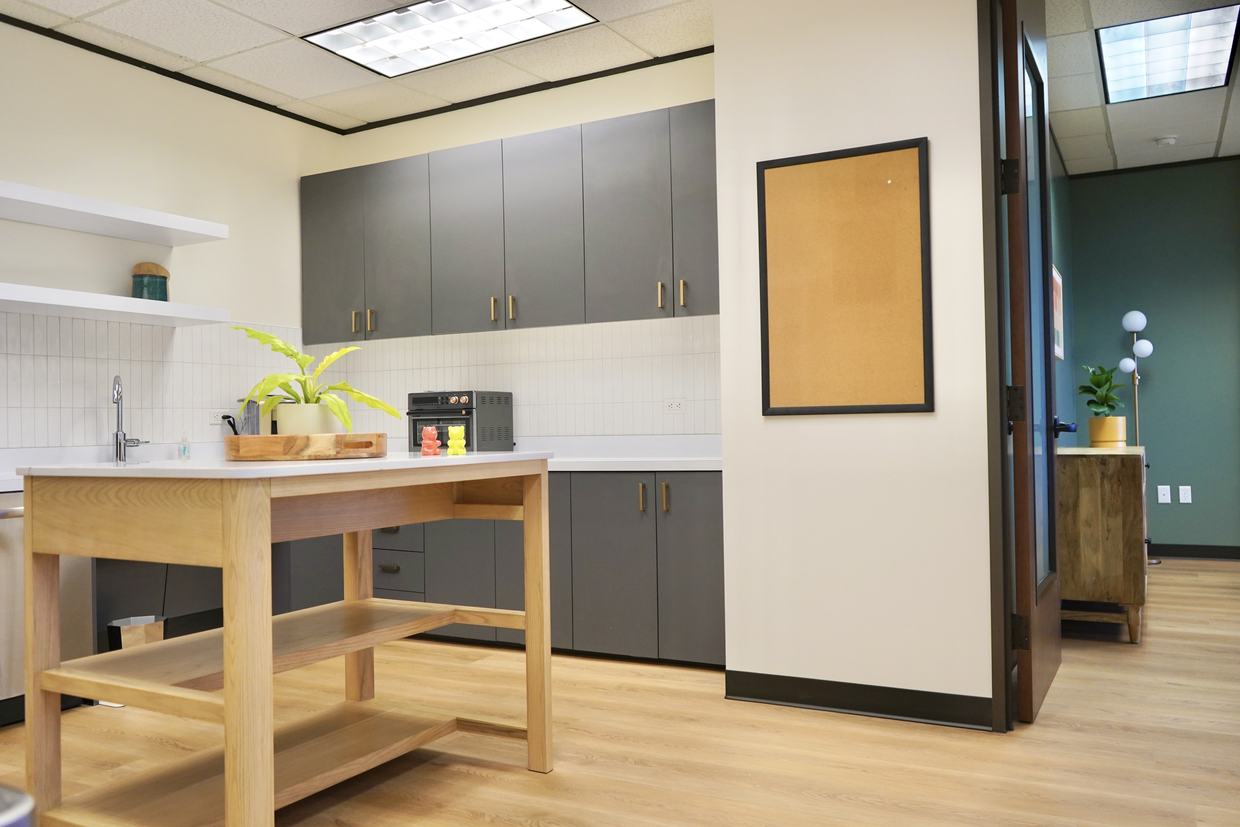
Inside our center on Spicewood Springs Road, Northwest Austin.
If a quieter start would help, transitional housing in Hyde Park is available alongside PHP or IOP, though from Williamson County, sleeping at home usually works.
Progress that already lives where you eat every day.
Because so much of the practice happens at home, the step from treatment back to ordinary life is smaller than it is for people who travel to us. Your plan is built around the places you actually eat: your kitchen, the break room at work, the restaurants your friends tend to choose.
Partners and family can be part of it. A spouse in Georgetown or a parent in Pflugerville can learn how to serve a new food without pressure, which matters more than any single meal. With your permission, we can also coordinate with your primary care doctor or the dietitian you see afterward, so the hierarchy keeps moving once the program ends.
For support between appointments in Williamson County and across Texas:
- Texas Health and Human Services: Mental Health and Substance UseState mental health services and crisis contacts, with a county tool that finds the public mental health authority for Williamson.
- NAMI TexasFree family education and support groups across the state, for people affected by mental illness and the people who love them.
More for Round Rock adults, in one place.
Everything for Round Rock: every service, the drive, the house →Or find your Texas city →
- ARFID treatment for Round Rock adultsAdult care for food avoidance driven by fear, texture, or low appetite.This page
- Eating disorder treatment for Round Rock adultsThe full picture: levels of care, the team, and how adults decide what fits.→
- Anorexia treatment for Round Rock adultsRestriction, weight restoration, and the fear underneath both.→
- Co-occurring eating disorder treatment for Round Rock adultsAnxiety, depression, OCD, or trauma treated alongside the eating disorder.→
What Round Rock adults ask before they call.
Straight answers to the questions we hear most. If yours is not here, call and ask it.
Can I try the same exposure food at home in Round Rock that night?
Yes, and it is one of the real advantages of living this close. When you and your team agree a food is ready to practice outside the program, it goes home with you, often as a smaller or simpler version of what you tried at the center. You note what happened, including what made it harder, and bring it back the next day so the plan can adjust. Nothing goes home before you say it is ready.
Breakfast is the meal I skip before driving in from Round Rock. Does ARFID treatment plan the meals I eat at home, not only the ones in program?
It does. Your dietitian plans the whole day with you, and the meals you eat at home count as much as the ones you eat with us. For a breakfast that keeps getting skipped before a drive of about 25 to 35 minutes, the first step might be one familiar food you can manage before you leave, then a second, then a real meal. The goal is steady energy for the day, not a perfect morning.
My Round Rock doctor says I am underweight, but I have never wanted to be thin. Is weight gain part of ARFID treatment?
If your body needs it, yes, though the reason is different from anorexia. In ARFID, weight loss usually comes from too narrow a range or too little volume, not from a wish to be smaller. Restoring weight and correcting deficiencies is about energy, concentration, and health, and dietitians begin with foods you already trust. With your permission, we can share progress with the doctor who raised the concern.
Does ARFID treatment involve a dietitian?
Closely, at every stage. Dietitians help build your food hierarchy, sit with you at supported meals, and plan the meals you eat at home. Dietitian care is part of PHP, and IOP includes a weekly dietitian session alongside individual therapy. Because you drive home to Round Rock each evening, your dietitian also helps you decide which version of a food is ready to leave the center with you, and what to do if that evening goes differently than planned.
Tell us which foods feel safe, and we will start there.
One confidential call with our team: what you eat now, what has changed, and whether PHP or IOP from Round Rock is the right fit.