
About 195 miles from Dallas-Fort WorthAdults 18+In person in Austin
ARFID treatment for Dallas-Fort Worth adults, with fear and texture worked through at the table, slowly.
Empowered Treatment offers ARFID treatment for adults at our Austin center, about 195 miles from Dallas-Fort Worth, through partial hospitalization and intensive outpatient care, with transitional housing for your stay. From the metroplex, that stay becomes room to practice: a new food is tried at a supported meal in Austin, can be tried again at the ordinary table of the house, and goes home only once it feels steady.
about195miles
About 3 to 3.5 hours each way by car. I-35E from Dallas or I-35W from Fort Worth, joining I-35 at Hillsboro.
Other Texas cities we serve, by distance
- 30 hrsa week in partial hospitalization: supported meals, groups, therapy, dietitian, medical and psychiatric care
- 9 hrsa week of group programming in IOP, plus weekly individual and dietitian sessions
- 1 housein Hyde Park, alongside PHP or IOP, with shared meals and a room of your own
- 18+adults only, with every hour of care in person at our Austin center
Avoidance that started early and never got a name.
Avoidant/restrictive food intake disorder narrows what you can eat until your health or daily life starts paying for it. It is not about weight or body shape. It usually grows from textures, smells, or tastes that feel overwhelming, from a fear of choking or vomiting, or from so little interest in eating that meals slip by unnoticed.
Plenty of adults in Dallas and Fort Worth grew up being called picky and learned to work around it: the same order at every restaurant, an excuse ready before the team lunch, a shake in the car instead of a meal. Getting a diagnosis as an adult can be a relief, and our adult ARFID program in Austin treats it as the real, workable condition it is.
ARFID can resemble other conditions from the outside. When weight loss comes with fear of gaining or distress about your body, anorexia treatment for Dallas-Fort Worth adults may be the closer match. When anxiety or OCD reaches well beyond food, co-occurring eating disorder treatment for Dallas-Fort Worth adults covers that ground.
When the safe list sets the terms for work, travel, and dinner.
Adults with ARFID can manage for a long time. These are signs the managing has started to cost more than it gives:
- Fewer foods than last year.Items you could eat before have dropped off, and nothing has arrived to replace them.
- Your body is running short.Fatigue, weight loss, dizziness, or bloodwork showing low iron or other deficiencies.
- Gagging has become automatic.Certain textures trigger a gag before you have decided anything, even with foods you would like to eat.
- Meals happen out of sight.You eat before events, in the car, or alone, so nobody at work or at the table sees your plate.
- A frightening moment changed everything.Since a choking or vomiting episode, eating has felt like a risk, and the list shrank fast.
- Drinks and bars are doing the work.Nutrition shakes have quietly replaced breakfast and lunch, and you lean on them more each month.
If several of these are familiar, you are not being dramatic. ARFID is treatable in adulthood, whenever it started.
Exposure at the table, at a pace you agree to.
ARFID care in Austin starts with steadiness, not with the hardest food. You are in person at our center, in PHP or IOP, with one team following your plan as it widens.
Stable energy before anything new
Your dietitian begins with the foods you already eat and fills the nutritional gaps first, so you have the energy and focus that exposure work asks of you.
A ladder you help design
You and your therapist rank foods by difficulty, and you choose each next rung. You can answer “not yet” at any rung, and nobody tricks or pressures you into a bite.
Care aimed at your reason
ARFID responds to specialized, pressure-free care, and sensory, fear-based, and low-interest ARFID each call for different work. Your assessment shows which one leads, and the plan follows it rather than a template.
Fear and sensory load, together
Therapy for the fear around eating runs alongside gradual work with textures, smells, and tastes, and if you are autistic or have ADHD, the plan respects how you experience food instead of fighting it.
New foods are introduced during supported meals in eating disorder PHP for Dallas-Fort Worth adults, where a dietitian or therapist sits with you through the hard part.
A few weeks in Austin to practice before you go home.
The center is about 195 miles from the metroplex, roughly 3 to 3.5 hours via I-35E or I-35W, so treatment from Dallas-Fort Worth pairs with a room in our transitional housing in Hyde Park. For ARFID, the distance has an upside. You are away from the restaurants, routines, and kitchen that have held the old list in place, and the house gives you a second, ordinary table to practice at once the program day ends.
- A first callTell us which foods you eat now, which ones frighten you, and what has changed lately. We will talk through whether a stay in Austin fits, and which safe foods to pack for the drive down I-35.
- Coverage, checked firstWe can check your benefits before you decide, and we tell you plainly what your plan says about a few weeks of care in Austin.
- An assessment in personThe clinical team learns what drives your ARFID, whether sensory, fear, or low interest, and agrees with you on a level of care and a start date.
- Practice in two placesA food is tried at a supported meal at the center, and you can try it again at the house in a smaller or simpler form, so the next day starts from what happened.
- A list to take homeBefore you leave, you and your dietitian write down which foods are ready for the metroplex and which still need practice, so your progress travels with you.
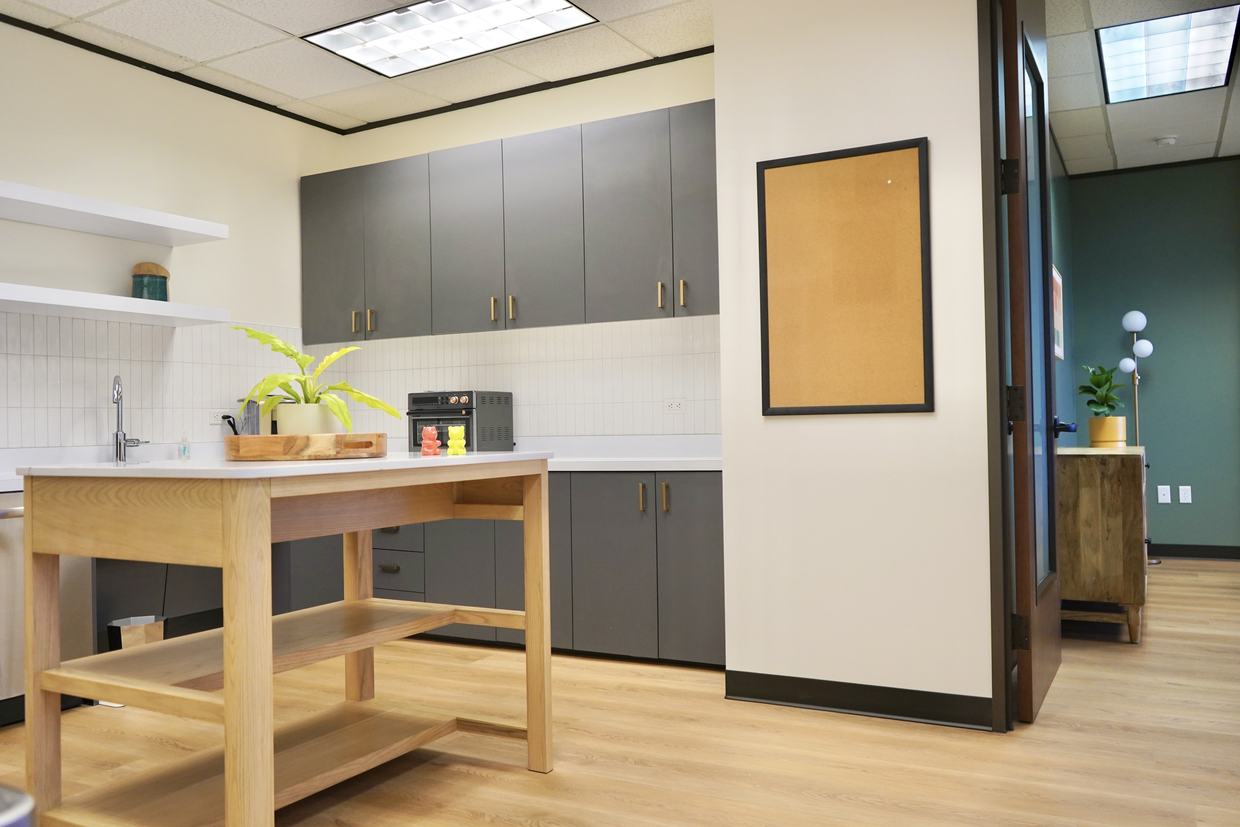
Inside our center on Spicewood Springs Road, Northwest Austin.
Bringing a longer list back to Dallas and Fort Worth.
The foods you practiced in Austin need to survive contact with home: your grocery store, the Dallas takeout place where you have ordered the same thing for years and can now try the next rung, a coworker’s birthday lunch. Your aftercare plan names them, along with the next foods on the ladder and how to keep climbing. With your written permission, we share it with a dietitian, therapist, or doctor you will see in the metroplex, so the work keeps moving after the program ends.
Someone in Arlington or Denton who knows how to offer a new food without pressure, and how to let a refusal pass without comment, turns home into a safer place to practice. Our guide on how to help someone with an eating disorder is a good shared starting point.
Support at home in North Texas:
- My Health My Resources of Tarrant CountyBehavioral health services and crisis support across Tarrant County, for adults continuing care after Austin.
- Texas Health and Human Services: Mental Health and Substance UseState mental health services, crisis contacts, and a county lookup for the public mental health authority back home in the metroplex.
Related care for Dallas-Fort Worth adults, in one place.
Everything for Dallas-Fort Worth: every service, the drive, the house →Or find your Texas city →
- ARFID treatment for Dallas-Fort Worth adultsAdult care for food avoidance driven by fear, texture, or low appetite.This page
- Eating disorder treatment for Dallas-Fort Worth adultsThe full picture: levels of care, the team, and how adults decide what fits.→
- Anorexia treatment for Dallas-Fort Worth adultsRestriction, weight restoration, and the fear underneath both.→
- Co-occurring eating disorder treatment for Dallas-Fort Worth adultsAnxiety, depression, OCD, or trauma treated alongside the eating disorder.→
What adults across Dallas-Fort Worth ask before they call.
Straight answers to the questions we hear most. If yours is not here, call and ask it.
Can adults in Dallas or Fort Worth get ARFID care if they were never diagnosed as kids?
Yes. ARFID is often missed in childhood, and it is common to reach a diagnosis only in adulthood, after years of hearing the word picky. A diagnosis in your twenties, forties, or later is just as valid, and you do not need childhood records to begin. Your assessment in Austin looks at your history and how you eat now. If you have a doctor in Dallas or Fort Worth, recent labs are useful to bring.
What if textures make me gag, even with foods I want to eat?
That is a sensory response, not a lack of willpower, and it is a common driver of adult ARFID. Treatment starts well below the trigger: looking at the food, touching it, smelling it, a texture adjusted slightly, long before a bite. Your therapist helps calm the body’s alarm while your dietitian finds versions of the food you can approach. You choose each step, and a gag is treated as information, never as failure.
How do I handle work lunches in Dallas while my list of safe foods is still short?
With a plan you make in advance rather than an excuse invented on the spot. In treatment you can rehearse ordering, eating in front of coworkers, and what to say if someone asks about your plate. While the list is short, it can help to suggest places with a safe option, eat a safe snack beforehand, or order a drink and join the conversation. Back in Dallas, how much you explain is entirely your call.
How does a dietitian help widen my food list when I start from five or six foods?
By starting exactly where you are. Your dietitian first makes sure those five or six foods cover as much nutrition as possible, then looks for close neighbors: a different brand, a new shape, a small change in seasoning. Each small change is practiced at supported meals until it holds. The aim is a list that grows from its edges, one neighbor at a time, rather than by force.
Your safe foods are the starting point, not something we come to take away.
One confidential call: what you eat now, what frightens you, and what a few weeks of practice in Austin would look like from the metroplex.