
For people struggling with eating disorders in North Dakota, and the people who keep checking in on them.
Empowered Treatment in Austin, Texas, provides partial hospitalization and intensive outpatient care for adults with eating disorders, plus a transitional house where clients can live during treatment. Whatever stage you are in, you are welcome to reach out.
Getting through the day is not the same as being okay.
In North Dakota, people are used to pushing through: long winters, early mornings, harvest weeks, and drives that would seem far anywhere else. An eating disorder can hide inside that habit of enduring. It might look like an NDSU student who skips meals to stay in control, an oilfield worker near Williston who binges after long shifts, or a teacher in Minot who has been dieting since high school.
Pushing through can work for a while, until it stops working. Hunger gets ignored, exercise becomes punishment, and thoughts about food crowd out the things you used to care about. If that is where you are, it is not a personal failing. Eating disorders are serious and treatable conditions, and wanting more than survival from your days is a healthy thing to want.

Needing help does not make you a burden.
Many people put off reaching out because they do not want to worry anyone or take time away from work and family. But an eating disorder tends to take more from those things the longer it goes on. Making a call is a way of protecting what matters to you.
Talking with us is confidential. Someone from our team will listen to your story, explain how PHP and IOP work day to day, and help you think about whether now is the right time. If you wonder whether you qualify, read am I sick enough for treatment?
Staying close, even across the miles.
If someone you love is struggling, you may be the one who notices the missed meals at family gatherings or the long hours at the gym. Bringing it up can feel risky. Our guide for loved ones explains the warning signs and how to raise your concern with care.
Should your loved one begin treatment in Austin, you will still have a meaningful part to play from Fargo, Bismarck, or Grand Forks. Our family education gives parents, partners, and siblings a shared understanding of eating disorders and tools for supporting someone through recovery.
A real house, not a hotel room.
Living in a hotel during treatment can feel lonely, especially more than a thousand miles from the Red River Valley. Our transitional housing is a shared home in Hyde Park, an older Austin neighborhood, where you live alongside others in PHP or IOP. Daily structure, supported routines, and people who understand recovery make the time between sessions feel less isolating.
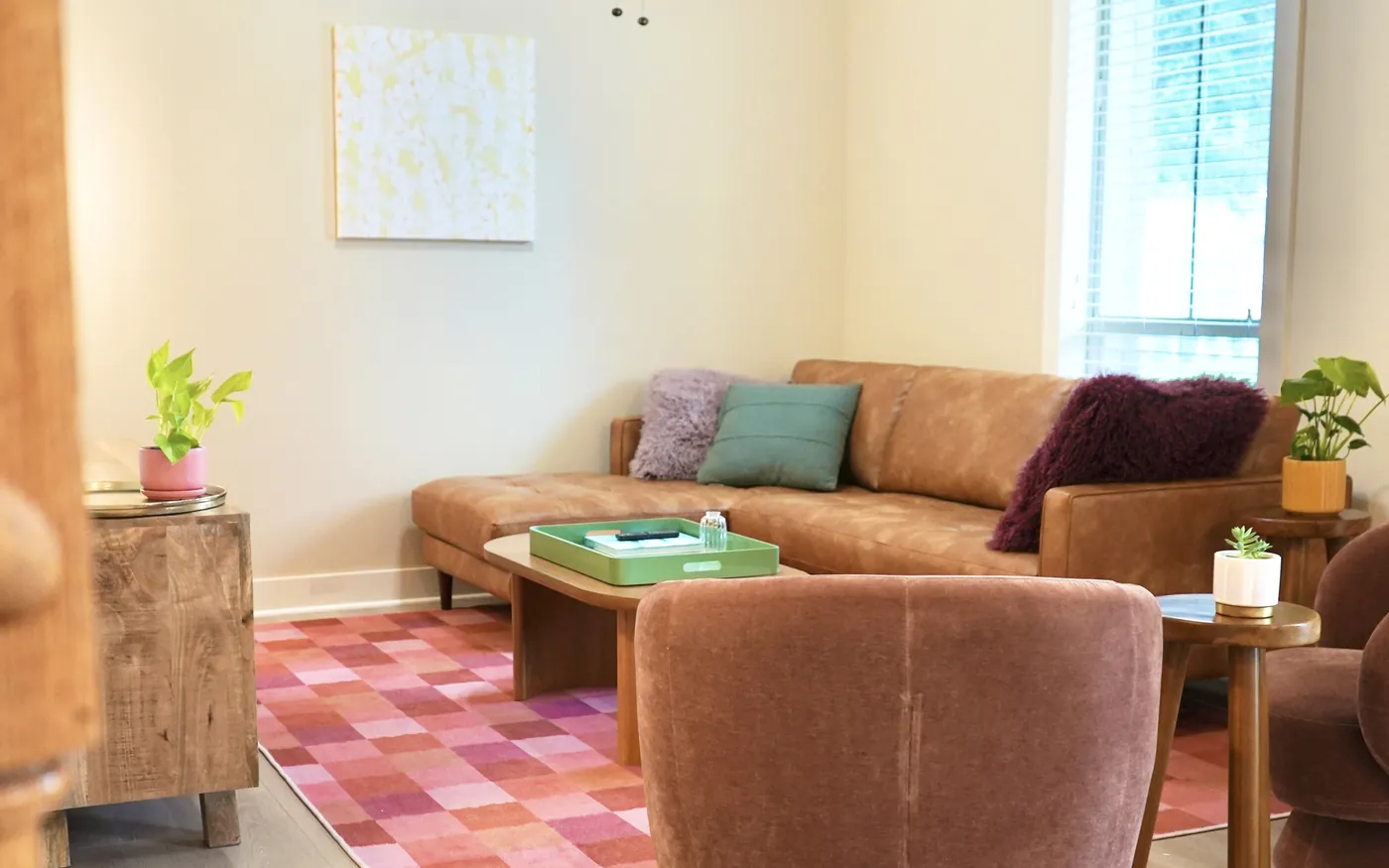 Shared living spaces
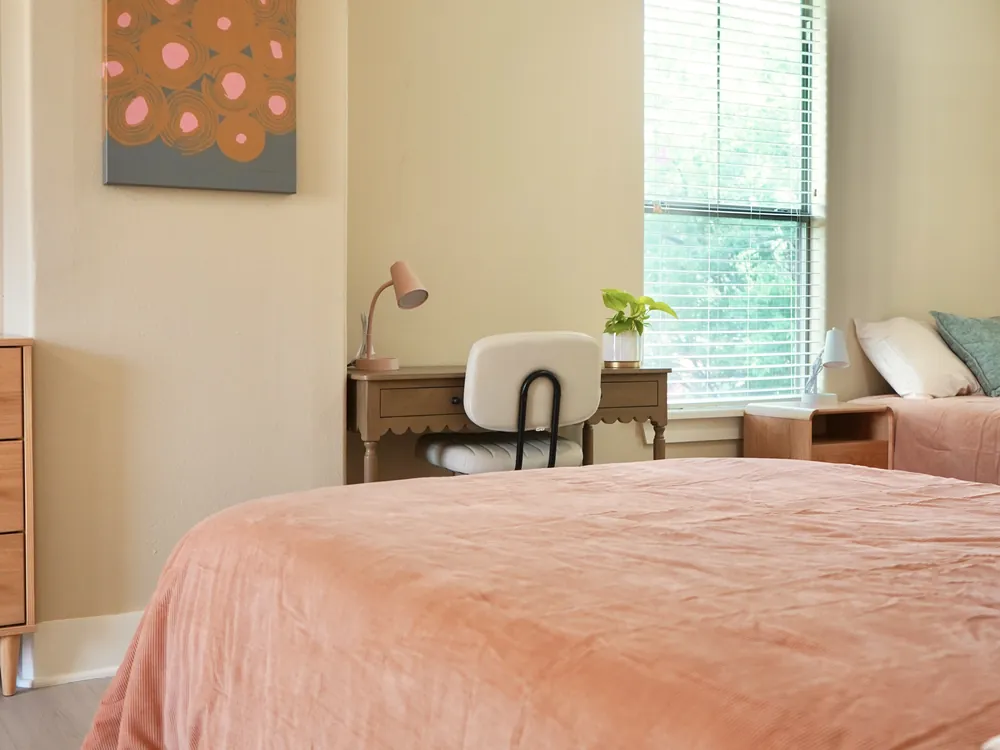 A room of your own
Medical, emotional, and nutritional care working together.
Eating disorders can affect electrolytes, heart health, sleep, and mood, alongside the thoughts and behaviors people notice first. Our therapists, dietitians, family therapist, and psychiatric providers coordinate around one plan, so changes in one area inform the others. As treatment progresses, we help you prepare for the return to North Dakota with care arranged in advance.
Partial hospitalization (PHP)
Full treatment days at our Austin center: supported meals, daily groups, individual therapy, dietitian care, and medical and psychiatric monitoring.
About PHP →Intensive outpatient (IOP)
Group programming plus weekly individual and dietitian sessions, built to fit around work, school, and family once more structure is not needed.
About IOP →
“On the psychiatric side, I pay close attention to how depression, anxiety, sleep, and physical health are affecting someone, because those pieces can make the rest of recovery harder if they are left alone. I like to explain my thinking in plain language so people feel informed and comfortable asking questions about their care.”Reggie Graves, MSN, PMHNP-BC, FNP-CPsychiatric Nurse Practitioner, Empowered Treatment
The practical side, sorted out together.
Traveling from North Dakota to Austin
Air travel is the most common way to get here. We can help you plan around your start date and think through what to bring for a stay in a warmer climate.
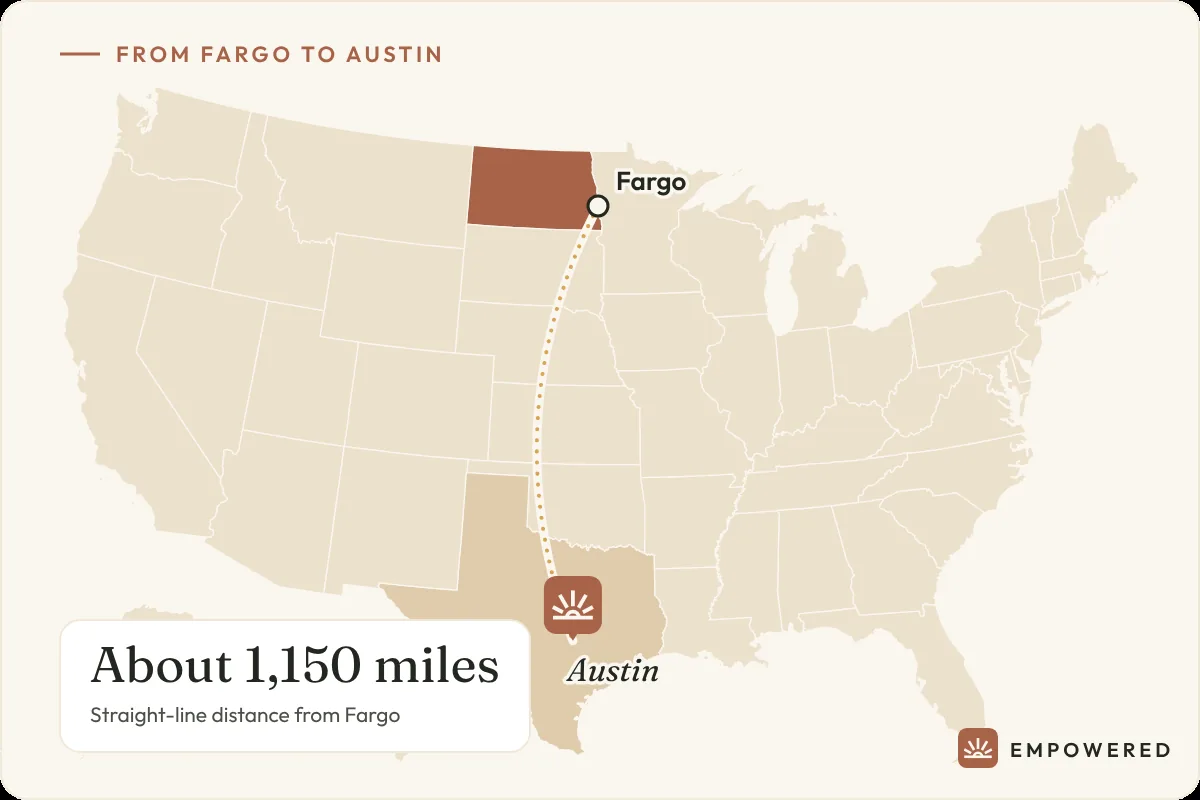
- Distance: about 1,150 miles from Fargo as the crow flies
- Flights: Hector International Airport (FAR) in Fargo and Bismarck Airport (BIS) connect to Austin-Bergstrom International Airport (AUS)
- Getting to the center: AUS is roughly 30 minutes by car from our Northwest Austin location, depending on the time of day
- Housing: live in our transitional house during PHP or IOP
Insurance, explained plainly
Out-of-state treatment raises reasonable questions about cost. We check your benefits for partial hospitalization and intensive outpatient care and talk through the results with you.
- Begin with our insurance check, or call and a team member will contact your plan
- A North Dakota plan may handle Texas providers differently than in-state ones; ask about out-of-network benefits and authorization, and we help you ask the right questions
- The North Dakota Insurance Department answers health insurance questions and accepts consumer complaints
- Our article on what treatment costs covers common expenses to plan for
Back home, with support in place.
The work of recovery continues after discharge. These statewide resources in North Dakota can help you find ongoing services and keep your family connected to support.
- North Dakota Health and Human Services: Behavioral HealthState behavioral health hub with a service locator, adult mental health resources, clinic information, and crisis contacts.
- Mental Health America of North DakotaA free help line that connects callers with mental health providers and practical resources, plus a screening tool.
- North Dakota Insurance DepartmentConsumer help with health insurance questions and complaints, by phone or email.
- 988 Suicide & Crisis LifelineCall or text 988, any time, from anywhere in the United States. In an emergency, call 911.
What North Dakotans tend to ask first.
What should I pack coming from North Dakota?
Austin is much warmer than the northern plains for most of the year, so lighter clothing helps, along with a layer for air-conditioned rooms. Bring comfortable clothes for long program days. Our article on moving to Austin for care has more planning tips.
Can I stay in touch with my family during treatment?
Yes. Clients keep in contact with family outside programming hours, and loved ones can take part in family education. With your consent, our family therapist can also include relatives in sessions.
What is the difference between PHP and IOP?
Do you treat binge eating disorder?
Yes. We treat binge eating disorder along with anorexia, bulimia, ARFID, and other eating disorders. Treatment focuses on the patterns, emotions, and stressors behind the behavior, not on dieting or weight loss.
More for North Dakota
Articles and guides for readers in North Dakota.
A conversation can change the direction.
Call our team to talk about what you are noticing and what kind of help might fit. There is no charge to call and nothing you have to agree to.