
For people struggling with eating disorders in North Carolina, you deserve care that takes you seriously.
Empowered Treatment is an Austin, Texas, program for adults with eating disorders, offering partial hospitalization, intensive outpatient care, and transitional housing. If you are in North Carolina and want to understand your options, we can talk it through with you.
From the mountains to the Outer Banks, it can hide in plain sight.
North Carolina holds a lot of different lives: researchers in the Triangle, bankers in Uptown Charlotte, students in Chapel Hill and Greenville, families in the Sandhills, and people in Boone or Asheville who moved for the mountains. Eating disorders cross every one of those lines. They can look like discipline, like being the dependable one, or like a diet that never quite ends, which is why they are so easy to overlook.
Whatever yours looks like, it is worth taking seriously. Restriction, bingeing, purging, and compulsive exercise all carry real physical and emotional costs, and none of them are about vanity. If food and body worries are crowding out the rest of your life, a conversation with a specialized team can help you sort out what kind of support would actually make a difference.

You don't need to have the words for it yet.
Some people call us knowing exactly what they are dealing with. Others only know that eating has become complicated, tiring, or frightening. Either way is fine. You do not need a diagnosis or a tidy explanation to ask a question.
When you reach out, someone on our team will listen, ask what has been happening, and explain how our partial hospitalization and intensive outpatient programs work. If you have been unsure whether to call, our page on what happens when you call explains the process.
Choosing your words when you're scared.
It is natural to want to fix things fast, especially when the person struggling is your child, your spouse, or the sibling you grew up with. Well-meant comments about food or weight can still land badly. Our page on what not to say to someone with an eating disorder can help you steer toward conversations that open doors.
If your loved one begins treatment with us, our family education helps you understand what they are working on and how to respond at home, whether you live in Raleigh, Wilmington, or a small town in the foothills.
A supportive house for the weeks you're here.
Leaving Charlotte, the Triad, or the coast for treatment means figuring out where to sleep, eat, and unwind. Our transitional housing answers that question. It is a real house in Austin's Hyde Park neighborhood, available alongside PHP or IOP, where you live with peers in recovery and come back each evening to a setting designed to support the skills you are building.
 Shared living spaces
 A room of your own
Therapy that goes deeper than the symptoms.
Behaviors around food usually make sense once you understand what they are protecting you from. Our therapists explore that with you, while registered dietitians rebuild nutrition, psychiatric providers address mood and medical needs, and a family therapist helps the people closest to you take part. The team works from one shared plan and helps you set up support in North Carolina before you head home.
Partial hospitalization (PHP)
Full treatment days at our Austin center: supported meals, daily groups, individual therapy, dietitian care, and medical and psychiatric monitoring.
About PHP →Intensive outpatient (IOP)
Group programming plus weekly individual and dietitian sessions, built to fit around work, school, and family once more structure is not needed.
About IOP →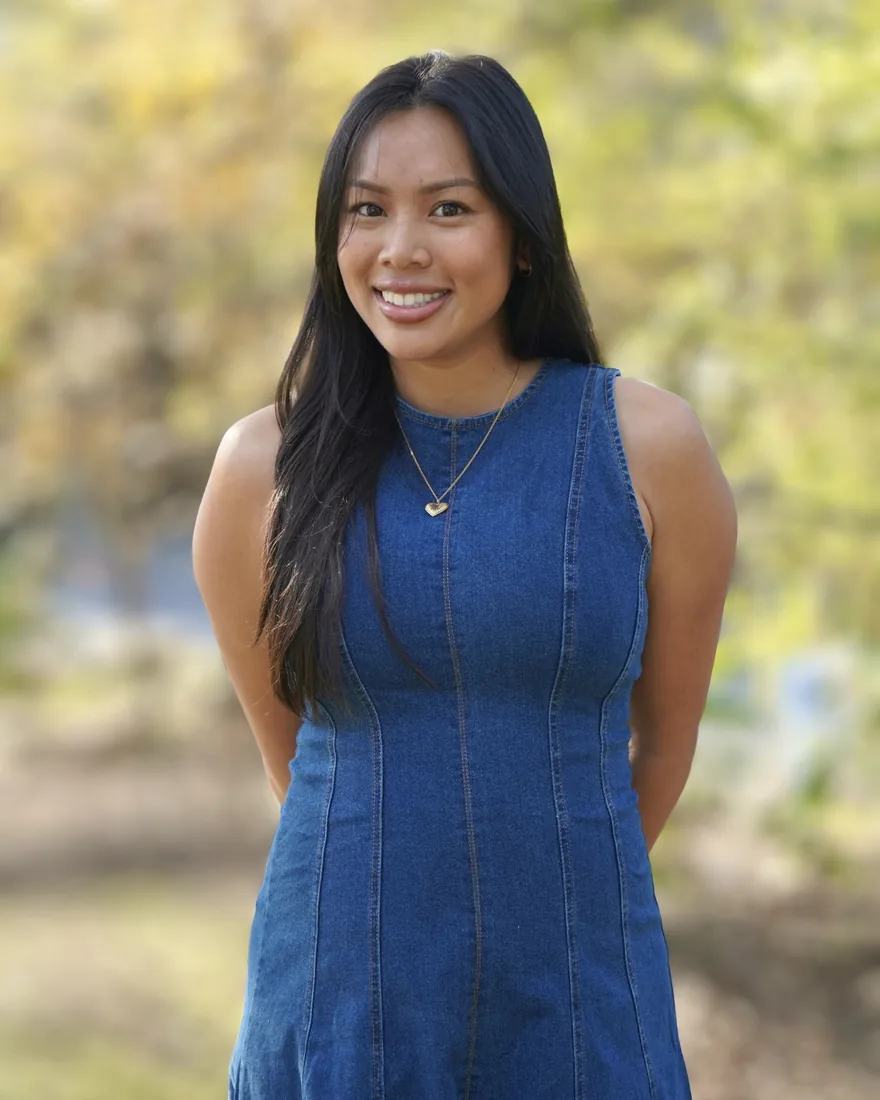
“In therapy, I am curious about what the eating disorder has been helping someone cope with, because that understanding is what makes change feel possible instead of forced. My hope is that every client feels safe enough to be honest, even about the parts they are still unsure they want to let go of.”MayLinh Lucio, LMSWTherapist, Empowered Treatment
Planning travel and talking to your insurer.
Getting from North Carolina to Austin
Flying is the most common choice for North Carolinians, and several of the state's airports offer routes that connect to Austin.
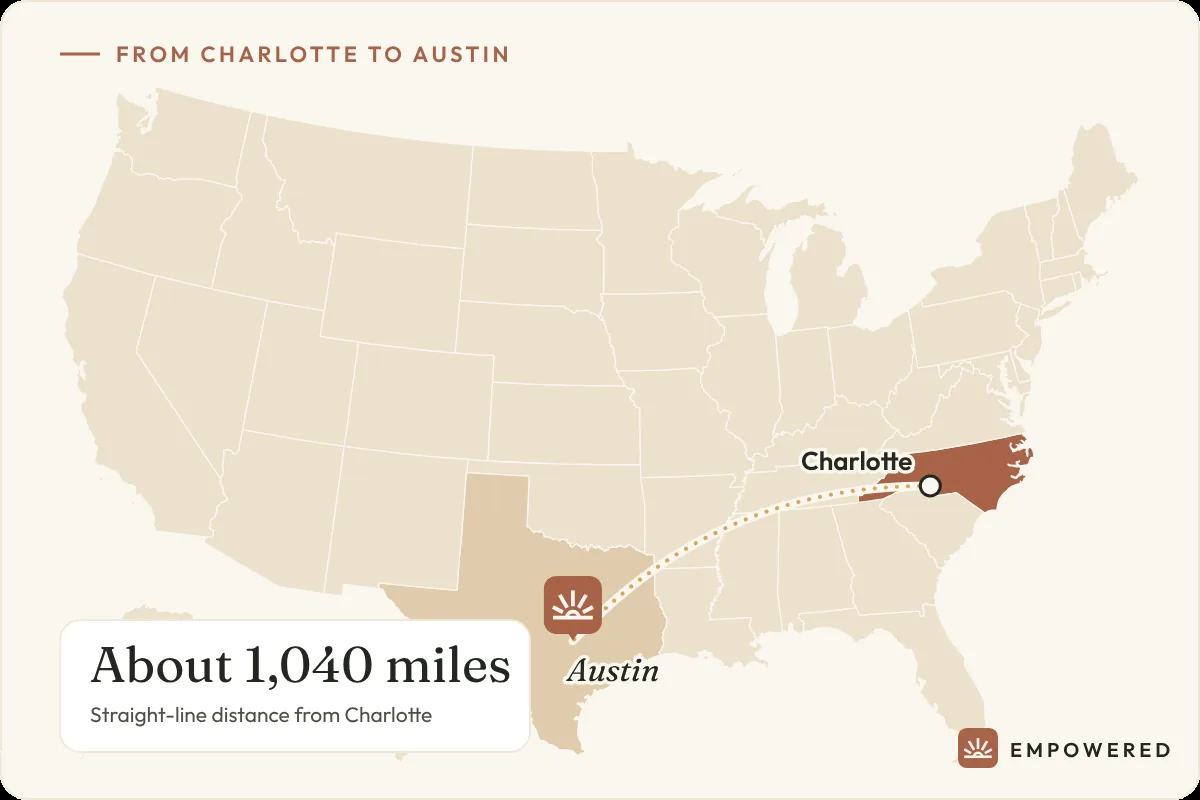
- Distance: about 1,040 miles from Charlotte as the crow flies
- Flights: Charlotte Douglas International (CLT), Raleigh-Durham International (RDU), Piedmont Triad International (GSO), and Asheville Regional (AVL) all serve travelers headed to Austin-Bergstrom International Airport (AUS)
- Once you land: AUS is roughly a 30-minute drive from our center, depending on traffic
- Housing: transitional housing in Hyde Park can be arranged with your program
Insurance from North Carolina
Many plans include some benefits for out-of-state care, but the details vary. We can check yours and walk you through what applies.
- Use our insurance verification form to get started
- If your plan is based in North Carolina, ask how it handles out-of-network care at a program in Texas; we help you know what questions to raise
- The North Carolina Department of Insurance helps consumers with insurance questions, complaints, and denied health claims through Smart NC
- Read what to know about the cost of eating disorder treatment
Help that's there when you get back.
After treatment, steady support at home helps protect your progress. These resources across North Carolina can help you and your family stay connected to care.
- NCDHHS: Mental Health, Developmental Disabilities, and Substance Use ServicesCrisis support, walk-in clinics, and a county directory for ongoing mental health services across the state.
- NAMI North CarolinaFamily support groups, Family-to-Family classes, and education for people living with mental health conditions and their loved ones.
- North Carolina Department of InsuranceInsurance help and information, including Smart NC support for disputes over denied health claims.
- 988 Suicide & Crisis LifelineCall or text 988, any time, from anywhere in the United States. In an emergency, call 911.
Questions from North Carolina.
Why consider Austin if I live in North Carolina?
Some people want a fresh setting, some need a program with openings now, and some are looking for a particular combination of care and housing. We can talk honestly about whether our program is the right fit or whether another option might serve you better.
Will my North Carolina providers be involved?
With your written permission, we can coordinate with your therapist, dietitian, or physician at home during treatment and as you prepare to return. Keeping them informed makes the handoff back to outpatient care smoother.
What does a typical day in PHP look like?
Partial hospitalization runs about 30 hours a week and includes therapy groups, supported meals, nutrition work, and individual sessions. Learn more on our PHP page or in levels of care explained.
Do you treat men with eating disorders?
Yes. Eating disorders affect people of every gender, and our adult programs welcome men. Read more about eating disorders in men.
More for North Carolina
Articles and guides for readers in North Carolina.
Reaching out is a reasonable next step.
Call to speak with our team about what has been happening and what level of care might help. There is no charge and no obligation to talk.