
For people struggling with eating disorders in New York, stepping away for care can be a beginning.
Empowered Treatment is an adult eating disorder program in Austin, Texas, built around partial hospitalization, intensive outpatient care, and a transitional home in Hyde Park. If you have been holding everything together while food quietly takes over, help can begin with a single call.
An eating disorder can keep pace with the busiest life.
In New York, an eating disorder might live alongside a demanding job in Manhattan, a graduate program in Ithaca, a long commute from Long Island, or a winter in Buffalo spent mostly indoors. It could be someone in Albany who has skipped breakfast for a decade or a dancer in Brooklyn whose rules about food keep tightening. It affects every body type, culture, and age.
However it began, the eating disorder may now be making decisions for you: which invitations to accept, when you are allowed to eat, how much movement is enough. Plenty of people keep functioning at a high level through all of it, which can make the problem easier to dismiss. Your exhaustion still counts, and it is worth bringing to someone who specializes in this.

Doing well on paper is not the same as being okay.
Many adults who call us are capable, accomplished, and privately worn down by food and body thoughts. You may worry that taking time for treatment means falling behind. It is worth asking what the eating disorder is already costing you, and whether that cost is growing.
A first conversation is confidential. We will listen to what is going on and explain how partial hospitalization and intensive outpatient differ. If your career is part of the worry, our article on working while in eating disorder treatment may help you think it through.
Your adult child, partner, or sibling still needs you.
Loving an adult with an eating disorder can mean walking a hard line between respecting their independence and speaking up about what you see. If you are a parent, our guide to talking to your adult child about their eating offers words that open the door instead of closing it.
Families who live in Westchester, the Hudson Valley, or upstate can take part in our family education while their loved one is in Austin. You will learn how eating disorders affect thinking and behavior, what support around meals looks like, and how to care for yourself through a difficult season.
Room to focus, far from the usual pressures.
When daily life in New York is full of deadlines, crowded schedules, and long commutes, a change of setting can make it easier to put recovery first. Our transitional housing is a real house in Hyde Park, close to central Austin, for adults enrolled in PHP or IOP. You live with peers in treatment, and your evenings have routine and support built in.
 Shared living spaces
 A room of your own
A team that talks to each other.
Our therapists, registered dietitians, family therapist, and psychiatric providers share one treatment plan and adjust it together as you progress. Nutrition care is woven through each day, including supported meals and practical work with food. When it is time to return to New York, we help you build a team there so recovery has continuity rather than a gap.
Partial hospitalization (PHP)
Full treatment days at our Austin center: supported meals, daily groups, individual therapy, dietitian care, and medical and psychiatric monitoring.
About PHP →Intensive outpatient (IOP)
Group programming plus weekly individual and dietitian sessions, built to fit around work, school, and family once more structure is not needed.
About IOP →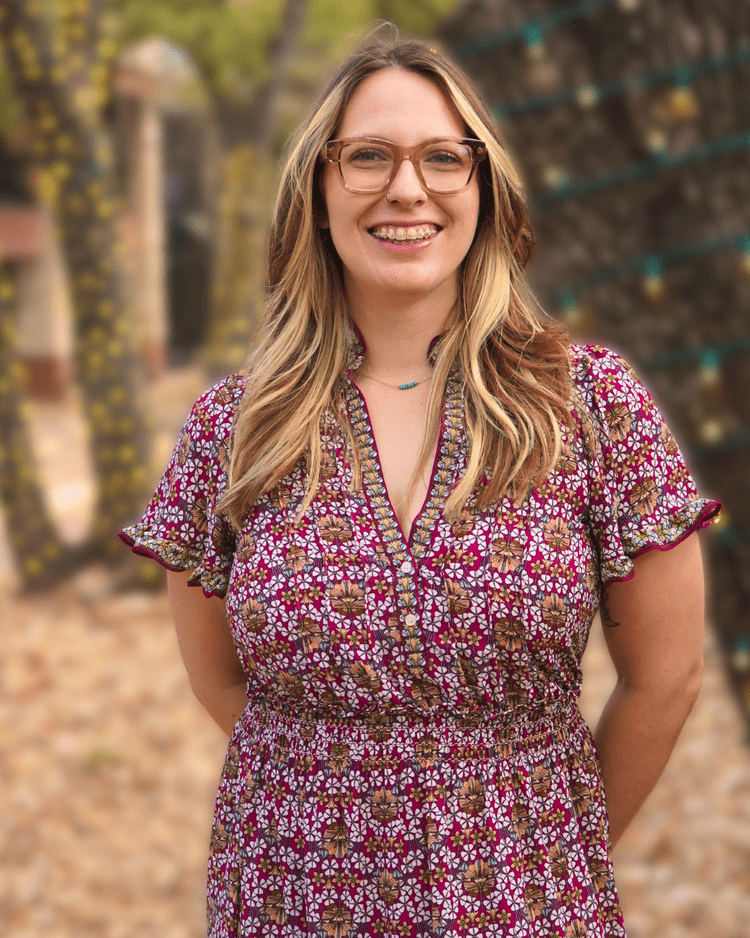
“In nutrition sessions, we start by making eating feel more predictable and less frightening, then slowly widen what feels possible. I want people to leave with skills they can use in a real kitchen, at a work lunch, or around a holiday table.”Madeline Thomas, MS, RD, LDDietitian, Empowered Treatment
Flights, coverage, and next steps.
From New York to Austin
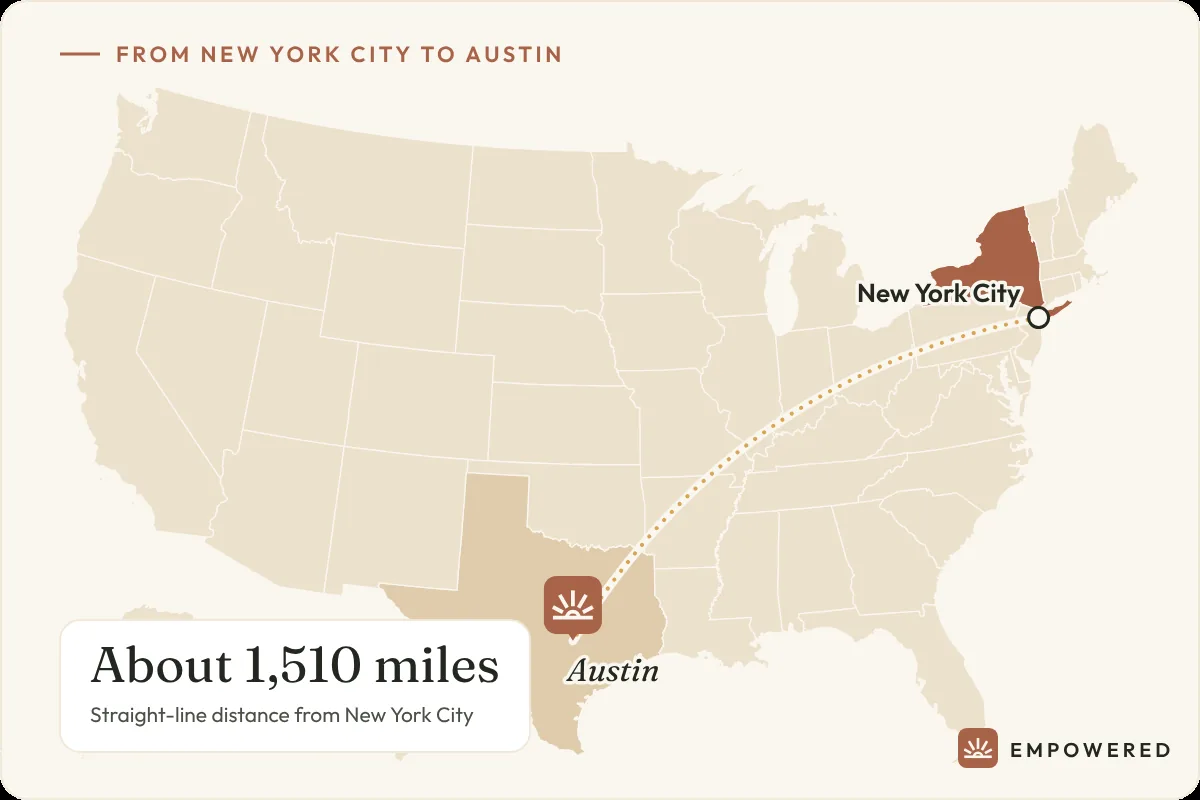
Most New Yorkers coming to us fly, and the trip can usually be made in a single day. We are happy to help you plan around your start date.
- Distance: about 1,510 miles from New York City as the crow flies
- Departing New York: John F. Kennedy International Airport (JFK), LaGuardia Airport (LGA), Buffalo Niagara International Airport (BUF), and Albany International Airport (ALB) have routes to Austin-Bergstrom International Airport (AUS)
- After you land: expect roughly a 30-minute ride from AUS to our center, with timing tied to traffic
- Living here: clients in PHP or IOP can stay in our transitional housing
Benefits and paying for care
Insurance rules for treatment in another state can be confusing. We can contact your plan, confirm benefits for each level of care, and explain the results in plain language so you can plan ahead.
- Fill out our insurance verification form, or phone us and we will review your policy with you
- If your plan is based in New York, ask how it handles a provider in Texas and whether out-of-network benefits apply; we can help you prepare for that call
- The New York State Department of Financial Services explains external appeals, complaints, and surprise bill protections for health insurance
- Learn more in does insurance cover eating disorder treatment?
Continuing care across the state.
Treatment ends, and recovery keeps going. These resources from across New York can help you and your loved ones find ongoing services and support once you are home.
- New York State Office of Mental HealthA searchable directory of mental health programs by county, crisis contacts including 988, and a helpline for navigating insurance.
- NAMI New York StateFamily-to-Family classes, family support groups, and a statewide helpline for people affected by mental illness and their families.
- New York State Department of Financial ServicesHealth insurance guidance, external appeals, and a hotline for complaints about insurers and health plans.
- 988 Suicide & Crisis LifelineCall or text 988, any time, from anywhere in the United States. In an emergency, call 911.
What New Yorkers ask before calling.
Is it worth traveling from New York for treatment?
That depends on your needs, your timing, and what is available to you. Some people choose a program away from home because it gives them distance from daily pressures. We can talk through the decision honestly. Our page on moving to Austin for eating disorder care covers practical questions.
How do I talk with my employer in New York about taking leave?
You do not have to share your diagnosis to request time off, and many people keep the details private. Our article on telling your employer about treatment offers language you can adapt. We can also talk with you about what your employer may ask for.
Do you treat binge eating disorder?
Yes. We treat binge eating disorder along with anorexia, bulimia, ARFID, and OSFED. Binge eating is often misunderstood as a willpower problem, and it deserves the same specialized care as any other eating disorder. Read more about binge eating disorder.
What role does the dietitian play?
Dietitians are central to our program. They help you rebuild regular eating, challenge food rules, and practice meals in real settings. Sessions are collaborative and paced with you, and nutrition work is coordinated with your therapist so the emotional side of eating is addressed too.
More for New York
Articles and guides for readers in New York.
Your next step can be a small one.
Call and speak with someone on our clinical team about what has been going on. We will help you understand your options, with no cost and no commitment.