
For people struggling with eating disorders in New Mexico, there is a way through, with people beside you.
Empowered Treatment helps adults with eating disorders through partial hospitalization, intensive outpatient care, and transitional housing at our program in Austin, Texas. If food has become a source of fear, guilt, or constant calculation, we can help you think through what comes next.
Wide open country can still feel very isolating.
New Mexico is a place of long horizons: the Rio Grande corridor, the high desert around Santa Fe, the farm towns near Las Cruces, the mesas outside Farmington. It is also a place where specialized help can feel very far off. Eating disorders affect UNM and NMSU students, lab scientists in Los Alamos, ranchers, artists in Taos, military families near Clovis, and people of every culture that calls the state home.
For many, the illness grows in quiet. You might skip meals on long drives, eat in secret after everyone is asleep, or feel unable to stop moving even when you are exhausted. None of this makes you difficult or dramatic. It means something hard is happening, and you deserve care from people who understand eating disorders and will treat you with respect.

Recovery can start before you feel ready.
Many people expect motivation to arrive first. In practice, it often grows once support is in place. You can call us while feeling scared, doubtful, or even a little angry about needing help. All of that is welcome in the conversation.
Our team will learn about your history, your health, and your goals, then explain how IOP and PHP are structured. If anxiety, trauma, or depression are part of the picture, our page on co-occurring disorders explains how we address them together.
Your role matters, even from a distance.
Parents and partners often wonder whether to step in or step back. There is no single right answer, but steady, nonjudgmental concern goes a long way. Our guide to what to expect when a loved one is in treatment explains how the process unfolds and where you fit.
Our family education is designed for relatives who want to understand the illness, learn supportive language around meals, and prepare for the return home. Whether you are in Albuquerque, Roswell, or a pueblo community, you can stay involved.
A supportive house while you do the work.
From Gallup or Silver City, daily trips to a specialized program are simply not possible. Our transitional housing makes an extended stay workable. Clients in PHP or IOP live together in a house in Austin's Hyde Park neighborhood, where evenings and weekends include structure, company, and staff who know what early recovery feels like.
 Shared living spaces
 A room of your own
Care that connects every part of recovery.
An eating disorder affects the body, the mind, and relationships, so our treatment does too. Specialized therapists, registered dietitians, psychiatric providers, and a family therapist share information and plan as a group, which keeps meal support, emotional work, and medical oversight aligned. Before discharge, the team helps you set up continuing care in New Mexico.
Partial hospitalization (PHP)
Full treatment days at our Austin center: supported meals, daily groups, individual therapy, dietitian care, and medical and psychiatric monitoring.
About PHP →Intensive outpatient (IOP)
Group programming plus weekly individual and dietitian sessions, built to fit around work, school, and family once more structure is not needed.
About IOP →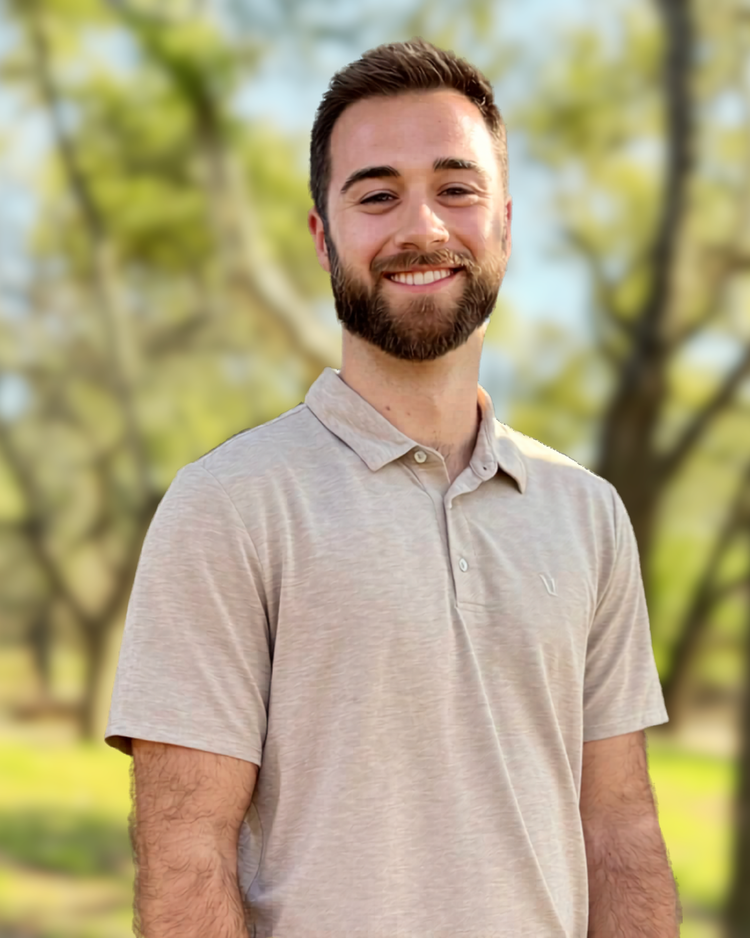
“Families often arrive with a lot of worry and very little information, so we start by explaining what the eating disorder is doing and what tends to help at home. When parents, partners, and siblings feel more confident, the person in treatment has steadier ground to stand on.”Chase O'Neal, LMFT-AssociateFamily Program Therapist, Empowered Treatment
Travel and insurance, one piece at a time.
Coming to Austin from New Mexico
Most New Mexicans fly into Austin for treatment, and our staff can help line up your arrival with your start date and housing.
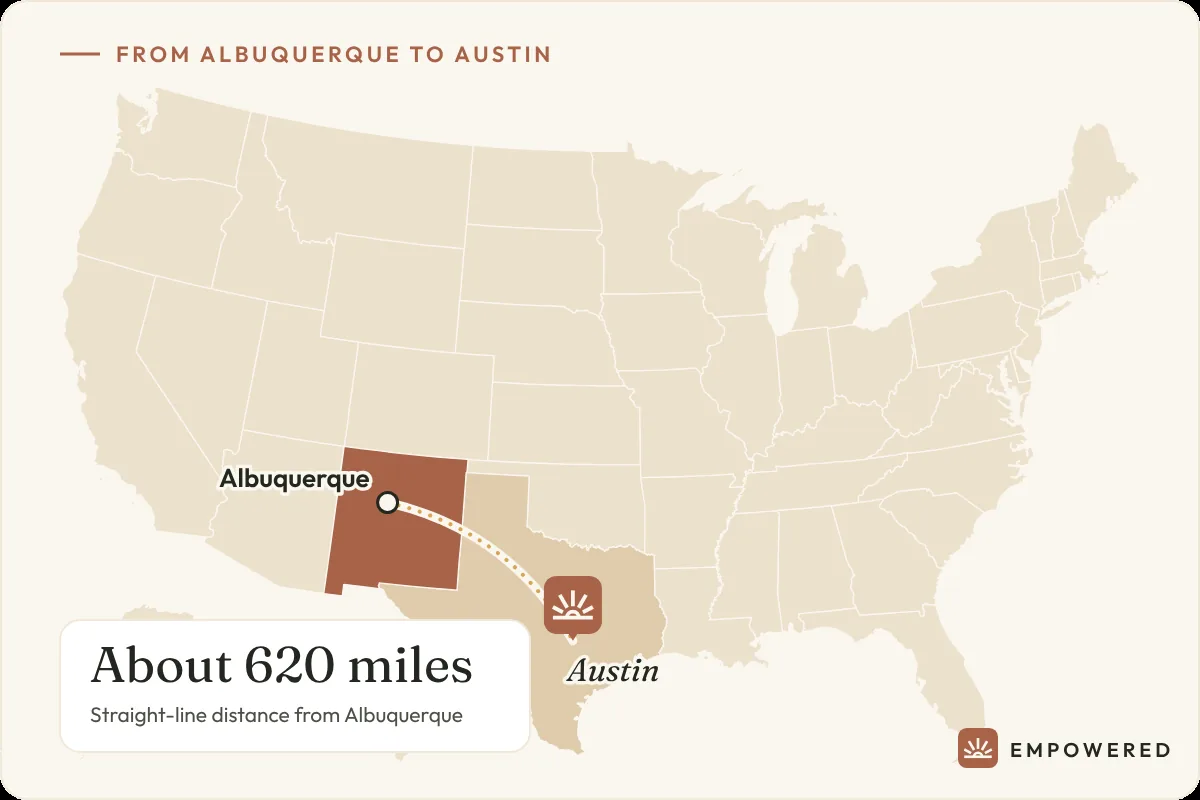
- Distance: about 620 miles from Albuquerque as the crow flies
- Airport: Albuquerque International Sunport (ABQ) has flights to Austin-Bergstrom International Airport (AUS)
- After landing: the drive from AUS to our center takes roughly 30 minutes, more during peak traffic
- Housing: transitional housing can be arranged for clients attending PHP or IOP
Figuring out coverage
Each plan treats specialty care differently. We can check your benefits for partial hospitalization and intensive outpatient care so you know where you stand.
- Request a check through our verify insurance page, or call to go over benefits together
- If your insurance is based in New Mexico, ask how it covers out-of-network care at a Texas program; we can help you know what to ask
- The New Mexico Office of Superintendent of Insurance helps residents with insurance questions and complaints
- If you are on New Mexico Medicaid, coverage for care outside your home state is usually limited, so call and we will help you understand what applies
Staying supported across New Mexico.
Recovery continues after you leave Austin, and support closer to home helps it last. These resources in New Mexico can help you and your family stay connected to care, wherever in the state you live.
- New Mexico Health Care AuthorityThe state agency that oversees Medicaid and publicly funded behavioral health programs in New Mexico.
- NAMI New MexicoThe state organization of the National Alliance on Mental Illness, with education and support for people affected by mental illness and their families.
- New Mexico Office of Superintendent of InsuranceHelp for residents with insurance questions, coverage problems, and complaints.
- 988 Suicide & Crisis LifelineCall or text 988, any time, from anywhere in the United States. In an emergency, call 911.
What New Mexicans want to know.
How do people from rural New Mexico make treatment in Austin work?
Many plan a temporary stay, with transitional housing covering where they live during PHP or IOP. Our team helps with timing, what to bring, and how to stay connected to home. See moving to Austin for eating disorder care.
Can my care team back in New Mexico stay involved?
With your permission, we can coordinate with your current therapist, doctor, or dietitian during treatment and as you plan discharge. That helps everyone stay on the same page and makes the handoff home smoother.
I am in midlife. Am I too old for eating disorder treatment?
No. Eating disorders affect adults of all ages, and some first appear or return later in life. Our page on eating disorders in midlife and beyond explains how treatment addresses the concerns that come with different life stages.
What if I relapse after going home?
Setbacks can be part of recovery and do not erase progress. Our aftercare planning includes warning signs and a plan for reaching support quickly. Read relapse after eating disorder treatment for more.
More for New Mexico
Articles and guides for readers in New Mexico.
The distance is real, and so is the help.
Call to talk with our clinical team about what is happening and what level of care might fit. The conversation is confidential and free.