
For people struggling with eating disorders in Maine, there is room to ask for more support.
Empowered Treatment is an adult eating disorder program in Austin, Texas, offering partial hospitalization, intensive outpatient care, and a transitional house for people who travel to attend. If you live in Maine and have been waiting a long time for the right fit, we are glad to talk.
Long winters and long waitlists can wear anyone down.
Maine's rhythm is shaped by its seasons: dark afternoons in January, a short burst of summer on the coast, and towns that empty out or fill up depending on the month. For someone living with an eating disorder, those shifts can quietly reinforce routines that feel safe but keep getting narrower. Whether you are in Lewiston, Bangor, a campus in Orono, or a fishing town Down East, the struggle is real even if no one else can see it.
You do not need a crisis to deserve care. Eating disorders affect thinking, mood, energy, digestion, and relationships, and they usually ease more with focused treatment than with waiting. If you have been holding on until a spot opens up, it may help to know what more structured care looks like and whether it could happen sooner somewhere else.

If you're tired of managing this on your own.
Eating disorders are exhausting to carry, even for people who look like they are coping well. Maybe you have kept a job, a household, or a degree program going while food rules quietly took over. Admitting that you are worn out is not weakness. It is useful information.
A call with our team is private and low pressure. We will ask a few questions, explain how PHP and IOP differ, and help you weigh whether traveling to Austin is realistic. If you have struggled for a long time, starting treatment after years of struggling may speak to you.
You are allowed to need help too.
Partners, parents, and siblings often spend months carrying worry, adjusting meals, and trying not to say the wrong thing. That takes a toll. Our page on caregiver burnout and eating disorders names what many families feel and offers ways to steady yourself.
When your loved one begins treatment, our family education helps you understand the illness, the plan, and your part in it. You can stay connected from Portland or Presque Isle, and you do not have to have every answer before you start.
Somewhere supportive to stay, far from the usual routines.
When the nearest fitting program is a plane ride away, the question of where to live can stop people before they start. Our transitional housing is a real house in Austin's Hyde Park neighborhood that you can live in while attending PHP or IOP. It offers structure, company, and a quiet place to return to, which can matter a great deal when home is on the other end of the country.
 Shared living spaces
 A room of your own
Nutrition and therapy, treated as partners.
Eating disorder recovery asks you to change both what you do with food and what food means to you. Our registered dietitians and therapists work side by side, joined by a family therapist and psychiatric providers, so that meal support, emotional work, and medical care move in the same direction. Together, we decide the level of care that fits and plan the support you will need when you return to Maine.
Partial hospitalization (PHP)
Full treatment days at our Austin center: supported meals, daily groups, individual therapy, dietitian care, and medical and psychiatric monitoring.
About PHP →Intensive outpatient (IOP)
Group programming plus weekly individual and dietitian sessions, built to fit around work, school, and family once more structure is not needed.
About IOP →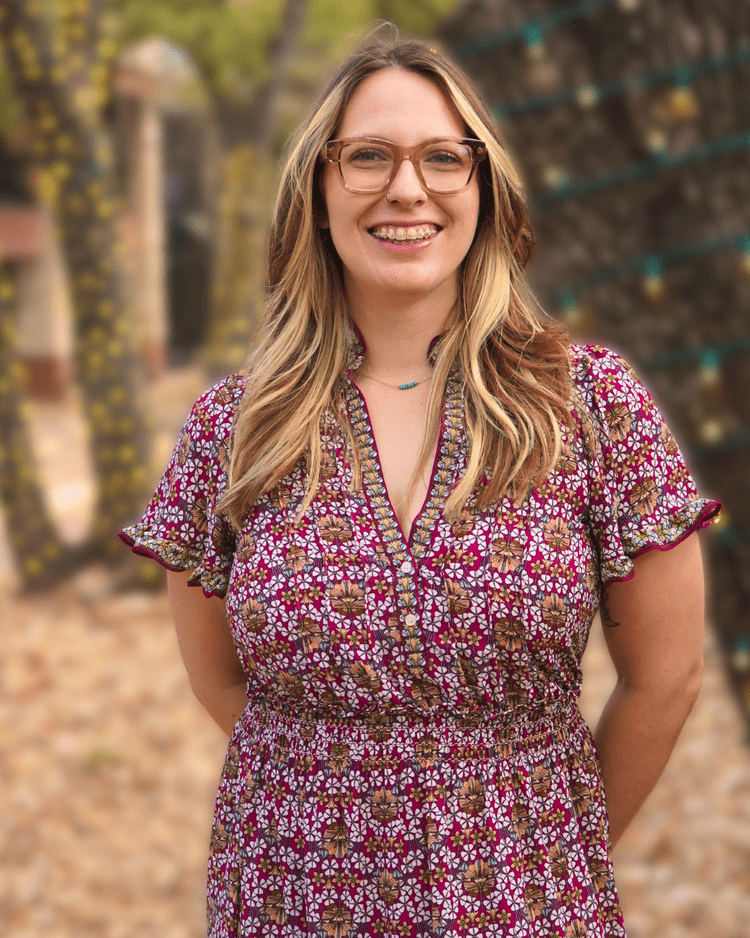
“I like to start by asking what eating has felt like lately, because the goal is never a perfect meal plan but a relationship with food that feels steadier and less frightening. We go at a pace that respects where someone is, and we practice each step together.”Madeline Thomas, MS, RD, LDDietitian, Empowered Treatment
From Maine to Austin, step by step.
Making the trip from Maine
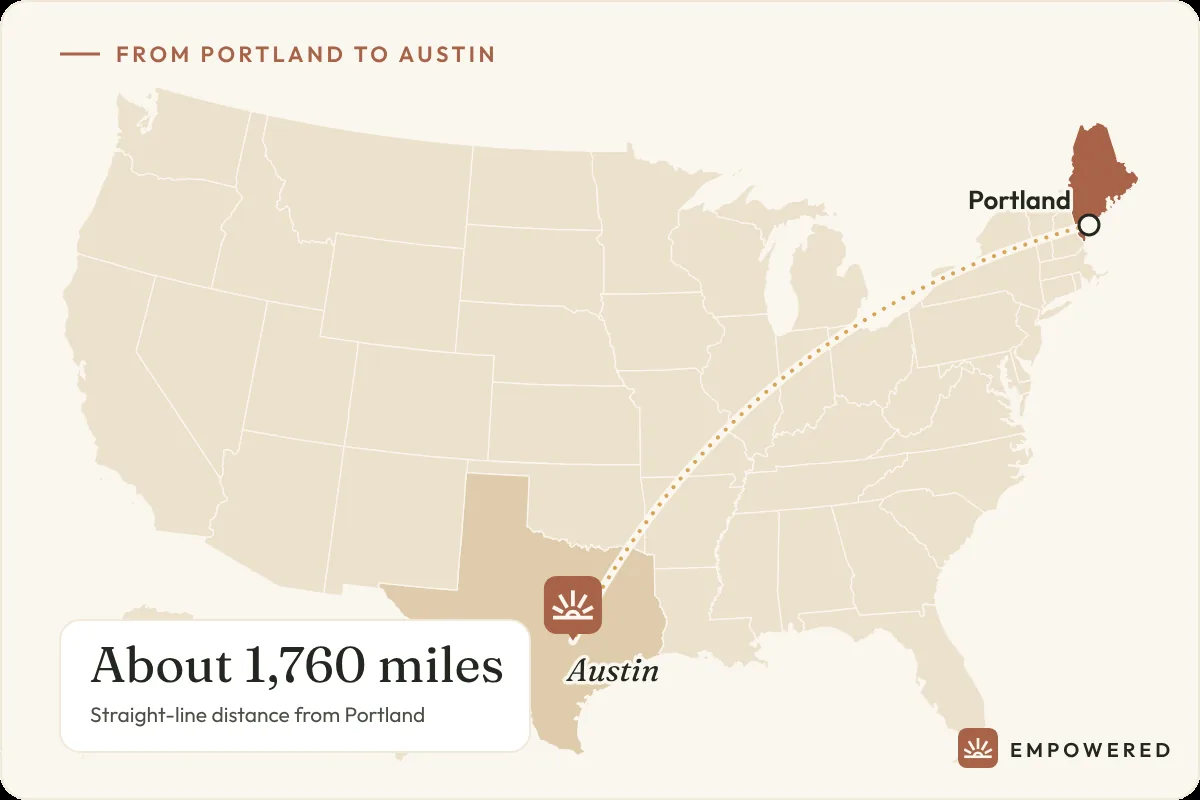
This is one of the longest trips to our center, so most people fly and plan their stay around the program schedule.
- Distance: about 1,760 miles from Portland as the crow flies
- Air travel: Portland International Jetport (PWM) and Bangor International Airport (BGR) both connect to Austin-Bergstrom International Airport (AUS) through larger hubs
- On arrival: our center is roughly a 30-minute drive from AUS, depending on traffic
- Staying in Austin: ask about our transitional housing in Hyde Park when you call
Coverage when your plan is based in Maine
Benefits for out-of-state care vary a lot between plans. We can look into yours and explain the options before you plan travel.
- Send your details through verify insurance and we will follow up
- A Maine-based plan may treat a Texas program as out-of-network; we help you ask about out-of-network benefits and any authorization steps
- The Maine Bureau of Insurance regulates insurers in the state and can be reached by phone with consumer questions
- Medicaid coverage for care outside your home state is usually limited, so call and we'll help you understand what applies
Resources to lean on back in Maine.
Recovery continues after you leave Austin. These resources in Maine can help you and the people around you keep support close at hand.
- Maine DHHS Office of Behavioral HealthState behavioral health resources, including the Maine Crisis Line, a peer support warmline, and referral information.
- NAMI MaineStatewide support, education, and advocacy for people affected by mental illness and the families who love them.
- Maine Bureau of InsuranceThe state insurance regulator, with consumer guides and a toll-free line for insurance questions.
- 988 Suicide & Crisis LifelineCall or text 988, any time, from anywhere in the United States. In an emergency, call 911.
Questions we hear from Mainers.
Is it unusual to travel from Maine to Texas for eating disorder care?
It is a big decision, but not an unusual one. Specialized adult programs are limited in many parts of the country, and some people choose to travel when the level of care they need is not available soon enough. We can help you compare options honestly.
What should I pack for Austin coming from Maine?
Austin is warm for much of the year, so lighter clothes are useful, plus a layer for air conditioning and cooler winter days. Bring medications, insurance cards, and anything that helps you feel grounded. Our team can share a more detailed list once your start date is set.
How will my care continue once I return home?
Discharge planning begins early. We work with you to identify outpatient providers in Maine, coordinate with them if you give permission, and talk through how to handle the first weeks home. Our page on relapse prevention covers more.
Do you offer any part of treatment remotely?
No. Our programs are fully in person in Austin, which is part of why we offer transitional housing for people coming from a distance.
More for Maine
Articles and guides for readers in Maine.
You don't have to wait to start asking questions.
Call our team to talk through what is going on and whether our program could help. The conversation is free and carries no obligation.