
For people struggling with eating disorders in Louisiana, recovery can start with a single honest conversation.
Empowered Treatment is an adult eating disorder program based in Austin, Texas, offering a partial hospitalization program, an intensive outpatient program, and transitional housing. If food has become a source of fear or secrecy, you do not have to sort it out by yourself.
Food is supposed to bring people together, not keep you apart.
Across Louisiana, an eating disorder might belong to an LSU student in Baton Rouge who plans each day around avoiding the dining hall, a refinery worker in Lake Charles who eats in secret after long shifts, or a young professional in New Orleans who dreads every family gathering because of what will be on the table. It can affect anyone, of any size or background.
When birthdays, holidays, and spring crawfish season gather people around a table, the isolation of an eating disorder can feel especially sharp. You may smile through those moments while running quiet calculations. That strain is real, and it is not a personal failing. It is a sign that support designed for eating disorders could help.

It is okay not to have the words yet.
Some people call us with a clear sense of what is wrong. Others only know that meals have become exhausting and that they cannot keep going this way. Either is a fine place to start. You do not need to label what you are going through before reaching out.
The person who answers will listen first. Together you can explore whether PHP, IOP, or a different kind of care would make sense. If you have struggled for a long time, our article on starting treatment after years of struggling may feel familiar.
Families feel this too, and they need support.
When the person you love pulls away from shared meals or seems consumed by food rules, it is natural to feel helpless, frustrated, or scared. You are allowed to feel all of that. What tends to help is steady, calm concern, without debating what they eat. See what not to say to someone with an eating disorder for gentle guidance.
Once an adult begins treatment with us, the family has a place in the work. Our family education gives parents, partners, and siblings a clearer picture of the illness and practical ways to respond, whether you are in Shreveport, Lafayette, or right outside New Orleans.
A home base for the weeks ahead.
From Acadiana, the Northshore, or the parishes along the Red River, the drive to Austin is long enough that commuting is off the table. Our transitional housing gives you a real home in Hyde Park, near the center of Austin, while you take part in PHP or IOP. Housemates are working on recovery too, and the evenings come with structure that supports your days in programming.
 Shared living spaces
 A room of your own
Mind and body, treated together.
Eating disorders are medical and psychological at the same time, so our team is built that way. Your therapist, dietitian, family therapist, and psychiatric providers coordinate closely and adjust your plan as you change. As discharge gets closer, we help you connect with clinicians in Louisiana so the care you started here has somewhere to continue.
Partial hospitalization (PHP)
Full treatment days at our Austin center: supported meals, daily groups, individual therapy, dietitian care, and medical and psychiatric monitoring.
About PHP →Intensive outpatient (IOP)
Group programming plus weekly individual and dietitian sessions, built to fit around work, school, and family once more structure is not needed.
About IOP →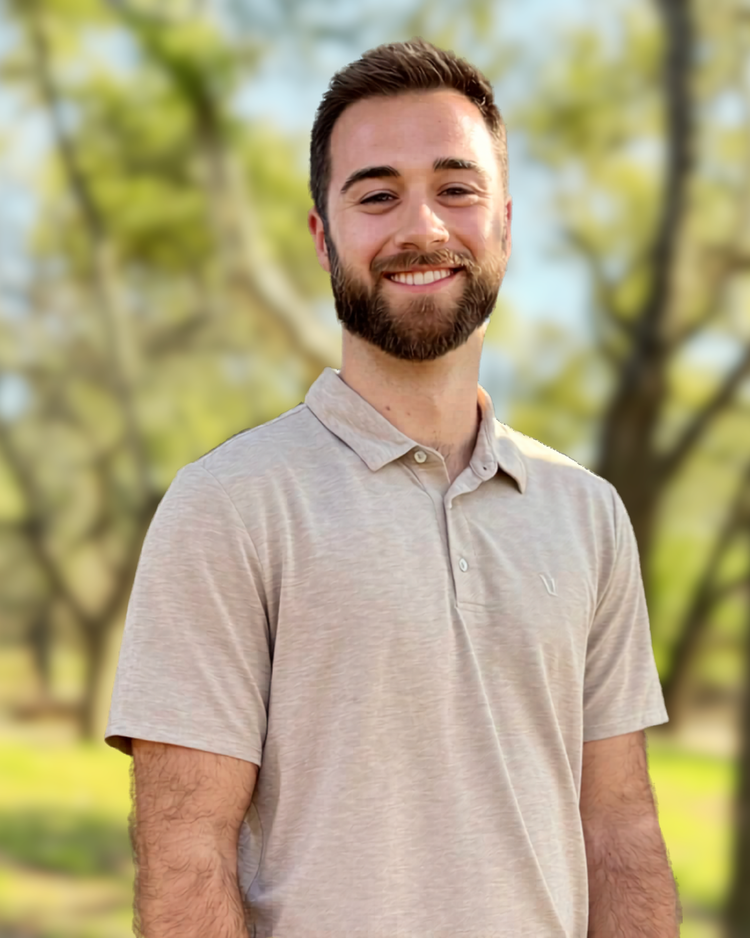
“Families often come to us worried that they caused this or that they have already said the wrong thing, and I want them to hear that they can still be a real source of support. My role is to help everyone understand the illness well enough that home starts to feel like a safer place to recover.”Chase O'Neal, LMFT-AssociateFamily Program Therapist, Empowered Treatment
Travel and benefits, made clearer.
Coming to Austin from Louisiana
Interstate 10 links south Louisiana with Central Texas, and flights from the state’s larger airports connect to Austin as well. We can talk with you about the timing of your arrival.
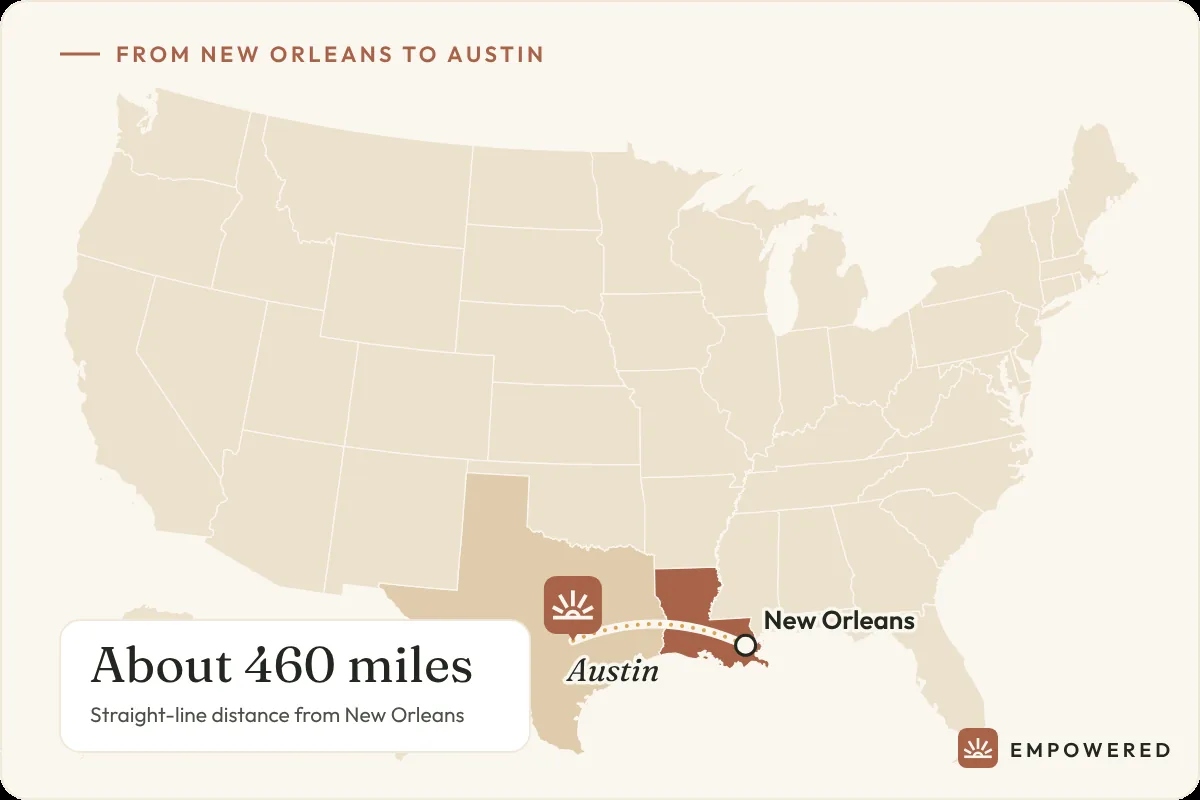
- Distance: about 460 miles from New Orleans as the crow flies
- By air: Louis Armstrong New Orleans International Airport (MSY), Baton Rouge Metropolitan Airport (BTR), and Shreveport Regional Airport (SHV) offer routes to Austin-Bergstrom International Airport (AUS)
- Last leg: from AUS, plan on roughly a 30-minute drive to our Spicewood Springs Road center, longer at rush hour
- Staying in Austin: our transitional housing pairs with either PHP or IOP
How coverage may work
Every policy is different. Our admissions team can review your benefits for partial hospitalization and intensive outpatient care, and explain what your plan says about providers outside Louisiana, before you make arrangements.
- Start with our insurance verification page, or give us a call and talk it through
- A plan based in Louisiana may treat care in Texas as out of network; we can help you know what to ask your insurer about out-of-state benefits
- The Louisiana Department of Insurance explains appeal rights and can help with questions or a complaint against a health insurer
- If your coverage is through Medicaid, benefits for care outside your home state are usually limited, so call and we will help you understand what applies
Help that stays with you when you head home.
Stepping down from a program is easier with support already lined up. These statewide resources in Louisiana can help you and your family stay connected to care after treatment.
- Louisiana Department of Health: Office of Behavioral HealthState behavioral health services by region, a provider directory, and Louisiana 988 for call, text, or chat support at any hour.
- NAMI LouisianaFamily support groups, Family-to-Family education, and guidance for caregivers of people living with mental illness.
- Louisiana Department of InsuranceHealth insurance information, appeal rights, and help from the Office of Consumer Services with questions and complaints.
- 988 Suicide & Crisis LifelineCall or text 988, any time, from anywhere in the United States. In an emergency, call 911.
Common questions from Louisiana.
Can someone from Louisiana attend your program?
Yes, adults from Louisiana can enroll. Care happens in person at our Austin center, so people from out of state often live in our transitional housing during PHP or IOP. We help you plan the move and the start date.
Will family gatherings back home be part of what we work on?
They can be. Many people want help with holidays, celebrations, and shared meals, and that is a normal part of treatment. Therapy and nutrition sessions can focus on these moments, and our family education helps relatives know how to make them easier.
What if I am already in treatment somewhere else?
Some people come to us after another program, or because their current care no longer feels like enough. We can coordinate with your existing providers. Our page on switching from another program explains how that transition usually works.
Do you treat anxiety or depression along with the eating disorder?
Yes. Eating disorders often travel with anxiety, depression, trauma, or OCD, and our team treats them together rather than one at a time. Read more about eating disorders and co-occurring conditions.
More for Louisiana
Articles and guides for readers in Louisiana.
Reach out whenever you are ready.
A member of our clinical team can listen to what has been happening and talk through options with you. The call is confidential and comes with no pressure to decide.