
For people struggling with eating disorders in Florida, from the Panhandle to the Keys.
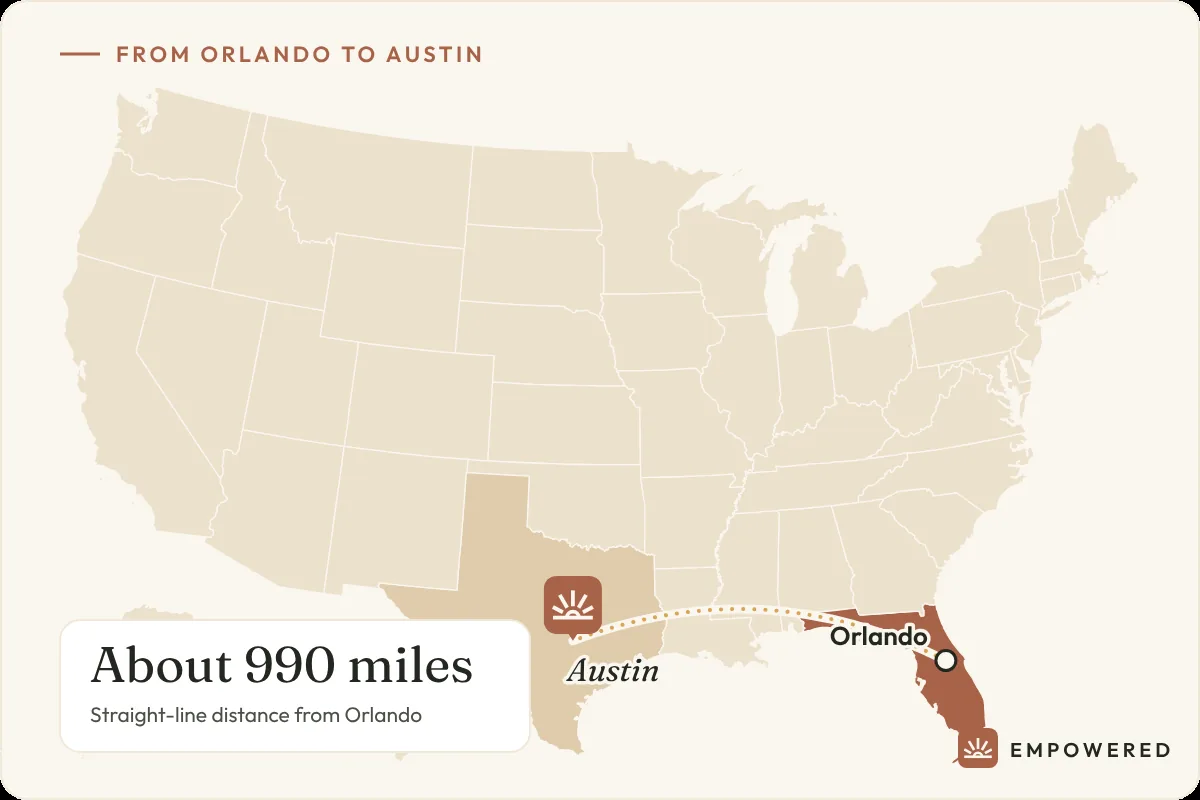
Empowered Treatment is an Austin program for adults with eating disorders, offering partial hospitalization, intensive outpatient care, and a transitional house where clients can live during treatment. It is a flight from Florida, with a team that can help you plan each piece of it.
Hiding it can become a full-time job.
Florida life often happens in public: on beaches, at theme parks, by the pool, in swimsuits for most of the year. For someone with an eating disorder, that can mean constant body checking, planning outfits around how you look, or skipping meals before a weekend outing. It shows up in Gainesville and Tallahassee dorms, during Tampa hospital shifts, in Orlando hospitality jobs, and in people well into retirement who have never told anyone.
Eating disorders are not about vanity, and they are not limited to one age, size, or background. They are serious conditions that tend to tighten their grip over time, often while the person still looks fine to everyone else. If you are tired of the effort it takes to keep the eating disorder running, that exhaustion is useful information. It can be where a different kind of help begins.

It is okay to want things to feel easier.
Maybe you have tried meal plans from the internet, new rules, or promises that Monday will be different. Eating disorders are very good at convincing people that the next attempt at control will finally fix things. Specialized treatment works differently: it replaces rules with structure, and it addresses the thoughts underneath the behaviors.
Calling us is confidential. A member of our team will ask what has been going on, explain how partial hospitalization and intensive outpatient care differ, and help you sort out what level of support makes sense. If you are already in another program and it is not helping, read about switching programs.
When the person you love is an adult.
Supporting an adult with an eating disorder is different from supporting a child. You cannot make the decision for them, and pushing too hard can backfire. You can name what you have noticed, stay calm, and keep the door open. Our guide to when a loved one refuses help offers language that respects their autonomy.
If they do come to Austin, our family education gives you a clearer picture of the illness and your place in recovery. It helps parents, partners, and siblings replace guesswork with a plan, so the support you offer during visits, calls, and the eventual return home actually helps.
A house to come back to each evening.
Moving roughly a thousand miles for treatment goes more smoothly when the basics are already handled. Our transitional housing is a real house in Austin's Hyde Park neighborhood, available to adults in PHP or IOP. Instead of an empty apartment or a hotel room, you return to housemates doing the same work and to support during the hours outside of programming, when old habits can pull hardest.
 Shared living spaces
 A room of your own
Food, feelings, and physical health in one plan.
Our clinicians do not work in silos. Therapists who specialize in eating disorders, registered dietitians, psychiatric providers, and a family therapist build one treatment plan with you and adjust it together as things change. Nutrition is approached as part of therapy rather than a separate assignment, and before you head back to Florida we help line up outpatient providers so momentum is not lost.
Partial hospitalization (PHP)
Full treatment days at our Austin center: supported meals, daily groups, individual therapy, dietitian care, and medical and psychiatric monitoring.
About PHP →Intensive outpatient (IOP)
Group programming plus weekly individual and dietitian sessions, built to fit around work, school, and family once more structure is not needed.
About IOP →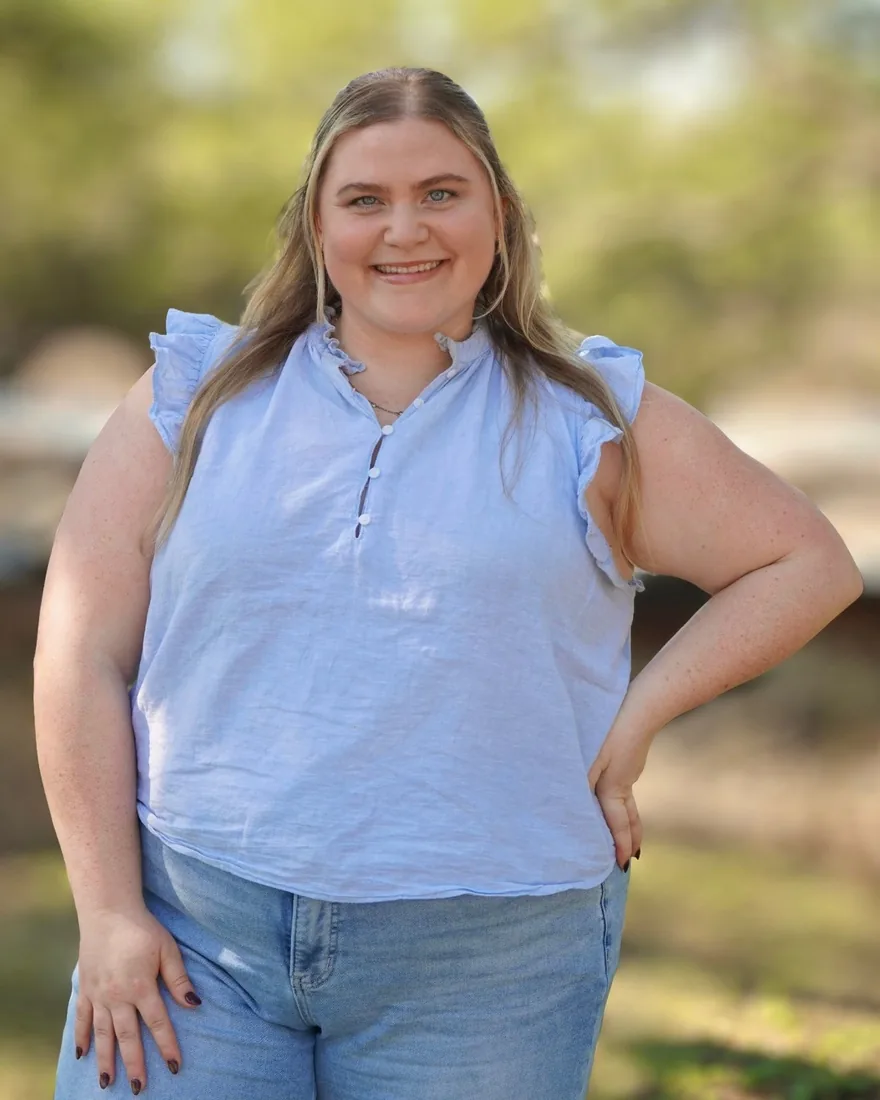
“In nutrition sessions, my goal is to help people rebuild trust with food at a pace that feels doable, starting with regular, adequate meals and working toward more flexibility over time. We talk openly about the fears that come up at the table, because those fears are part of the work, not a sign that someone is doing it wrong.”Curissa Groll, MS, RD, LDDietitian, Empowered Treatment
Flights, coverage, and next steps.
Flying to Austin from Florida
Florida has several large airports with service to Texas, so most people can find a route that lines up with their start date.
- Distance: about 990 miles from Orlando as the crow flies
- Airports: Orlando International (MCO), Miami International (MIA), Tampa International (TPA), and Fort Lauderdale-Hollywood International (FLL) all have routes into Austin-Bergstrom International Airport (AUS)
- From the airport: plan on about a half-hour drive from AUS to our Spicewood Springs Road center, longer at rush hour
- Where to stay: ask about transitional housing in Hyde Park while you attend PHP or IOP
Coverage when your plan is in Florida
Every plan treats out-of-state and out-of-network care a little differently. We would rather you know what to expect up front than be surprised later, so we check benefits before you make plans.
- Use our verify insurance page, or call and we will go through your card with you
- For a plan based in Florida, the key questions are whether it includes out-of-network benefits and how it covers PHP and IOP delivered in Texas; we can help you frame those questions
- The Florida Department of Financial Services Consumer Helpline assists with insurance questions and problems with a claim
- Before you decide, read what to know about eating disorder treatment costs
Support in the Sunshine State for the long run.
Treatment is one chapter. These statewide organizations in Florida can help you and the people close to you keep support going after you return home.
- Florida Department of Children and Families: Substance Abuse and Mental HealthThe state's mental health and substance use authority, with treatment information and a search for services by county.
- NAMI FloridaFree classes such as Family-to-Family, plus family support groups and NAMI Connection groups across the state.
- Florida Department of Financial Services Consumer HelplineHelp from the state with insurance questions, health plan FAQs, and claim problems.
- 988 Suicide & Crisis LifelineCall or text 988, any time, from anywhere in the United States. In an emergency, call 911.
Questions from Florida, answered plainly.
How do people from Florida usually handle the move for treatment?
Treatment here is usually measured in weeks rather than days, so it helps to plan for work leave, pets, bills, and travel dates. Many people stay in our transitional housing. Moving to Austin for care covers the planning in more detail.
Is Austin weather much different from Florida?
Austin summers are hot like Florida's, though usually less humid, and winters are cooler, with an occasional freeze. Pack a few layers for fall and winter. Most of your day is spent indoors at our center, so the weather rarely affects programming.
Can I keep my job while I am in Austin?
That depends on your level of care. PHP is 30 hours a week, so work is usually paused. Our IOP is 9 hours a week plus individual and dietitian sessions. See telling your employer for help with that conversation.
Do you treat binge eating disorder, or only anorexia?
We treat adults with a range of eating disorders, including anorexia, bulimia, binge eating disorder, ARFID, and OSFED. The diagnosis matters less than how much the eating disorder is affecting your life.
More for Florida
Articles and guides for readers in Florida.
One phone call can steady things.
Reach out to talk with our clinical team about what is happening and which program might fit. Asking questions costs nothing and does not lock you into anything.