
For people struggling with eating disorders in Colorado, from the Front Range to the Western Slope.
Empowered Treatment runs partial hospitalization and intensive outpatient programming for adults with eating disorders in Austin, Texas, and offers a transitional house for those who need somewhere to stay. If what you have tried so far has not been enough, this is one more door worth knocking on.
The struggle is often hidden in plain sight.
In Colorado, an eating disorder can live quietly inside an ordinary week. It might belong to a graduate student in Boulder who counts every bite, a ski patroller in Summit County who forgets to eat until dark, a parent in Colorado Springs who eats only after the kids are asleep, or a retiree in Grand Junction who has followed the same food rules for decades. None of them has to look sick to be struggling.
What these stories share is a slow narrowing. Food becomes a set of calculations, movement becomes something owed, and the body becomes a project that is never finished. If that pattern feels like yours, you are not overreacting by wanting help. Noticing it, and naming it, is often where real change begins. Help is available, and it can begin with a conversation.

Your struggle counts, even if it doesn’t look dramatic.
Some people wait for a crisis before they let themselves ask for help. You do not have to. If you are exhausted by the rules, frightened by how much time food takes up, or tired of hiding it from the people around you, those are good reasons to reach out now.
Your first call reaches a person on our admissions team who understands eating disorders. They will listen to what has been going on, give you straight answers, and help you weigh whether our partial hospitalization or intensive outpatient program could be a fit. If neither fits, we will say so.
Loving someone through this is hard work.
Maybe you have noticed meals disappearing, a new intensity about exercise, or a mood that changes around food. It is normal to second-guess yourself, and normal to fear saying the wrong thing. Our article on when a loved one refuses help covers what to do if your first attempt to talk is pushed away.
If your adult child, partner, or sibling begins treatment in Austin, you still matter to how it goes. Our family education sessions explain what the illness is doing, what a treatment day involves, and how relatives can offer steady encouragement from Denver, Durango, or anywhere in between.
A home base far from the usual pressures.
Leaving Pueblo, Fort Collins, or a mountain town for treatment means stepping away from routines that may have kept the eating disorder in place. Our transitional housing, a residential home in the Hyde Park area of central Austin, gives you a steady place to live during PHP or IOP, with housemates who understand the work and evenings that feel calmer than the ones you left.
 Shared living spaces
 A room of your own
Coordinated care, not a patchwork.
Your therapist, dietitian, family therapist, and psychiatric provider share notes and goals rather than working in separate silos. That matters, because an eating disorder touches mood, physical health, relationships, and daily eating all at once. Together we decide which level of care makes sense now, adjust as you change, and plan aftercare that connects you with support once you return to Colorado.
Partial hospitalization (PHP)
Full treatment days at our Austin center: supported meals, daily groups, individual therapy, dietitian care, and medical and psychiatric monitoring.
About PHP →Intensive outpatient (IOP)
Group programming plus weekly individual and dietitian sessions, built to fit around work, school, and family once more structure is not needed.
About IOP →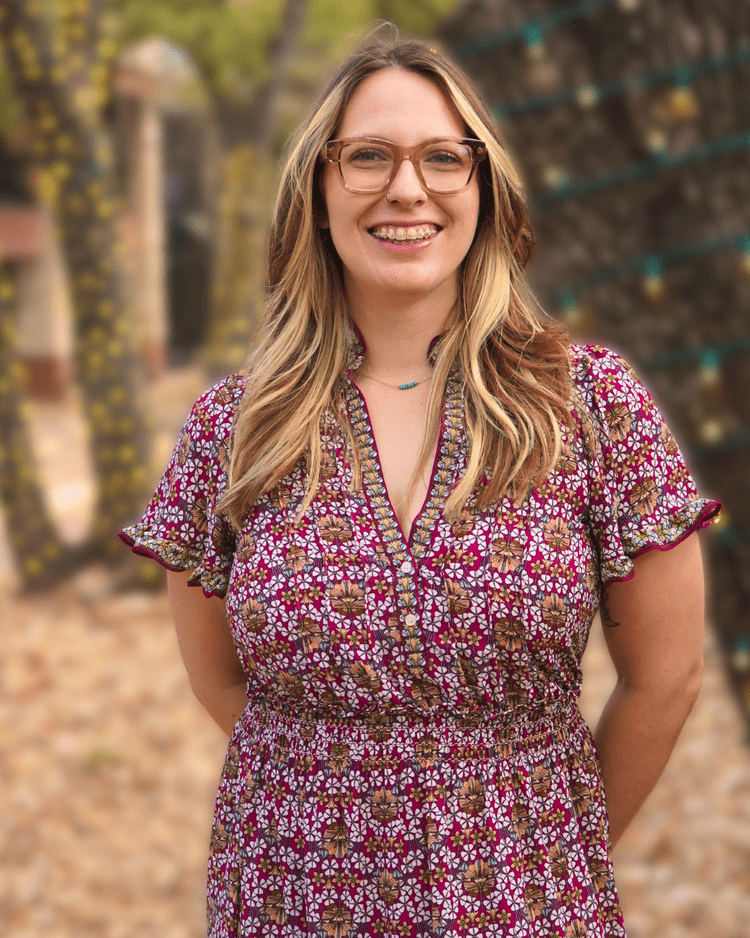
“In nutrition sessions, I want people to feel curious about food again instead of afraid of it, and we take things one manageable step at a time. We practice real meals together until eating starts to feel less like a test and more like taking care of yourself.”Madeline Thomas, MS, RD, LDDietitian, Empowered Treatment
Planning the trip and the paperwork.
Traveling to Austin from Colorado
Coming from Colorado usually means a flight. Before you book, our admissions staff can talk through arrival timing, packing, and how to settle in ahead of programming.
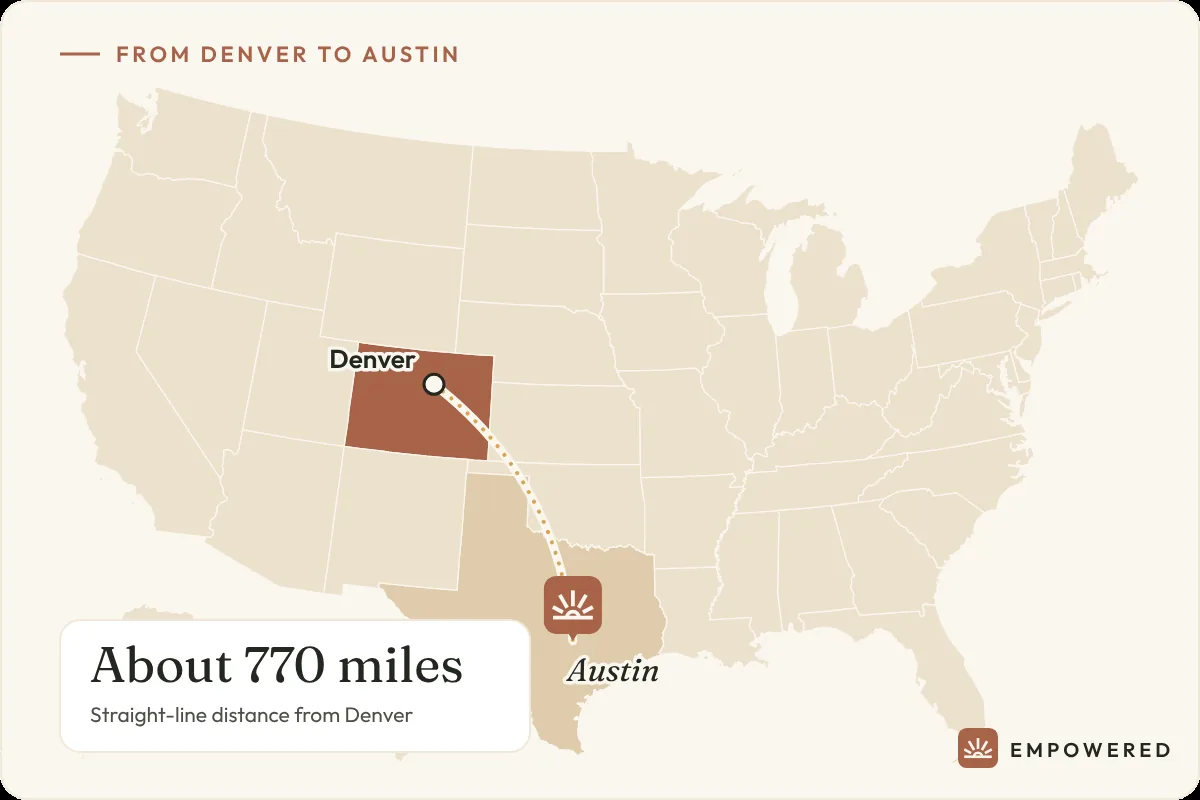
- Distance: about 770 miles from Denver as the crow flies
- Air travel: flights leave Denver International Airport (DEN) and Colorado Springs Airport (COS) for Austin-Bergstrom International Airport (AUS)
- Ground time: plan on around 30 minutes by car from AUS to Spicewood Springs Road, more at rush hour
- A place to live: the transitional house can be paired with either PHP or IOP
Questions about coverage
Before you make plans, we can look at your benefits with you, including how your plan treats partial hospitalization, intensive outpatient care, and providers in another state.
- Start with our insurance verification form, or phone us and a team member will check your benefits
- With a Colorado-based plan, find out how it handles care delivered in Texas and what out-of-network benefits look like; we help you ask the right questions
- The Colorado Division of Insurance explains mental health parity and how to appeal a denied claim
- Our guide to treatment costs explains common expenses and questions to raise
Keeping support in place once you’re back.
Treatment is one chapter, and the next one happens at home. These statewide options in Colorado can help you and the people close to you find ongoing care, education, and help with coverage.
- Colorado Behavioral Health AdministrationThe state agency coordinating mental health and substance use services, with a directory to search for care and a link to crisis support.
- NAMI ColoradoFamily support groups and free education programs such as Family-to-Family for relatives and caregivers.
- Colorado Division of InsuranceGuidance on mental health coverage rules, denied claims, appeals, and how to contact the Division with a complaint.
- 988 Suicide & Crisis LifelineCall or text 988, any time, from anywhere in the United States. In an emergency, call 911.
What Coloradans often want to know.
Is it realistic to leave Colorado for several weeks of treatment?
For many adults it is, with planning. People often arrange leave from work, line up help at home, and stay in our transitional housing while attending programming. Our admissions team can walk through the logistics with you before you decide anything.
Will my care team stay in touch with my providers in Colorado?
With your permission, yes. We can coordinate with an outpatient therapist, dietitian, or doctor you already see, and as discharge approaches we help you set up follow-up care back home so the transition is not abrupt.
What does a day in partial hospitalization look like?
PHP runs about 30 hours a week, with group therapy, supported meals, nutrition work, and individual sessions. It offers more structure than weekly therapy while letting you sleep somewhere other than a hospital.
Is treatment only for people who are underweight?
No. Eating disorders occur at every body size, and many people who need help are not underweight. We treat anorexia, bulimia, binge eating disorder, ARFID, and other presentations, which our conditions we treat page describes.
More for Colorado
Articles and guides for readers in Colorado.
The next step can be a single phone call.
Talk with our team about what you are facing and what kind of care might help. There is no fee for the conversation and no pressure to decide anything.