
For people struggling with eating disorders in Alabama, there is a path forward that fits your life.
If food and your body have started running the show, you deserve care built for adults. At Empowered Treatment in Austin, Texas, adults can step into partial hospitalization or intensive outpatient programming, with transitional housing for anyone who needs a place to stay.

Plenty of people hold it together on the outside.
An eating disorder can live inside a full calendar. It can belong to an engineer on the Huntsville research corridor who works through every lunch, a graduate student in Tuscaloosa or Auburn counting everything on the plate, a teacher in the Wiregrass, or a parent in Mobile who feeds everyone else first. From the outside, life can look busy and fine. Inside, the rules about food keep tightening.
Maybe you have tried to handle it on your own for a long time. Maybe weekly appointments helped for a while and then stopped being enough. Neither means you failed. Eating disorders are medical and psychological conditions, and they respond to structured, specialized care. Looking into that kind of care is a reasonable next step, not an overreaction.

Your struggle counts, even if nobody else has noticed.
A lot of adults wait because they still function. They show up to work, keep up with family, and tell themselves it is not serious. But how much space food takes in your head matters more than how things look from the outside. If you keep second-guessing yourself, this piece on the “not sick enough” feeling may sound familiar.
When you call, you will reach someone on our team who can explain how our partial hospitalization program and intensive outpatient program work, what a typical week looks like, and what the next step could be. The conversation is confidential, and you are not signing up for anything by having it.
Supporting an adult you love, from hundreds of miles away.
Maybe you are a parent in Montgomery, a spouse in Birmingham, or a sibling near the coast, and you have watched someone you love grow quieter around meals. It is normal to feel unsure about how to raise it. Our page of practical ways to support someone suggests gentle openings that leave blame out of it.
Distance does not shut you out of the process. In our family education sessions, parents, partners, and siblings hear what eating disorders do, how treatment unfolds, and how to respond in ways that support recovery rather than add pressure, whether you join from home or visit Austin.
A steady home base for the weeks ahead.
Leaving Alabama for treatment can feel like a big ask, especially if you have never spent much time in Texas. For clients enrolled in PHP or IOP, we offer housing in a house in Hyde Park, one of Austin’s older central neighborhoods. Evenings and weekends, when eating disorder thoughts often get loudest, you come back to structure and to housemates who understand.
 Shared living spaces
 A room of your own
One team, one shared plan.
Your therapists, dietitians, family therapist, and psychiatric providers meet regularly to talk about how you are doing, so nobody is working from half the story. Meals, emotions, medications, and medical monitoring are treated as parts of the same recovery. As you get stronger, we plan your step down with you and help line up support in Alabama for when you return.
Partial hospitalization (PHP)
Full treatment days at our Austin center: supported meals, daily groups, individual therapy, dietitian care, and medical and psychiatric monitoring.
About PHP →Intensive outpatient (IOP)
Group programming plus weekly individual and dietitian sessions, built to fit around work, school, and family once more structure is not needed.
About IOP →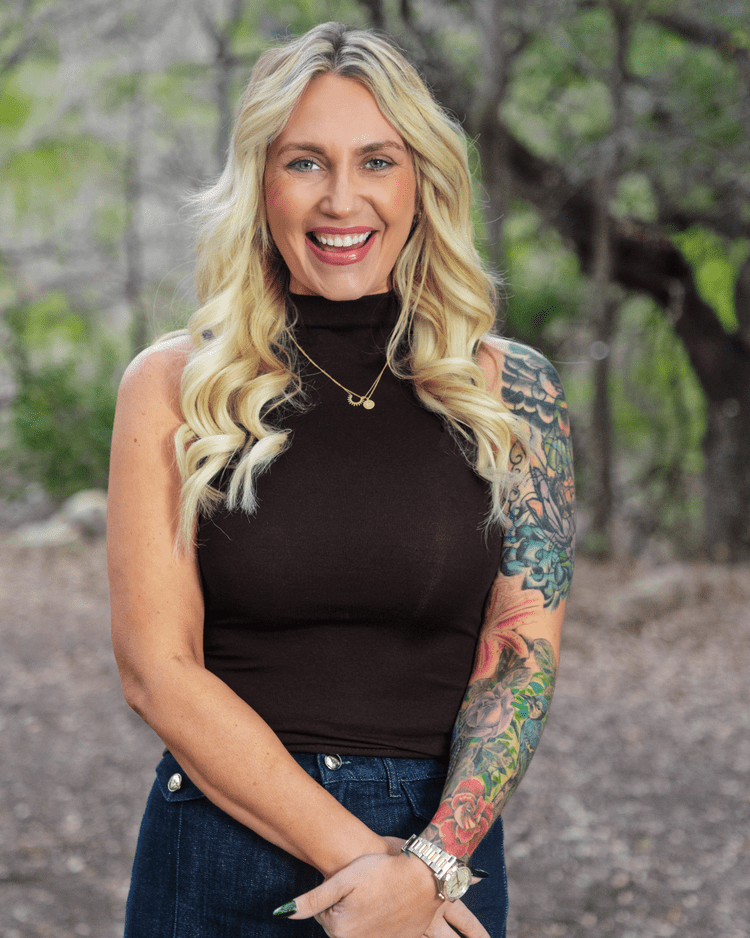
“Plenty of callers start by telling me they are not sure this is for them, and I always say we can figure that out together, one question at a time. I want flights, schedules, and paperwork to feel handled so your energy can go toward healing.”Brittni PogueCo-Founder & Director of Admissions and Business Development, Empowered Treatment
Planning the trip and the coverage.
Traveling from Alabama to Austin
Alabamians usually make this trip by air. Our admissions staff can walk you through choosing a start date, arranging arrival, and packing for a longer stay.
- Distance: about 680 miles from Birmingham as the crow flies
- Airports: Birmingham-Shuttlesworth International Airport (BHM) and Huntsville International Airport (HSV) both have flights to Austin-Bergstrom International Airport (AUS), with routes and connections that vary by airline and season
- After you land: plan on roughly a 30-minute drive from AUS to our Spicewood Springs Road center, a bit longer at rush hour
- Lodging: ask us about transitional housing when you schedule, since it is paired with PHP or IOP
Understanding your benefits
Before you book a flight, our admissions team can review what your plan covers for partial hospitalization and intensive outpatient care, and explain any out-of-network details in plain terms.
- Start with our insurance verification form, and someone from admissions will follow up with what we find
- For an Alabama-issued plan, the key questions are how it treats care delivered in Texas and whether out-of-network benefits kick in; we can help you frame them
- The Alabama Department of Insurance takes consumer complaints and offers information on health coverage options
- Curious about cost beyond insurance? See what to know about eating disorder treatment costs
Keeping support in place once you are home.
Your discharge plan matters as much as your first day. These statewide resources in Alabama can help you and your family stay connected to care after you finish programming in Austin.
- Alabama Department of Mental HealthStatewide information on mental health services, crisis centers, a provider directory, and 988 crisis support.
- NAMI AlabamaFamily-to-Family classes and family support groups for relatives and friends of people living with mental health conditions.
- Alabama Department of InsuranceHealth coverage information for Alabama consumers, plus an online form for complaints against insurers.
- 988 Suicide & Crisis LifelineCall or text 988, any time, from anywhere in the United States. In an emergency, call 911.
What Alabamians often ask before the first call.
Is it worth going all the way to Texas for treatment?
For some people, yes. The right fit depends on the level of care you need, your schedule, and the support around you. If you are weighing options, our article on how to choose an eating disorder program lays out what to look for, and we are glad to talk it through honestly.
What if I am in school at a university in Alabama?
Students sometimes take a semester or a reduced load to focus on recovery. We can talk with you about timing, documentation you may need, and how PHP or IOP might fit. Our page on college students and eating disorder care covers more.
Who will I talk to when I call?
A member of our admissions team who works with adults and families every day. They will ask about what you are experiencing, answer questions about our programs and housing, and explain next steps. Curious about the flow of that call? Here is a walkthrough.
Can my family be involved if they stay in Alabama?
Yes. With your consent, family members can take part in family education and sessions with our family therapist, even if they are not in Austin. Many families find this helps them understand recovery and support you more confidently when you return home.
More for Alabama
Articles and guides for readers in Alabama.
Ready when you are, no pressure before then.
Tell us a little about what has been happening, and we will help you sort out whether PHP, IOP, or housing fits. A phone call is free and leaves every decision with you.