
About 320 miles from McAllenAdults 18+In person in Austin
ARFID treatment for McAllen adults whose food fears have narrowed family meals and social life.
Empowered Treatment offers adult ARFID treatment in Austin, about 320 miles from McAllen, with gradual exposure, dietitian support, and therapy in PHP or IOP while you stay in our Hyde Park house. If a short list of safe foods has started deciding which family meals you join and which invitations you turn down in the Valley, treatment works on widening that list at a pace you agree to.
about320miles
About 5 hours each way by car. US-281 north to San Antonio, then I-35.
Other Texas cities we serve, by distance
- 30 hrsa week in partial hospitalization: supported meals, groups, therapy, dietitian, medical and psychiatric care
- 9 hrsa week of group programming in IOP, plus weekly individual and dietitian sessions
- 1 housein Hyde Park, alongside PHP or IOP, with shared meals and a room of your own
- 18+adults only, with every hour of care in person at our Austin center
Not picky eating, and not something you have to explain away again.
Avoidant/restrictive food intake disorder narrows what you can eat until it affects your health or your life. It is not about weight or body image. Usually one of three things drives it: strong reactions to texture, taste, or smell; fear of choking, vomiting, or getting sick; or so little interest in food that eating feels like a chore. Our adult ARFID program in Austin treats whichever of those is driving it, along with the anxiety that often comes with it.
In the Valley, ARFID collides with a food culture built on sharing. A tamalada at Christmas, a carne asada in a cousin’s backyard in Mission, a plate an aunt fills and hands you before you can say no. When you cannot eat most of what is on the table, every gathering becomes something to manage: eating before you go, claiming you already ate, or skipping it. Over years, that quietly shrinks a social life and leaves relatives hurt or confused.
When the avoidance comes with a fear of getting bigger or a dislike of your own shape, the better fit may be anorexia treatment for McAllen adults, and your assessment with an ARFID specialist in Austin will say which.
When safe foods start deciding where you can go.
ARFID can stay manageable for a long time and then tip. These signs suggest it is time for structured care:
- Your list is getting shorter.Foods that used to work have dropped away, and nothing new has replaced them in a long time.
- Gatherings are avoided or endured.Birthdays, holidays, and weekend family meals feel like tests you plan around rather than time with people.
- Your body is short on fuel.Weight loss, low energy, poor concentration, or a doctor in McAllen flagging iron or vitamin levels.
- Shakes and bars are your meals.Supplements have moved from backup to the main way you get through the day.
- One frightening event changed everything.Since a choking or vomiting episode, eating has not felt safe, and the fear keeps spreading.
- Work or dating is bending around food.You turn down lunches, trips, or dates because there will be nothing you can eat.
A ladder of foods you build, climbed one rung at a time.
ARFID care at Empowered is in person at our Austin center, and it starts with steadiness before challenge. Because you are living in the house rather than driving back to McAllen each night, you get daily practice with support close at hand, which suits exposure work well.
Your safe foods as the starting point
A dietitian begins with what you already eat and fills the nutritional gaps first. New foods only come once your energy can carry the effort.
An exposure ladder you shape
You and your therapist rank foods from least to most frightening, and you choose when to take the next step. Foods from your family’s kitchen can be on that ladder, so the practice points toward the tables you miss.
A plan aimed at your driver
Sensory sensitivity, fear of choking or vomiting, and low appetite each need a different approach, and your Austin assessment works out which one leads before any exposure begins.
CBT for the fear itself
CBT for food-related fear names what you expect to happen when you take a bite, then lets you check it, again and again, until the prediction loses its power. You carry that from supported meals to dinner at the house.
ARFID often travels with anxiety or depression. Co-occurring eating disorder treatment for McAllen adults covers treating both at once.
About five hours north, and a shared table every evening.
The center is about 320 miles from McAllen, roughly 5 hours by US-281 and I-35, so ARFID treatment from the Rio Grande Valley pairs with our transitional housing in Hyde Park. For ARFID the house is more than a bed. Shared meals in a real home are a gentle, ordinary place to practice eating around other people, which is often the exact skill that family gatherings back home have been asking of you.
- A first callTell us which foods feel safe, which ones you avoid, and how long it has been this way.
- A benefits checkWe can check your benefits before you decide, including PHP and IOP coverage.
- An assessment in AustinYou meet the team in person, and part of the visit is finding your main driver.
- Practice at the centerNew foods arrive at supported meals, at the step you agreed to, with someone beside you.
- Practice at the houseShared meals at Hyde Park let you try the same step again in a calmer, social setting.
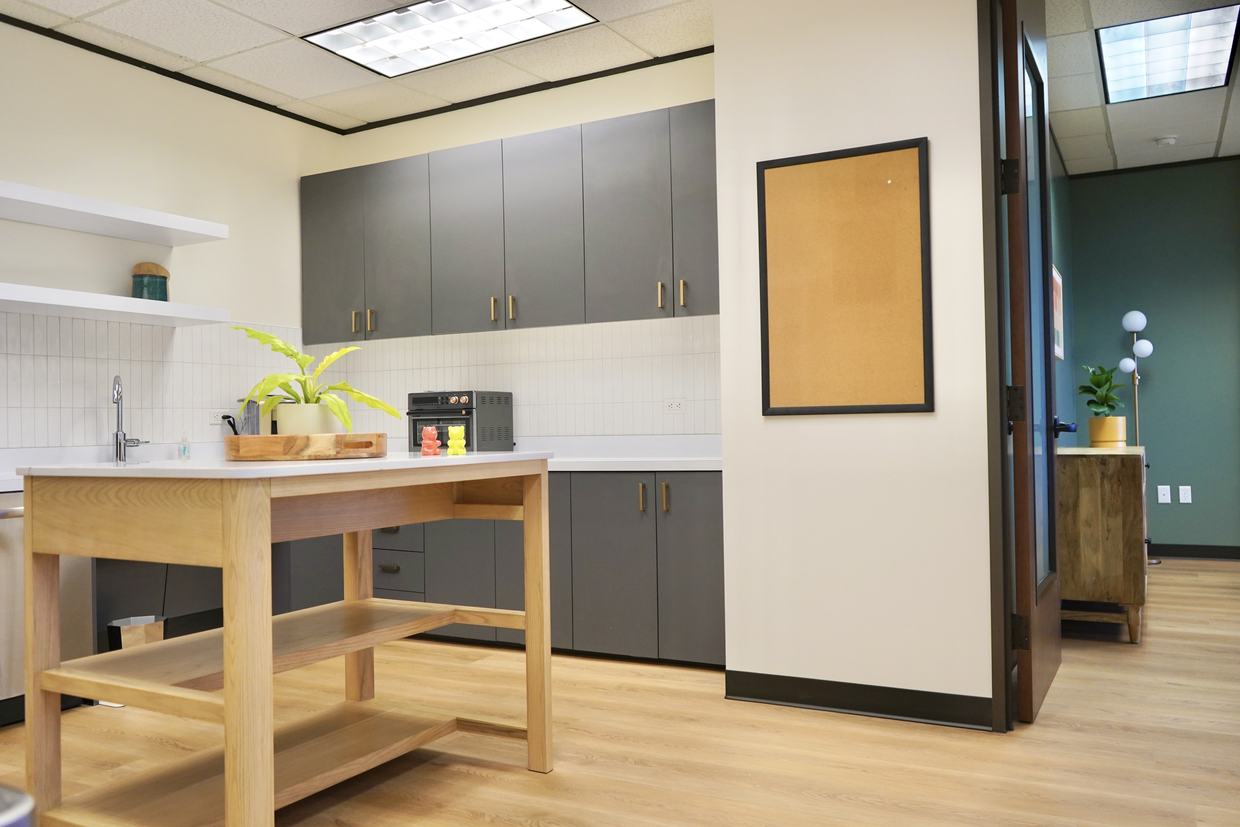
Inside our center on Spicewood Springs Road, Northwest Austin.
Getting back to the table you have been avoiding at home.
Progress in ARFID matters most once it follows you home. Before you leave Austin, your team helps you plan specific meals in the Valley: which dishes from home you have practiced, what you will do at the next family party, and how to keep climbing the ladder without a dietitian at your elbow.
Family can make that much easier. With your consent, relatives can learn how to offer a food without pressure and how to stop commenting on your plate, and our guide on family meals during eating disorder recovery gives them somewhere to start. With your written permission, we also share your plan with the doctor or dietitian you will see in McAllen or Edinburg.
Support for you and your family across Texas:
- NAMI TexasFamily education and support groups, for relatives who want to understand why food is this hard for you.
- Texas Health and Human Services: Mental Health and Substance UseState crisis contacts and a county lookup for the public mental health authority in the Valley, for after Austin.
More for McAllen adults, in one place.
Everything for McAllen: every service, the drive, the house →Or find your Texas city →
- ARFID treatment for McAllen adultsAdult care for food avoidance driven by fear, texture, or low appetite.This page
- Eating disorder treatment for McAllen adultsThe full picture: levels of care, the team, and how adults decide what fits.→
- Anorexia treatment for McAllen adultsRestriction, weight restoration, and the fear underneath both.→
- Co-occurring eating disorder treatment for McAllen adultsAnxiety, depression, OCD, or trauma treated alongside the eating disorder.→
What McAllen adults ask before they call.
Straight answers to the questions we hear most. If yours is not here, call and ask it.
How do ARFID fears affect family gatherings in the Valley, and can treatment help?
They often turn every gathering into a plan for avoidance: eating beforehand, skipping the meal, or leaving early before the food comes out. In a Valley family, where gatherings come often and food is one way people show care, that can strain relationships for years. Treatment helps by widening what you can eat and by practicing eating around others, so the next party in McAllen feels less like a test.
Can treatment include the foods my family cooks in the Valley?
Yes. If joining a Christmas tamalada or a cousin’s carne asada again is the goal, those dishes belong on your exposure ladder. Tell your dietitian and therapist what is served at home, and they can break a dish into smaller steps: one ingredient, then a small portion, then the full plate. Family can sometimes help by describing a recipe or how it is made.
Can ARFID and depression be treated together if I come from McAllen?
Yes. Low mood about 320 miles from home is something the team watches from your first week, because distance can deepen it just as exposure work asks the most of you. Your therapist, dietitian, and psychiatric provider share one picture of both conditions while you are in Austin. When you head back, your discharge plan covers both and aims to name the McAllen provider who will manage any medication.
Can I start ARFID treatment in IOP if PHP is too much time away from McAllen?
Sometimes. IOP is 9 hours a week plus individual and dietitian sessions, and if your assessment shows you are medically steady, it can be a starting point. From McAllen, though, IOP still means staying in Austin, because about 5 hours each way is not workable. The difference is a lighter treatment week, with more of your days your own. Your team will tell you honestly which level fits.
Tell us which foods still feel safe, and we will build from there.
A confidential call about what you eat now, which gatherings you have been missing, and whether PHP or IOP in Austin makes sense from the Valley.