
About 110 miles from College StationAdults 18+In person in Austin
Bulimia treatment for College Station adults in shared apartments where secrecy comes easy.
Empowered Treatment offers bulimia treatment for adults in Austin, about 110 miles from College Station, through partial hospitalization, intensive outpatient care, and a room in our transitional house. If the cycle has been living behind a locked bathroom door in a Northgate apartment or a Bryan duplex, a few weeks in Austin surround it with structure it cannot hide from, and a plan for the shared kitchen you go back to.
about110miles
About 2 hours each way by car. TX-21 west to US-290, or TX-21 to Bastrop then TX-71.
Other Texas cities we serve, by distance
- 30 hrsa week in partial hospitalization: supported meals, groups, therapy, dietitian, medical and psychiatric care
- 9 hrsa week of group programming in IOP, plus weekly individual and dietitian sessions
- 1 housein Hyde Park, alongside PHP or IOP, with shared meals and a room of your own
- 18+adults only, with every hour of care in person at our Austin center
Four roommates, one bathroom, and nobody quite asking.
Bulimia nervosa, usually just called bulimia, is a cycle: episodes of eating a large amount with a sense of losing control, followed by attempts to undo it through vomiting, laxatives, fasting, or punishing exercise. Then come the shame, the promise to restart tomorrow, and the restriction that sets up the next binge. It is a serious medical and psychological condition, and it usually happens at a weight no one comments on.
Student housing in College Station is almost designed for it. Groceries are shared or labeled, schedules never line up, music covers sound, and a roommate who notices the missing food assumes someone else ate it. A late run through a drive-thru after a long night at the library can turn into a binge in the car. Our adult bulimia program in Austin treats the cycle and the isolation that keeps it going.
Bulimia and binge eating disorder share a lot, and the difference is whether compensating behaviors follow. If bingeing happens without them, binge eating disorder treatment for College Station adults explains that path.
When the cycle sets the schedule instead of the semester.
These patterns suggest that weekly support may no longer be enough:
- The cycle is getting faster.Episodes that used to come during finals now come every few days, or more than once a day.
- You plan around the apartment.You know when roommates leave for class and which bathroom is least likely to be used.
- Your body is showing it.Swollen cheeks, a sore throat that keeps coming back, dental sensitivity, or dizziness and a fluttering heartbeat.
- Money and food keep disappearing.Grocery budgets run out early, delivery receipts pile up, or you are buying laxatives or diet pills.
- Social eating has become a performance.You eat normally at a group dinner, then leave early or find an excuse to be alone afterward.
- Counseling helped, but it did not hold.You understood the cycle better after sessions, and it carried on between them.
Interrupting the cycle where it actually starts.
The urge to purge feels like the problem, but the cycle usually starts hours earlier, with a skipped meal or a rule about what is allowed. Treatment at Empowered goes after those earlier links, in person at our bulimia treatment center in Austin.
Steady eating as the foundation
Your dietitian builds a plan with regular meals and snacks, so the hunger that fuels a binge is not stored up all day. Supported meals let you practice it with someone at the table.
Skills for the moment after eating
DBT-informed skills help you ride out the urge to compensate instead of acting on it, and you practice them right after meals, when the urge is real.
Therapy for what the cycle manages
CBT works on the rules and beliefs that keep it running, and trauma-integrated care, including EMDR when appropriate, addresses pain the cycle may have been covering.
Labs and medical checks
Purging can upset potassium and other electrolytes that the heart depends on, so medical monitoring and psychiatric care run through the whole program.
Group therapy is part of every week, and for a condition that thrives in secret, sitting with people who understand is often where the shame begins to loosen.
A house with shared meals, a long way from the old routine.
The center is about 110 miles from College Station, roughly 2 hours on TX-21 and US-290. That distance rules out a daily commute for PHP or IOP, and it also does something useful: it puts space between you and the apartment, the drive-thru lane, and the late-night routine where the cycle lives. Treatment pairs with our transitional housing in Hyde Park, where you have your own room and eat with housemates who are working on the same thing.
- A first callSay as much or as little as you want about the cycle. We will ask how often it happens and what support you have now.
- A benefits checkWe can check your benefits before you decide, whether the plan is your own, a parent’s, or a student plan.
- An assessment in AustinA medical and clinical evaluation, including labs, that decides between PHP and IOP and sets a start date.
- Life in the houseYour own room, shared meals, and evenings with structure. Cost and availability depend on your situation, so ask us directly.
- A plan for the apartmentBefore you step down, you work out how meals, bathrooms, groceries, and roommates will go once you are back.
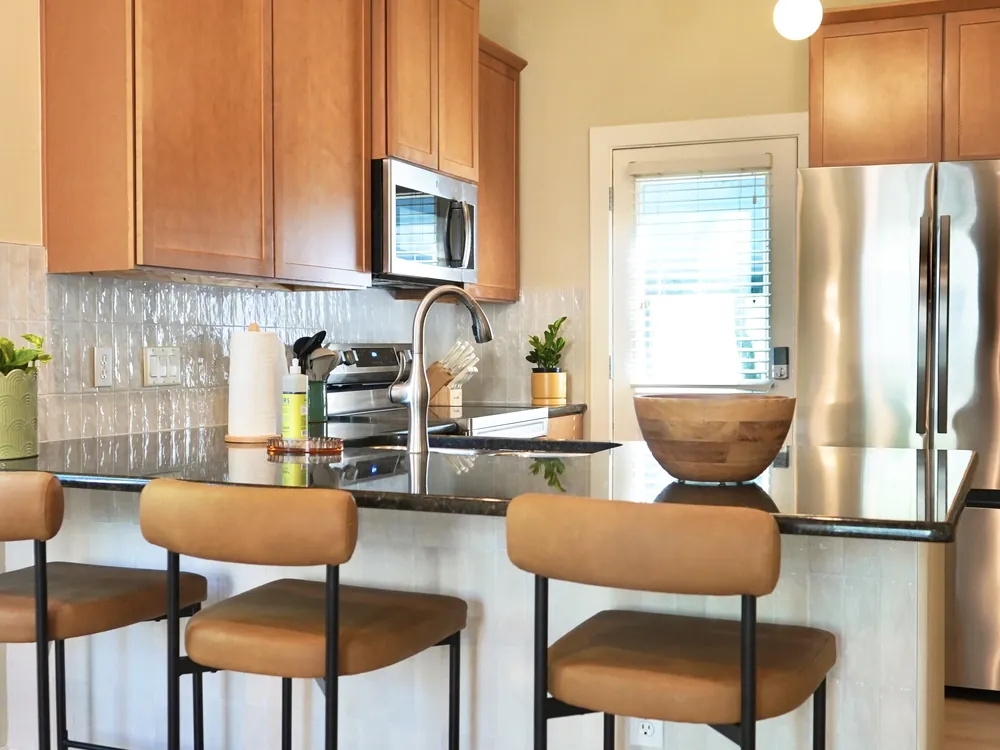
The transitional house in Hyde Park. See transitional housing in Hyde Park
Going back to shared space with the secrecy already broken.
The apartment will look the same when you return. What changes is that you no longer carry the cycle alone. With your written permission, we share your aftercare plan with whoever will support you in College Station, such as a campus counselor, a Bryan dietitian, or your doctor, so they know which skills you are using and what to watch for.
Some adults decide to tell one roommate, so there is a person at home who knows. Others move, or arrange different housing for the next lease. Your therapist can help you think through those choices well before move-out. Stepping down to the eating disorder IOP for College Station adults while you are still in Austin gives the new routine time to settle before you drive home.
Support across Texas once you are back:
- NAMI TexasFamily education and statewide support groups, for parents or partners who want to understand what bulimia asks of everyone.
- 988 Suicide and Crisis LifelineCall or text 988 at any hour if urges or low moods become a crisis after you are back in Brazos County.
Other programs for College Station adults, all in one place.
Everything for College Station: every service, the drive, the house →Or find your Texas city →
- Bulimia treatment for College Station adultsBinge and purge cycles, treated with structure and without shame.This page
- Eating disorder treatment for College Station adultsThe full picture: levels of care, the team, and how adults decide what fits.→
- Binge eating disorder treatment for College Station adultsBinge eating treated as an eating disorder, not a failure of willpower.→
- Eating disorder IOP for College Station adultsNine hours a week of groups, plus weekly individual and dietitian sessions.→
- Co-occurring eating disorder treatment for College Station adultsAnxiety, depression, OCD, or trauma treated alongside the eating disorder.→
What College Station adults ask before they call.
Straight answers to the questions we hear most. If yours is not here, call and ask it.
What helps when I return to a shared apartment in College Station?
A plan made before you go back, not after. With your therapist and dietitian, you decide how meals will happen, where groceries go, which times of day are hardest, and what you will do when the apartment is empty. You may choose to tell one roommate. If co-occurring anxiety or depression makes the return harder, co-occurring eating disorder treatment for College Station adults covers how those are treated together.
I saw a campus counselor for bulimia last year. Why would a program be different?
Because of how much happens between sessions. Weekly therapy for bulimia with a counselor in College Station covers one hour, and the cycle runs on the other hundred and sixty-seven. In PHP or IOP in Austin, you eat with support, practice urge skills right after meals, see a dietitian and therapist who work as one team, and have medical monitoring for the effects of purging. Your counselor’s work is not wasted. With your permission, it becomes part of the plan.
How do I handle tailgates and late-night food runs after bulimia treatment?
By planning for them on purpose, since home game weekends and late nights are part of College Station life. Your dietitian helps you eat regular meals that day, so you do not arrive starving, and your therapist helps you plan an exit for when the urge shows up. Late-night runs are easier with a friend who knows, or with a meal already eaten. You practice these situations in treatment, so the first one back is not a test you face cold.
Will a dietitian help me eat regularly on a student schedule?
Yes, and building that around your real College Station schedule is part of the job. Your dietitian looks at back-to-back classes, labs, work shifts, and the gaps when you usually skip food, then plans meals and snacks that fit between them. In PHP you practice the plan at supported meals. In IOP you meet your dietitian weekly. The goal is a pattern regular enough that the evening binge loses its fuel.
Call us from Bryan-College Station and tell us what the cycle looks like now.
One confidential call: what has been happening, whether PHP or IOP fits, and what a stretch in Austin would mean for your semester or job.