
About 110 miles from College StationAdults 18+In person in Austin
ARFID treatment for College Station adults who struggle with dining halls and shared kitchens.
Empowered Treatment offers ARFID treatment for adults in Austin, about 110 miles from College Station, through partial hospitalization, intensive outpatient care, and a room in our transitional house. If your eating narrowed under the stress of a first semester, and a crowded dining hall or a roommate’s cooking now feels impossible, treatment builds range slowly, and the shared kitchen in our Hyde Park house becomes a place to practice for the one back home.
about110miles
About 2 hours each way by car. TX-21 west to US-290, or TX-21 to Bastrop then TX-71.
Other Texas cities we serve, by distance
- 30 hrsa week in partial hospitalization: supported meals, groups, therapy, dietitian, medical and psychiatric care
- 9 hrsa week of group programming in IOP, plus weekly individual and dietitian sessions
- 1 housein Hyde Park, alongside PHP or IOP, with shared meals and a room of your own
- 18+adults only, with every hour of care in person at our Austin center
Eating less was never about weight. It was about getting through the day.
Avoidant/restrictive food intake disorder, or ARFID, is an eating disorder in which the range or amount of food gets so limited that health, energy, or daily life suffers. It is driven by sensory sensitivity, by fear of what eating might cause, or by a low drive to eat at all, rather than by a wish to be thinner. Adults with ARFID often say they have been called picky for years.
For some, it began in childhood. For others it tightened later, during a first year away from home, when everything was new and a handful of familiar foods felt like the one thing under control. College Station can make that worse: dining halls loud with choices you did not pick, a shared fridge full of smells, a lab partner who suggests lunch somewhere you have never been. Skipping the meal is easier, until it becomes the only option.
Our adult ARFID program in Austin treats the distress as real and works through it gradually. If restriction has started to involve fear of weight gain or worry about your body, anorexia treatment for College Station adults may fit better, and the assessment is where that gets settled.
When a few safe foods are carrying a whole semester.
ARFID can be manageable for a long time and then tip. These signs suggest it may be time for more than self-help:
- Your safe list got shorter after you moved.Foods you ate at home no longer feel possible in College Station, and nothing has taken their place.
- You skip meals on campus entirely.Long days pass on a drink and a granola bar because eating where others can see you feels worse than going hungry.
- Your body is short on fuel.Weight loss, fatigue in class, dizziness, or a doctor in Bryan pointing out low iron or another deficiency.
- Shared kitchens feel off limits.You wait until roommates are asleep to eat, or you avoid the kitchen because of the smells and the sight of their food.
- One frightening moment changed everything.Since a choking scare or a bad bout of vomiting, whole groups of food have felt dangerous.
- Social plans revolve around avoiding food.You turn down tailgates, group dinners, or dates because there may be nothing there you can eat.
Gradual, chosen, and never forced on you.
ARFID care at Empowered starts with steady nutrition and moves at a pace you agree to. Everything happens in person in Austin, in PHP or IOP, with one team of therapists, dietitians, and medical and psychiatric providers.
Fuel before challenge
Your dietitian begins with what you already eat and closes the gaps first, so you have the energy and concentration to try anything new at all.
A ladder you help build
You and your therapist rank foods and situations from easiest to hardest, including eating with others watching. You choose each next rung, and a step can wait.
A plan matched to your driver
Sensory sensitivity, fear of choking or vomiting, and low appetite each call for different work. Your assessment in Austin works out which one drives yours before the first rung is set.
Anxiety treated alongside
CBT helps you understand and tolerate the fear that shows up around food. If you are autistic or have ADHD, the plan adapts to how you experience eating rather than treating that as the problem.
When social anxiety, OCD, or depression is part of the picture, co-occurring eating disorder treatment for College Station adults explains how they are treated together.
A shared kitchen in Hyde Park, for practice before the real one.
The center is about 110 miles from College Station, roughly 2 hours by TX-21 west and US-290, so a daily commute for PHP or IOP is not realistic. Treatment pairs with our transitional housing in Hyde Park, and for ARFID that is more than a place to sleep. You share a kitchen and meals with housemates, which is the exact situation ARFID teaches you to avoid, now with support around it. A food you work on at the center can be tried at the house table that evening, with people who understand what it costs.
- A first callTell us what you can eat, what you avoid, and when things got narrower. We will talk through whether PHP or IOP fits.
- A benefits checkWe can check your benefits before you decide, including how your plan covers each level of care.
- An assessment in AustinIn person, with attention to which driver leads and whether any medical workup is still needed.
- Practice at the centerNew foods arrive at supported meals, at the step you agreed to, with a dietitian or therapist beside you.
- Practice at the houseThe same step, repeated in a shared kitchen with housemates, so the setting you fear becomes ordinary.
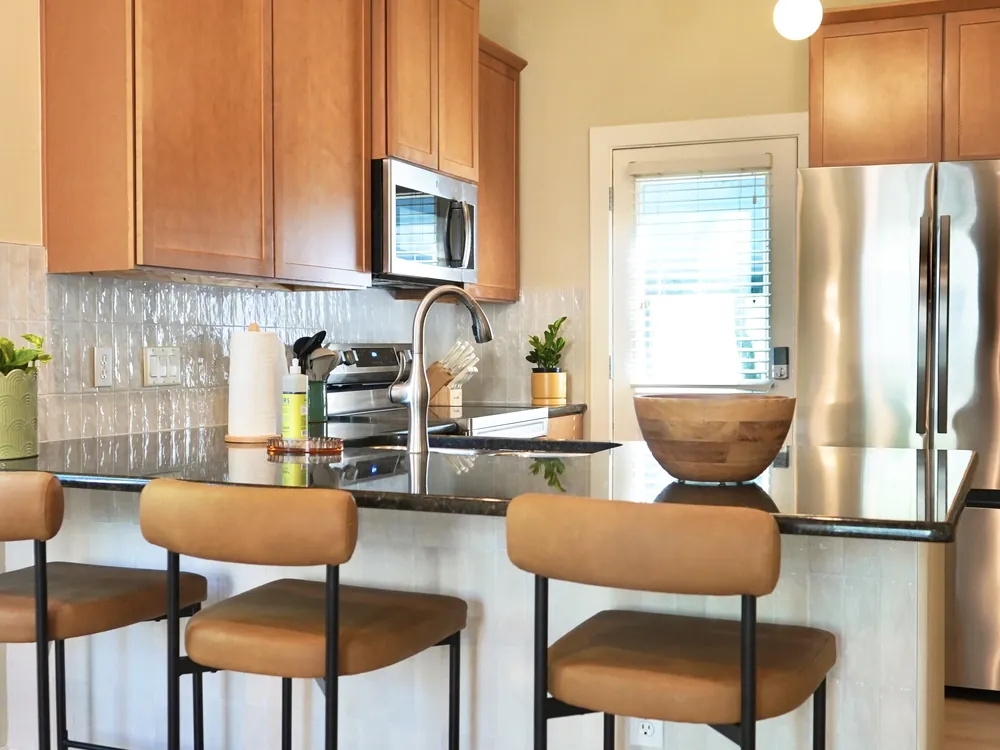
The transitional house in Hyde Park. See transitional housing in Hyde Park
Taking a longer list of foods back to campus.
The return to College Station is planned around the places you actually eat: the dining hall you used to avoid, the apartment kitchen, the food trucks between classes, a restaurant your friends like. Before you go, your team helps you choose which steps to keep practicing on your own and which situations to take on first.
With your written permission, we share your plan with whoever will support you in Bryan-College Station, like a campus counselor, a dietitian, or your primary care doctor, so the ladder keeps moving after the program ends. Parents or a partner can learn how to offer a new food without pressure, which often matters more than any single meal.
Support across Texas for after you are home:
- NAMI TexasFree family education and support groups statewide, for parents and partners learning how ARFID affects someone they love.
- Texas Health and Human Services: Mental Health and Substance UseState mental health services, crisis numbers, and a county lookup for the mental health authority serving Brazos County.
Other programs for College Station adults, all in one place.
Everything for College Station: every service, the drive, the house →Or find your Texas city →
- ARFID treatment for College Station adultsAdult care for food avoidance driven by fear, texture, or low appetite.This page
- Eating disorder treatment for College Station adultsThe full picture: levels of care, the team, and how adults decide what fits.→
- Anorexia treatment for College Station adultsRestriction, weight restoration, and the fear underneath both.→
- Co-occurring eating disorder treatment for College Station adultsAnxiety, depression, OCD, or trauma treated alongside the eating disorder.→
What College Station adults ask before they call.
Straight answers to the questions we hear most. If yours is not here, call and ask it.
My eating narrowed during my first year as an Aggie. Could that be ARFID?
It could be, especially if the narrowing was not about weight or appearance. Stress, a new place, and unfamiliar food can shrink a safe list fast, and for some adults it never expands again. If your range is still shrinking months later, or your energy, grades, or health are suffering, that is worth an assessment. A short call can help you decide whether to come to Austin for one.
Eating in front of classmates is harder than the food itself. Can ARFID care help me stop skipping meals on campus?
Yes, and that fear can go on your ladder like any food can. In treatment, you practice eating with others present, first at supported meals, then at the house table, then in places that look more like campus. Your therapist helps you handle the anxiety of being watched. By the time you return to College Station, the goal is that a crowded dining hall is uncomfortable at most, not a reason to go without lunch.
What if fear of choking is what started my ARFID?
Then treatment starts by naming where that fear is worst now, like a packed campus dining hall at lunch rush or a tailgate where food gets passed around and eaten standing up, and those settings go at the top of your ladder, not the bottom. College Station is about 2 hours from Austin, so that work happens in person while you live in our Hyde Park house, and a hard session is never followed by a long drive alone. The steps climb from safe foods toward avoided textures, at a pace you set with your therapist and dietitian. If anything medical needs ruling out first, your team will say so.
Should I see a Bryan GI doctor first if eating hurts?
If eating causes pain, a medical evaluation is a good idea, and a gastroenterologist in Bryan or College Station is a reasonable place to start. Pain can have a physical cause that needs treating, and it can also be part of what keeps ARFID going. The two are not either-or. With your permission, we can coordinate with the doctor you see, so medical findings and the eating plan line up.
Tell us which foods still feel safe, and we will begin with those.
One confidential call about what you eat now, what has changed since you came to College Station, and whether PHP or IOP in Austin fits.