
Understanding Co-Occurring Eating Disorders and Substance Use Disorders
Stay EMPOWERED |
Stay Connected |
Stay EMPOWERED | Stay Connected |
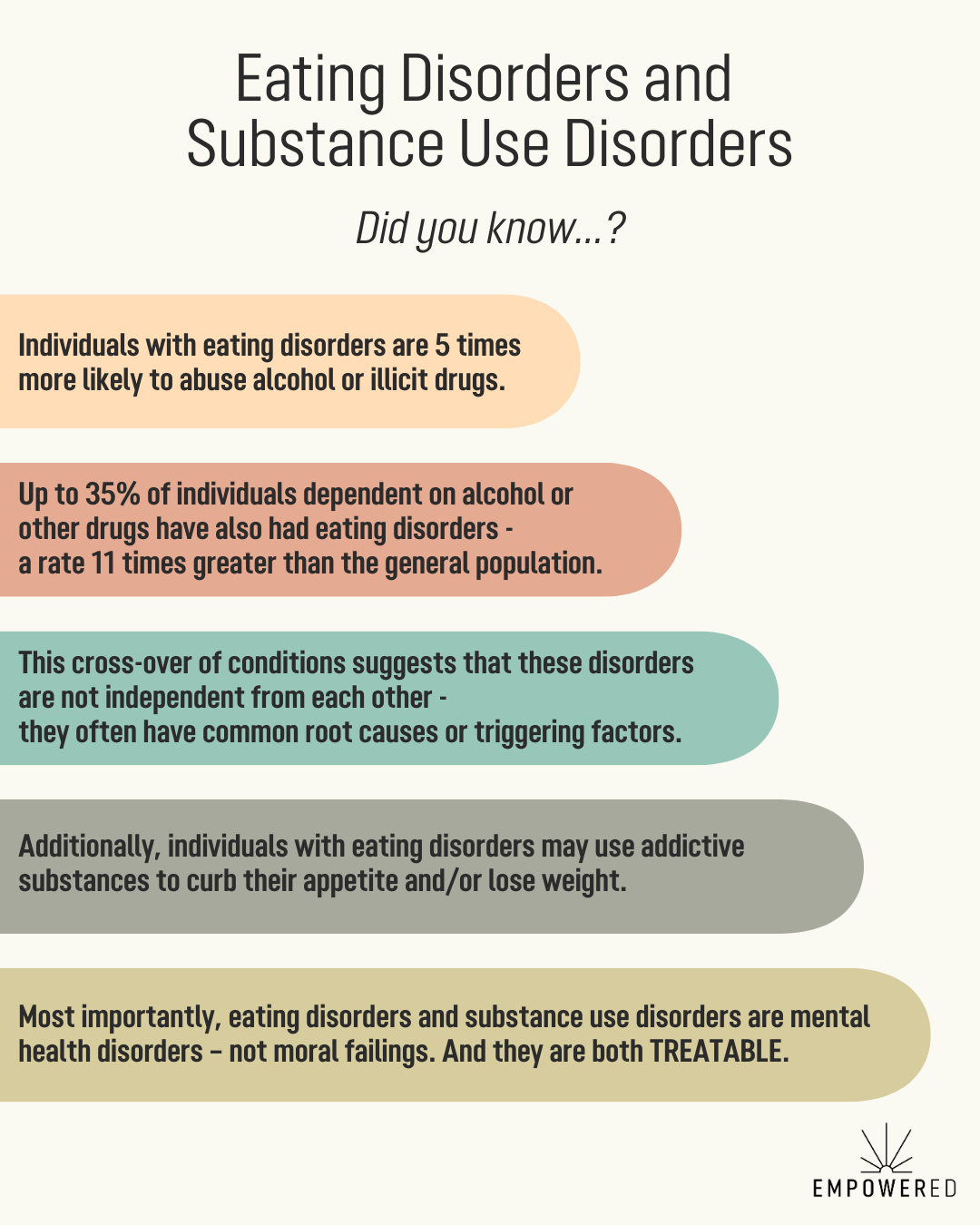
Infographic showing statistics on EDs and SUDs.
Reaching out for help can feel like one of the hardest things to do. It can often feel both overwhelming and scary - especially when you are fighting multiple battles at once. Eating disorders (EDs) and substance use disorders (SUDs) often come with a stigma attached, and both tend to be very misunderstood. When a person is struggling with both it can feel almost impossible to imagine a life free from them.
We want you to know that you are not alone in this battle and a life of freedom and recovery is possible. We know this because we have seen it happen time and time again. In this post we will explain how the disorders connect, why they sometimes overlap, and why a treatment team who understands both diagnoses is so important.
What is a Co-Occurring Disorder?
A co-occurring disorder (also known as a dual diagnosis) refers to a person struggling with two or more diagnoses at one time. Research shows that 50% of those who struggle with an eating disorder also have a co-occurring substance use disorder, or have struggled with one at some point. Most turn to substances as a negative coping skill to manage their emotional pain, trauma, or internal thoughts and feelings.
EDs and SUDs can share some of the same traits such as perfectionism, anxiety, shame, impulsivity and difficulty regulating emotions. Without support and proper treatment, those struggling can become stuck in a cycle that feels impossible to break.
Why Co-Occurring Disorders are so dangerous?
When EDs and SUDs happen simultaneously, the risks often compound. If a person’s body is malnourished there can be a higher risk of overdose. Heart complications can also be a contributing factor due to electrolyte imbalance and organ strain. Time and time again we see higher relapse rates due to only one disorder being treated. There can also be increased suicidal ideation due to increased emotional distress. If both conditions are active and you only treat one of them, the likelihood of symptoms of the other increasing are high. Co-occurring treatment isn’t just helpful, it’s lifesaving.
What are the warning signs of co-occurring ED & SUD?
Red flags of co-occuring disorders can appear emotionally, physically, or in day-to-day behaviors. We wanted to list a few examples on what to watch for:
Isolation – Isolation is a huge red flag we see with ED and SUD, as the shame behind both can be so extreme it feels easier to hide away.
Mood swings - Mood Swings can be another red flag we often see, mainly due to a combination of withdrawal symptoms and malnutrition.
There can also be an obsessive focus on weight, food, body image and over exercise.
As well as the big one – minimizing or using/drinking alone.
Physical signs to watch for can be:
Sudden or extreme weight changes, dental issues, and GI Issues.
Please remember that these are only a few of the potential signs and symptoms, and if there is any suspicion of either disorder we urge you to reach out to a professional for guidance.

Portrait of a young man indoors.
At Empowered, we know how isolating eating disorders and substance use disorders can be. We also know that those two things rarely exist in isolation. Our approach is grounded in caring, compassionate, and individualized treatment. We believe strongly in a small intimate approach where each client can receive the specific care they need.
Healing from any mental health disorder can feel paralyzing, but we want you to know it is not impossible, and that you deserve a life of freedom and happiness. You deserve to be in a space where you feel safe, where your story is heard, and where recovery is possible.